Parliamentary questions play a crucial role in our system of governance insofar as they ensure the scrutiny and accountability of the government while informing the public about governmental activities and policies.
Furthermore, MPs can use parliamentary questions to seek information and clarification on various issues, which can inform policy development and decision-making processes. By questioning ministers, MPs can highlight concerns and suggest alternative approaches to governance.
Last, but not least, since MPs represent their constituents’ interests in Parliament by asking questions on behalf of their constituents, they ensure that local concerns are addressed at the national level and that the government is aware of the needs and priorities of the people.
Considering that so many PQs remain unanswered by the prime minister, ministers and parliamentary secretaries, a sordid practice that has been going on for years now, it is no wonder that the Speaker of the House of Representatives, Anġlu Farrugia, spurred on by PNMP Eve Borg Bonello, has called for the introduction of a formal mechanism to ensure that parliamentary questions are answered on time, once current rules lack enforcement.
If that came about, it would be the first in the world, as no other parliamentary system of governance has any formal mechanism making it mandatory for the prime minister and ministers to answer parliamentary questions. Of course, there was never felt any need for such a mechanism, as in democratic systems abroad, they are always taken seriously, as otherwise, they risk political fallout.
Standard parliamentary practice should dictate that replies to all parliamentary questions should be provided, and failure to do so should lead to procedural repercussions and sanctions.
Finally, we should also seriously consider initiating a trial period during which our country’s prime minister would answer questions in parliament alone, rather than together with ministers, in a format similar to Prime Minister’s Questions (PMQs) in the UK’s House of Commons.
Question time is fundamental to a democratic and accountable style of government, and this may explain why question time tends to receive significantly more media attention than other legislative activities in many countries.
The Jeremy Harbinson saga affair
Mr Harbinson, an expert appointed by the respective Inquiring Magistrate in the Vitals Inquiry, has long refused to testify in Malta out of fear for his safety and for vehemently reiterating that he would never return to Malta.
To add insult to injury, it has now transpired that the Interpol search for him has hit a dead end, as he seems to have just vanished into thin air. Despite the issuance of an Interpol blue diffusion and the use of the Schengen Information System for localisation, Harbinson’s whereabouts remain unknown.
Court proceedings can stall, be delayed, or suffer significant setbacks if an appointed expert cannot be found, declines the appointment, or becomes unavailable.
So what should be the next move for the court presiding over the respective judicial proceedings?
To my mind, there could be more than one option available.
When an expert witness, particularly one appointed by the court, is crucial for understanding technical details or establishing liability, their absence creates a gap in evidence that often necessitates a pause in proceedings.
Indeed, in the proceedings in question, the court has, time after time, been formally adjourning the hearing, causing a stalled scenario, with the defence team vehemently insisting on a break in the deadlocked procedure.
The court can continue to adjourn proceedings indefinitely until the expert is somehow finally traced, or it can appoint a new expert to restart the evaluation process.
Ultimately, in the circumstances at present, and if Harbinson remains unavailable, the court, as is rightly and legitimately expected, could decide the case on the limited evidence available, which may be unfavourable to the party relying on that expert.
In the end, the prevailing scope should be that of ensuring justice is served within a reasonable time, for no accused individual can be forced to remain in the doldrums.
The ADPD and Momentum electoral alliance
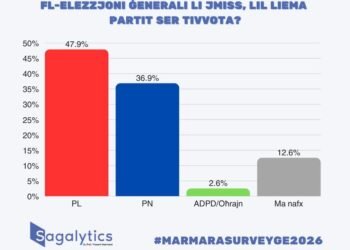
Following the pre-electoral alliance ahead of the next general election announced by ADPD and Momentum, many are questioning whether it was the right move and what electoral impact it might have, if any.
An alliance is characterised by the coming together of at least two political parties for a certain period, in pursuit of an agreed set of common goals to be reached through a common strategy, joint actions, the pooling of resources, and the distribution of possible subsequent pay-offs. It is a strategic partnership to increase electoral success.
It will be recalled that there had already been a sort of alliance between Alternattiva Demokratika and Partit Demokratiku.
We don’t know as yet whether this alliance is formal or informal, temporary or long-term.
It could be that this alliance was driven by various factors, including shared ideologies or policy goals, strategic considerations, or a desire to increase political influence or power. However, it can also turn out to be fragile and subject to change as political circumstances and priorities shift.
Undoubtedly, it presents a united front to voters.
Only time will tell how this alliance will pan out, but, at the end of the day, in the intricate realm of Maltese politics, trust is a cornerstone upon which that alliance between ADPD and Momentum is to be built, sustained, and strengthened. The role of trust in this political alliance is fundamental, shaping the dynamics of cooperation, collaboration, and consensus-building among these two as-yet niche parties.
Considering that Momentum’s Arnold Cassola obtained 29,013 votes in 2004 in the European Parliament election and 22,941 votes in the last EP election, with ADPD obtaining 2,124 votes in the last local council election, this budding alliance can have the potential to leave a remarkable impact on the eventual general election result.
Dr Mark Said is a lawyer