On Thursday Leo XIV completed his eleven-day trip to Africa. On the flight to Algeria, the first of four stops, the Pope had already confirmed: “This trip should have been the first of the pontificate. I had already said that last May.” Numerically it was third. Leo inherited the visit to Turkey and Lebanon at the end of November from his predecessor Francis, who was no longer able to complete it due to illness. The day trip to Monaco at the end of March was something of a test trip.
There will be further apostolic trips abroad this year. In June we’re going to Spain for seven days. Latin America could be added in the fall, with the obligatory stop in Peru, Leo’s “adopted” home country. The Pope will not visit the USA, his first, “natural” home, this year – despite the celebrations of 250 years of independence and the invitation from the White House personally delivered by Vice President JD Vance months ago. The US congressional midterm elections will take place in November. Popes avoid visiting foreign countries in election years because there is a risk of political capture.
Leo XIV was familiar with Africa long before his first trip to the continent as pontiff. As Superior of the Augustinian Order from 2001 to 2013 and also in his capacity as Prefect of the Dicastery for Bishops in the Vatican from 2023 to 2025, Robert Francis Prevost visited the continent around two dozen times. From the Maghreb to the south, from West to Central to East Africa.
A religious missionary in the Chair of Peter
As a religious missionary, Africa, where the universal church is growing more dynamically than in any other part of the world, was a “natural” destination for the Augustinian monk. Even if he himself did not do missionary work there, but rather in Peru over a longer period of time. There has never been a religious missionary like Prevost, who was and remains at home literally all over the world, especially in Africa, on the Chair of Peter.
After the first stop in Algeria, where Leo encouraged a tiny herd with thousands of years of roots to survive in a country that is now 99 percent Muslim, he was able to immerse himself in the bursting joy of faith of a constantly growing Christian community in Cameroon, Angola and Equatorial Guinea.
The energy that the Pope unleashed at Eucharistic celebrations in front of hundreds of thousands seemed to flow back to him: Leo completed his mammoth program with a total of 18 flights and two dozen speeches without any noticeable signs of fatigue. The focus of his speeches and homilies was always the gospel’s message of peace, alongside the demand for social and human justice, and finally the solidarity with the persecuted and the closeness to innocent victims.
“A handful of tyrants ravaging the world”
These messages were always aimed at national, regional and local conditions, the Pope emphasized at the weekend. He was reacting to reports in the media that had placed his statements in the context of world politics and the alleged dispute with President Trump. Pope Leo’s listeners in Yaoundé, Luanda and Malabo were able to relate his complaint about “a handful of tyrants who are ravaging the world” and about “violents and despots” who allow themselves to be blinded by power and wealth to their own experience.
His call for a more equitable distribution of the natural wealth of a country and continent was also addressed first to his local listeners and only then to a global audience. In Cameroon, the Pope told a Mass before 100,000 faithful: “Do not be led by distrust and discouragement. Reject every form of abuse and violence that deceives with the promise of quick gain but hardens and dulls the heart. Do not forget that your people are even richer than this country, because your treasure lies in your values: faith, family, hospitality and work.”
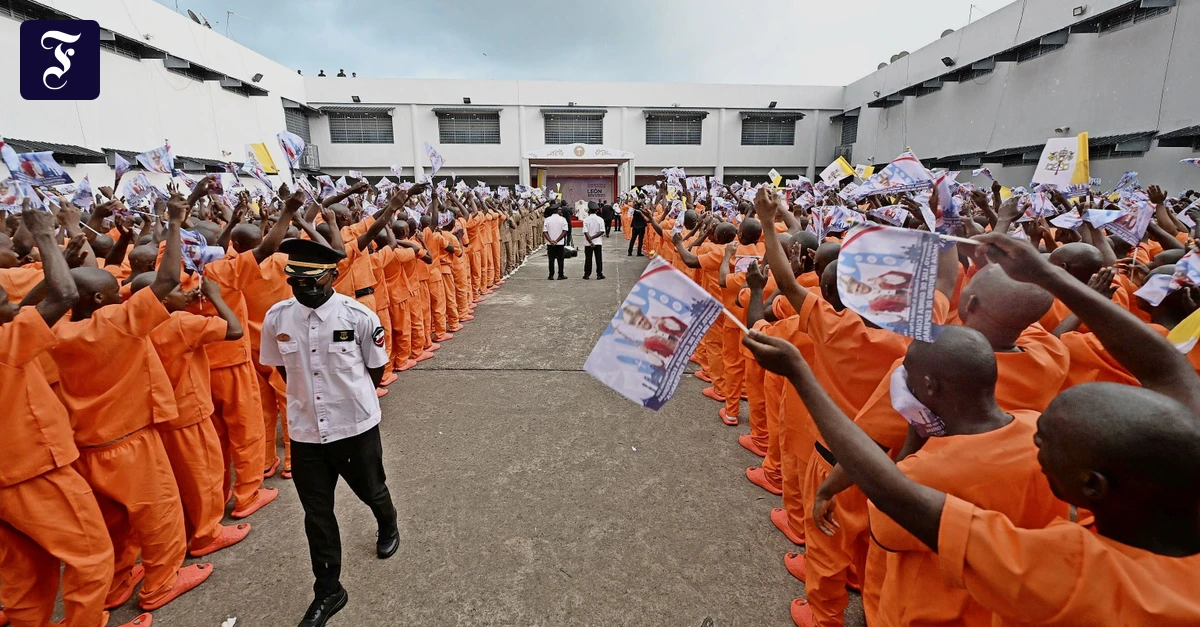
On the penultimate day of his trip, the pope visited a detention center in the coastal city of Bata in Equatorial Guinea, where he made a plea for forgiveness and mercy. And he addressed the youth directly at a mass with 50,000 believers in the city’s stadium. With an average age of barely twenty years, Africa’s population is younger than in any other part of the world.
The brightest light he encountered on his journey was “in their eyes, their smiles, their songs,” Leo said. With their radiance, the young people at all stages of his journey testified that “Christ brings joy, meaning, inspiration and beauty into the lives of every person.”