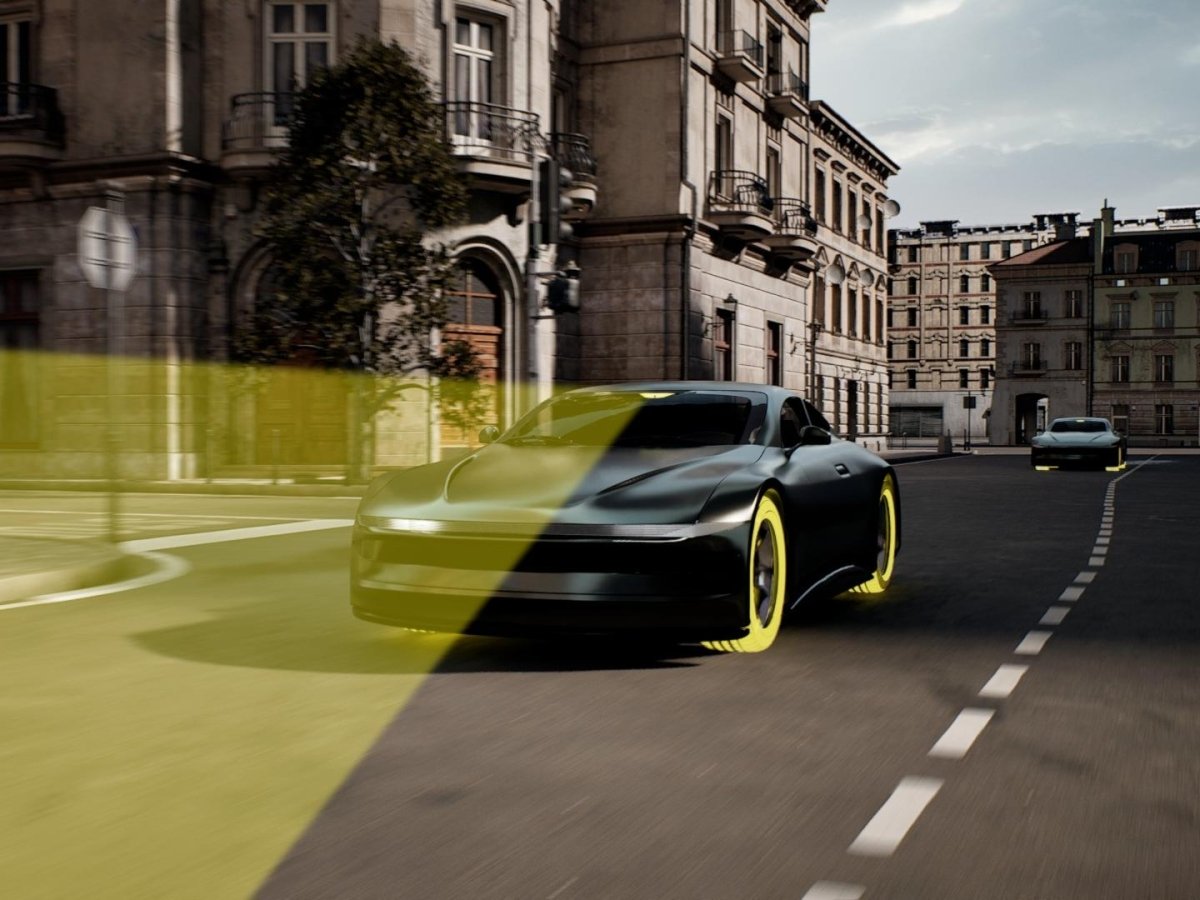
The sensor system in the tires which already records the driving conditions will be joined by functions developed by the Swedish company Univrses which analyze the road to choose the best routes and reduce consumption

We are used to considering a car’s tires as indispensable elements for safety or performance, capable, however, of transmitting sensations, certainly not information. A piece of news explains what kind of revolution is really taking place around our alloy wheels. A note, even formal and intended for professionals, manages to tell what will happen in the space between our car and the asphalt. Pirelli and the Swedish company Univrses announce that they have signed an agreement which provides for the integration of computer technologies based on artificial intelligence into the Pirelli Cyber Tire system. The financial implication is that Pirelli has acquired a 30% share of the company, with the option to reach a majority. The essence is that Pirelli literally makes tires enter what is defined as the internet of things, giving them an active role, connecting them to the car to use them as a tool that manages safety while driving and now also adding the artificial intelligence of Univrses, used to discover what the road conditions are, identify possible risk situations and communicate them to other cars.
In the internet of things
For years we have been thinking about an idea called “smart city”, real ecosystems that provide high-speed digital solutions and networks capable of transforming the city into a thinking complex of infrastructures and vehicles that talk to each otherwith traffic lights and signs that transmit traffic information, i.e. active infrastructures capable of transforming circulation into a concerted movement of all vehicles between fast routes, strategic diversions and ideal speeds. Few would have thought that tires would also be able to participate in this large complexbut that’s exactly what Pirelli Cyber Tire is aiming for. It is the first system in the world where a dedicated on-board computer collects data from sensors on tire pressure, temperatures and accelerations, i.e. on the type of driving and the effects it produces. All this is processed using algorithms developed by Pirelli and transmitted in real time to the car’s electronics, i.e. by the control units that manage the ABS for braking, the ESP for stability control and all the ADAS devices designed to deal with emergency situations. Thus a true internet of things on board is born, where tires abandon the completely passive role they have had until now and, indeed, they become the most truthful measuring instrument because they are closer to the ground.
The missing eyes
Digging deeper into the official press release, we discover where the winning idea is that convinced Pirelli to link up with Univrses, a company founded in 2015 and based in Stockholm, but which above all has so far worked independently of any car manufacturer, collaborating instead with the road safety authorities in Sweden, Denmark, Holland, the United Kingdom and Italy. It has developed its own artificial intelligence called 3DAI Engine which is responsible for giving the car the ability to recognize the surrounding environmentthat is, transforming any image or data coming from on-board sensors or cameras into a complete photograph of the road conditions, the presence of construction sites and any traffic difficulties, even the state of maintenance of signs and public lighting. Combining all this with what Pirelli Cyber Tire already does means adding extra eyes to the system, as well as a general forecasting capacity, i.e. the piece that was needed to have more security by then communicating information and analyzes on traffic to a real social car network. It is obvious that this also tells of a more rational world, where fuel consumption, distances to travel and even the times that motorists spend behind the wheel can be managed, contributing to collective well-being and environmental protection. Pirelli Cyber Tire also becomes an indispensable tool for future assisted drivingfrom the intermediate level, which still involves human participation, up to that of the total autonomy of the car in motion. But above all all this happens by anticipating the car manufacturers, who are still far from finding a shared standard in “smart cities”. Switching to intelligent tires is becoming the most immediate and fastest method.