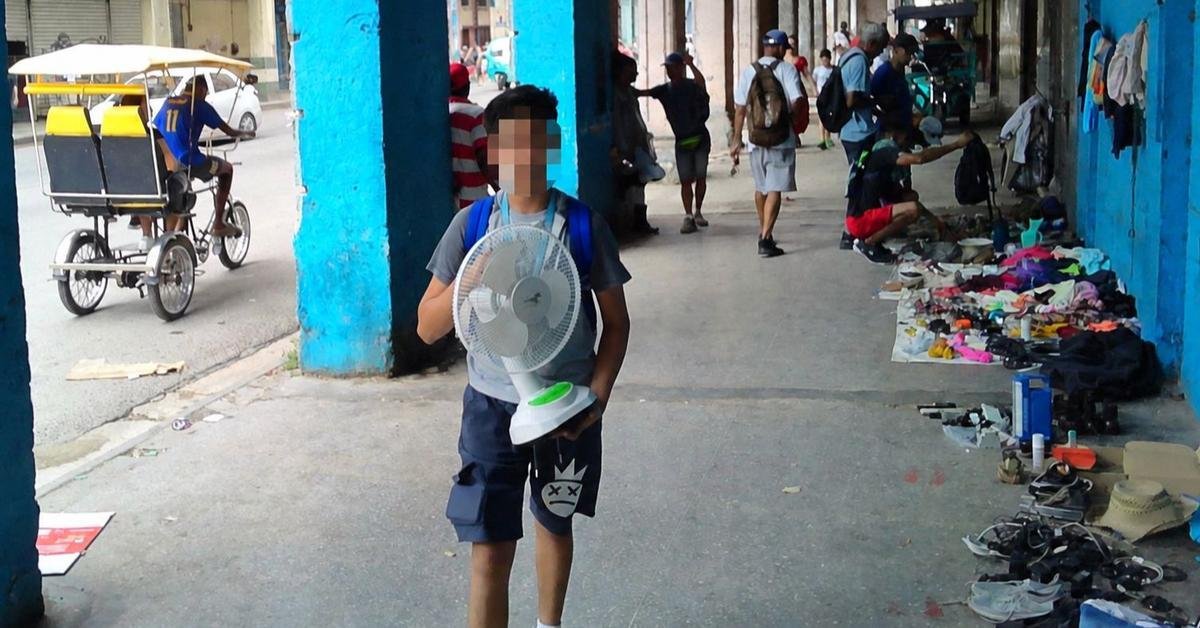
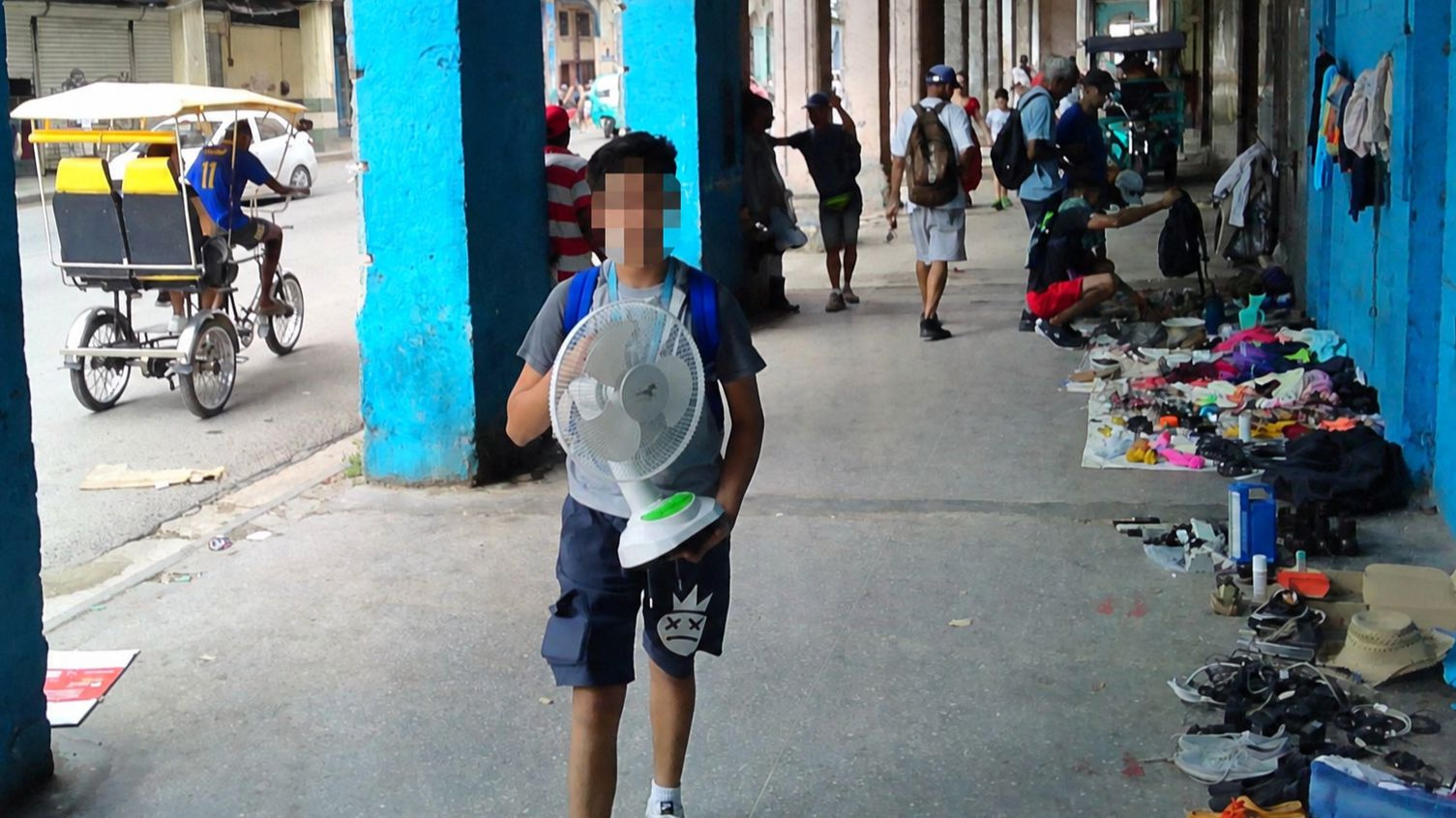
Havana/He doesn’t carry a ball, a backpack full of books or a bag with the day’s bread. This Saturday, a child walks through the portals of Reina Street, in Central Havana, carrying one of the most precious objects in today’s Cuba: a rechargeable fan. Your destination is some outlet that still has power to power the battery and guarantee a few hours of air when you return home.
The scene summarizes the Havana morning after the collapse of the national electrical system (SEN) that occurred this Friday. More than 17 hours after the total disconnection, large areas of the capital remained without service and others that had recovered electricity during the early morning lost it again.
Electricity stopped being something that came out of an outlet and became a treasure that is stored, chased, and even carried under one’s arm.
In Cuba, the question “do you have electricity?” It has displaced many other courtesy formulas. Knowing where to charge a phone, a lamp, an external battery or a fan can determine a family’s daily schedule. Rechargeable equipment has crept into conversations, solar panels occupy balconies and rooftops and words such as inverter, amperage, battery and photovoltaic cells are now part of the domestic vocabulary. Electricity stopped being something that came out of an outlet and became a treasure that is stored, chased and even carried under the arm.
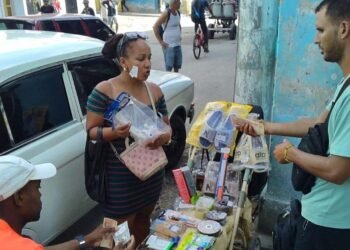
Reina’s boy also walks through a very Havana setting. A few meters away, on the floor of the portal, several vendors have displayed used shoes, doorknobs, clothes, pots and electrical parts rescued from the trash. Probably among the objects there is a piece of an old fan that could not withstand the long hours without power or the coming and going from one house to another.