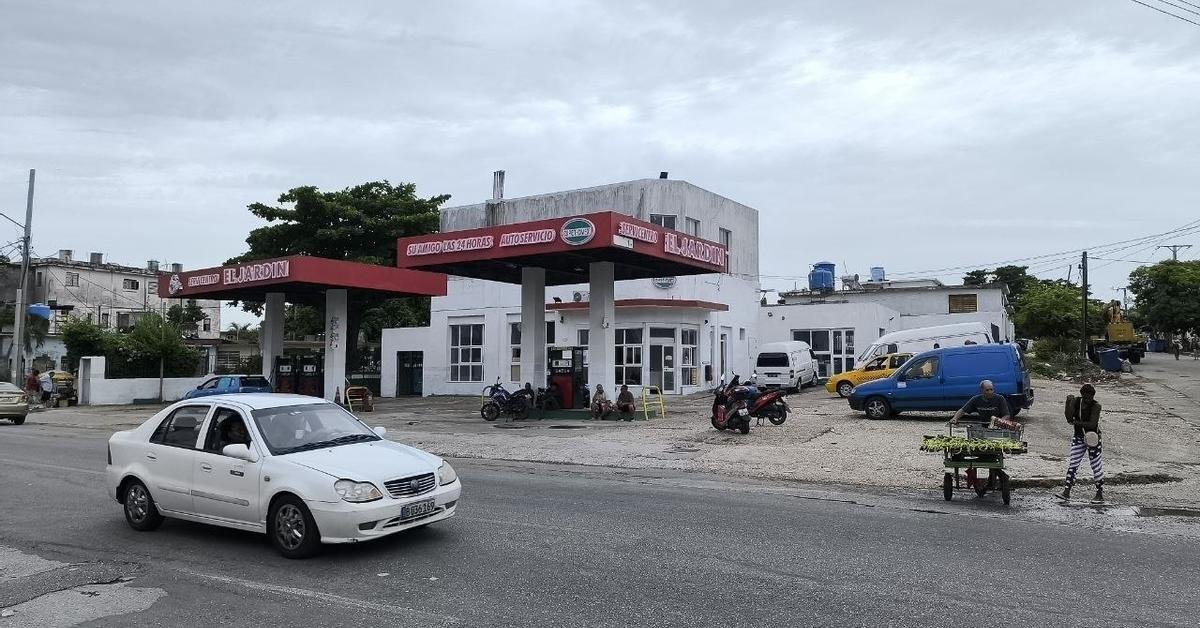
Havana/The El Jardín gas station, located on the corner of Zapata and 4, in Havana’s El Vedado, displays a new price sign that points to another increase in the price of fuel sold in dollars in Cuba. Regular gasoline (B-90), which since May was sold at $1.80 per liter, is now marked at $2.50, an increase of almost 39%.
The images, taken by this newspaper, also show that the prices of Super (B-100), Special (B-94) and Motor (B-83) gasoline have been covered with adhesive tape, while diesel maintains the price of 2 dollars per liter. The modification, however, has not been accompanied so far by any official announcement.
The new price represents the second significant increase in just a few months. Last May, the authorities inaugurated a system of service stations that sell fuel exclusively in US dollars, a measure presented as a way to earn foreign currency and guarantee supply.
That decision ended up dollarizing, in practice, the sale of fuel to the population. Since February, Cimex suspended sales in Cuban pesos due to shortages, and a good part of the stations that maintain supply charge in foreign currency. Access to gasoline was thus fundamentally reserved for those who have dollars or cards linked to foreign currency accounts, while many drivers must go to the informal market, where a liter is close to the equivalent of seven dollars, or go without fuel.

/ 14ymedio
The increase coincides with one of the worst energy crises that the Island is going through. The lack of diesel and fuel oil has reduced electricity generation, aggravating blackouts throughout the country. The obsolescence of thermoelectric plants has caused two total outages of the national electrical system in the last week. State transportation barely manages to maintain minimum services and sectors such as agriculture, construction and industry have been denouncing the lack of fuel for months.
In this context, the increase in the price of gasoline in dollars seems to respond to a strategy of raising foreign currency at a time when the State desperately needs resources. However, the absence of official information fuels uncertainty among drivers, especially when many stations remain out of supplies for days.
Images taken in El Jardín show a gas station without the usual long lines and with few vehicles waiting. The apparent calm is not only due to the price in dollars, but also to the shift system of the Ticket application, which organizes the purchase and allows only customers with an assigned reservation to attend.