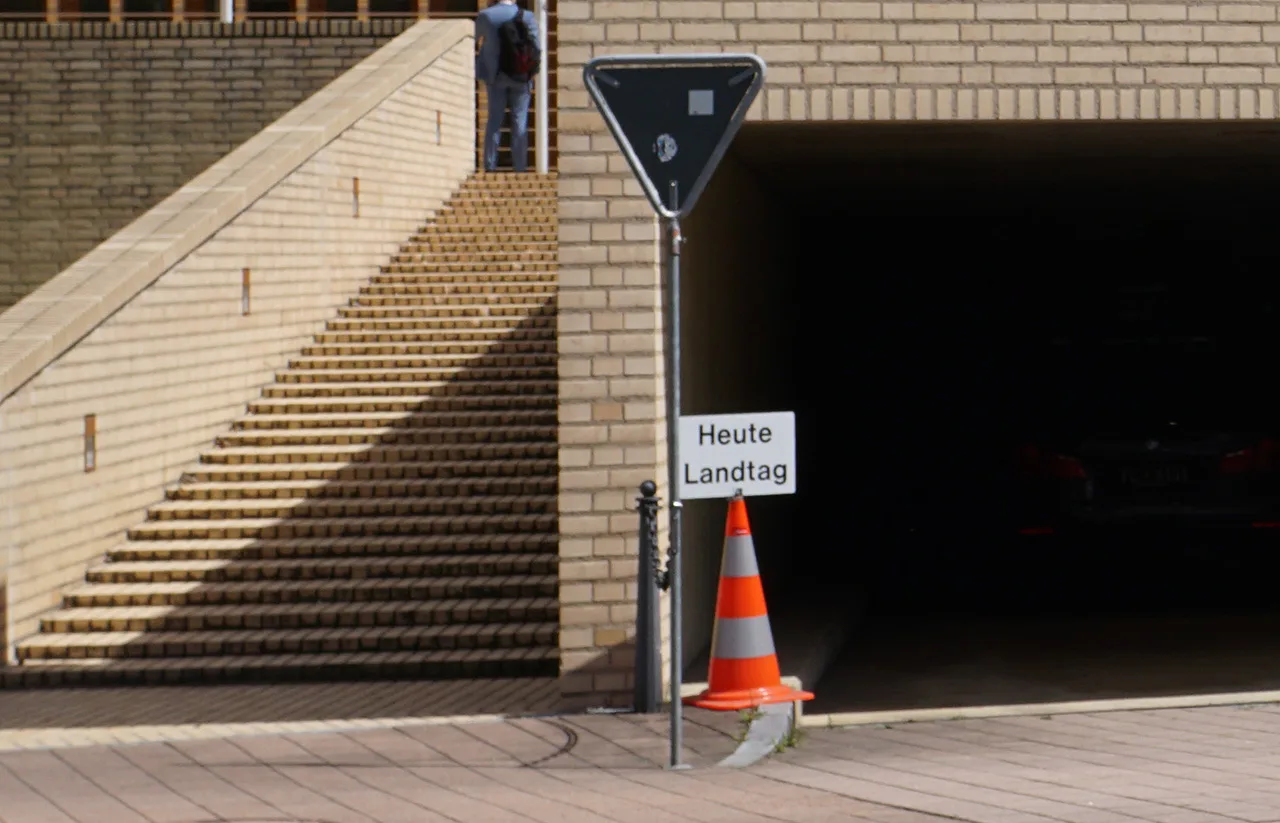
The state parliament has the Petition to reintroduce a direct bus connection between Ruggell and Schellenberg passed to the government by a vote of 23 to 2. The petition was submitted by mayor Dietmar Lampert, local councilor Eva Maria Nicolussi-Vogt and deputy mayor Jonas Grubenmann and is supported by 152 signatories.
The backstory
With the timetable change in December 2025, LIEmobil discontinued the Ruggell–Schellenberg section of line 32 without replacement after decades of operation. The Ruggell Limsenegg as well as Schellenberg Loch and Schellenberg Widum stops are affected. The municipal authorities of Schellenberg found out about this from the newspaper – without prior information.
Since then, a lot has been done to encourage LIEmobil to resume the route, said Johannes Kaiser (FBP), who presented the petition in the state parliament. He is a member of parliament from Schellenberg and has pushed the issue forward with small inquiries, media publications and discussions with the community. Around a fifth of the Schellenberg population is directly affected by the loss of this connection. Older people, children and young people are particularly hard hit, as they now have to walk long distances to get to the next stop – sometimes with a significant difference in altitude.
Economic efficiency versus public service
LIEmobil justifies the cancellation with insufficient passenger numbers at the affected stops and the high diesel consumption of the large vehicles used on the route. Kaiser countered that other lines in the LIEmobil network had even poorer cost coverage. In addition, LIEmobil will receive a government contribution of 14.5 million francs in 2025 – in 2026 this will increase to 18.5 million francs. According to an estimate, reintroducing the route would cost around 250,000 francs per year. At the same time, LIEmobil reported liabilities of around 489,000 francs to the country in its annual report, which had not been used up.
Martin Seger (DpL) put this into a broader perspective: While basic services for the population are being cut based on the argument of economic efficiency, 66,000 francs are spent annually on the Welcompass for overnight guests and around 923,000 francs on the LIEbike project. Over 10 percent of LIEmobil’s costs went to administration, which corresponds to a contribution of over 1.7 million francs per year.
Different approaches to solutions
Sandra Fausch (FL) emphasized that LIEmobil had to fulfill a public service mandate. The focus should not be on economic efficiency, but on a good, reliable and competitive public transport offer. The Free List supports the petition and demands that the connection be restored promptly.
Tanja Cissé (VU) showed understanding for the concern, but called for proportionality. She advocated creative solutions such as the use of minibuses or a call taxi instead of returning to the old solution with large buses. Dagmar Bühler-Nigsch (VU) argued similarly: She also supported a direct connection as part of the basic offer, but pointed out the need for flexible forms of operation. She mentioned minibuses, shuttle services or a cross-connection from Mauren via Schellenberg to Ruggell as possible options.
Thomas Rehak (DpL) expanded the discussion: The problem is not limited to Ruggell and Schellenberg, but is a national problem. The Triesen Oberdorf with around 1,500 residents is also largely cut off from public transport. The reason is LIEmobil’s ownership strategy, which only requires the transport company to connect communities with each other – but not to develop districts. As long as this requirement is not adjusted, the members of the state parliament can still express as many wishes as they want.
Stefan Öhri (VU) agreed with this assessment and demanded that the government, together with LIEmobil, develop clear and transparent criteria for the public service mandate in public transport – for minimum offers, transfer times, topography and accessibility as well as for the involvement of the affected communities in significant changes. Only with such guidelines can future conflicts be avoided.
Kaiser also drew attention to three concrete solution proposals that had been developed jointly by the communities of Ruggell and Schellenberg: a diversion of line 37 via Schellenberg, an extension of line 33 from Mauren via Schellenberg to Ruggell and a circuit with elements of lines 31 and 33. LIEmobil has not yet responded to any of these suggestions.
Government Councilor Oehry admits a lack of prior information
Government Councilor Daniel Oehry admitted that the lack of prior information to the affected population was incorrect and expressly apologized for it. However, LIEmobil acted within the existing framework conditions – and these were set jointly by the government and the state parliament. The ownership strategy was last approved on January 30, 2024.
Oehry drew two conclusions from the debate: Firstly, it must be checked whether the requirements given to the transport company are still up to date. Secondly, in Liechtenstein – unlike in Switzerland, for example – there are no clear criteria for determining the level of underutilization at which a line can be questioned or discontinued. Both points should be addressed as part of the revision of the ownership strategy and performance agreement. He couldn’t make a promise that a bus would drive to Schellenberg again tomorrow – but the discussion that the petition had triggered was right and important.
The state parliament referred the petition to the government for appropriate disposition with 23 votes and 25 present.