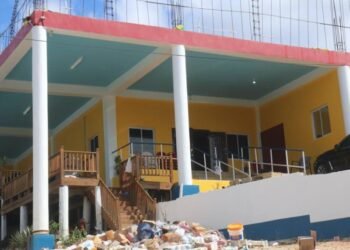
Following the recent demolition of 20 houses in Coopers Pen, Trelawny, Prime Minister Dr Andrew Holness announced on August 17 that the Government will develop a programme to address irregularly settled communities.
According to the Jamaica Information Service, the proposed programme would seek to formalise and regularise these communities while preventing further squatting. The prime minister was also clear that squatting is wrong, while acknowledging that every Jamaican should have an equal opportunity to access land and housing.
That position is reasonable. Jamaica cannot encourage the unlawful occupation of private or public land, and any serious response must include prevention. However, the announcement raises an unavoidable question: What happened to the programme, policy framework and implementation work the government has been developing for years?
This is not a problem that suddenly appeared in 2026. In the 2020 Throne Speech, the Government committed to completing the National Squatter Survey to determine the extent of squatting and provide information to guide completion of the National Squatter Management Policy and Implementation Plan. In February 2021, the Throne Speech again reported that work had progressed on the policy and implementation plan, which was intended to coordinate a programme to gradually reduce and eventually eliminate squatting.
By December 2021, the process appeared significantly advanced. JIS reported that the second draft of the National Squatter Management Policy was expected to be submitted to Cabinet by the end of January 2022, together with an implementation plan and budget. Stakeholder consultations had already taken place, and 30,097 surveys had been completed across eight parishes, covering 273 informal settlements and approximately 100,000 people.
There was also institutional machinery dedicated specifically to the problem. The government’s own National Squatter Management Policy states that a Squatter Management Unit was established in 2006 to coordinate policy development and actions to address squatting (Ministry of Economic Growth and Job Creation [MEGJC], 2021). In May 2022, the government further reported that the National Housing Trust had provided $37.8 million towards the National Squatter Survey and that a database containing detailed information on hundreds of settlements had been developed.
This makes the prime minister’s latest announcement difficult to accept without further explanation. If we had a specialised unit, a national survey, tens of thousands of completed questionnaires, a database, stakeholder consultations, a second draft policy, an implementation plan and a proposed budget, why are Jamaicans being told in 2026 that the government will now develop a programme?
The question is particularly important because the government had already identified many of the solutions. Its policy framework speaks not only about preventing squatting, but improving living conditions in existing settlements, facilitating security of tenure and promoting sustainable land use. As far back as 2021, Prime Minister Holness himself said that it was not enough for government simply to declare that illegal settlement must end; Jamaicans must be provided with legitimate means to own land.
That is precisely the balance Jamaica needs. Property rights must be protected, but enforcement cannot substitute for housing policy. Demolition may resolve an immediate dispute over occupation; it does not resolve the circumstances that cause thousands of Jamaicans to seek shelter through informal settlement in the first place.
Recent events make the need for answers urgent. Within months, communities in Mount Olivet, St Ann; Stokes Hall, St Thomas; and Coopers Pen, Trelawny have confronted demolition or attempted demolition. Against that backdrop, announcing another programme without accounting for the work already undertaken risks sounding less like a new solution and more like another restart.
The government should therefore tell Jamaicans what became of the National Squatter Management Policy and Implementation Plan. Was the second draft submitted to Cabinet in 2022 as announced? Was it approved? What recommendations emerged from the surveys? How many settlements identified for regularisation have actually been regularised? What has the Squatter Management Unit accomplished, and what additional resources or legislative changes are required?
These are not partisan questions. They are questions of governance, continuity and accountability. Jamaicans have already invested time and public resources into studying this problem. Communities participated in surveys and consultations on the understanding that the information would help shape solutions.
The country does not need to keep rediscovering a problem it has studied for years. If the existing policy requires revision, revise it. If it requires legislation, bring the legislation. If implementation requires funding, tell the country what it will cost and establish a timetable.
After years of policies, surveys, consultations and promises, Jamaicans do not simply need another programme to be developed. They need the programme to work.
Peta-Gay Ferguson is the general secretary of the PNP YO. Send feedback to columns@gleanerjm.com and petafergi@gmail.com