Air traffic in Peru has room to practically double in the next two decades. According to the projections of the Airports Council International for Latin America and the Caribbean (ACI-LAC), the number of passengers transported in the country would increase from around 43 million in 2025 to 95 million in 2044, to reach 100 million by 2055. With this, Peru would grow at a rate higher than the average expected for Latin America and the Caribbean.
But at a time when Lima seeks to consolidate itself as a regional connection center after the start-up of the new Jorge Chávez terminal, another factor is on the table, the transfer TUUA paid by connecting passengers and its eventual effect on the competitiveness of the airport.
Rafael Echevarne, general director of ACI-LAC, maintained that, from the association’s perspective, the collection of this fee should not represent a problem for the competitiveness of Lima, considering that airport fees in the country are competitive compared to other markets.

The International Airport Council for Latin America and the Caribbean projects that passenger traffic in Peru will go from 43 million in 2025 to 95 million in 2044 and will reach 100 million by 2055.
“The amount being charged should not be a problem for the competitiveness of the Lima hub,” said Echevarne.
The executive added that charging for transfer passengers is an existing practice in other markets, including the United States, Europe and the Middle East.
“The collection of TUUA for transfer passengers is something totally normal outside of Latin America. In the United States it is charged, in Europe it is charged, in the Middle East it is charged,” he indicated.
At the level of Latin America and the Caribbean, ACI-LAC estimates that traffic will go from the current around 800 million passengers to 1.4 billion in 2044 and 1.7 billion in 2054.
In the Peruvian case, the projected growth would take traffic from 43 million passengers in 2025 to 95 million in 2044. That is, the country would practically double its passenger movement in around two decades and would have an expansion greater than the regional average.
For Echevarne, this is a structural trend linked to economic development and the geographical characteristics of the region.
“In Latin America there is no option for aviation. Social and economic growth depends on aviation,” he said.
As he explained, the great distances, the Andes mountain range, the rivers and the jungles make air transport have a particularly relevant role in connecting the territories of the region.

Air traffic in Peru has room to practically double in the next two decades.
These perspectives will be part of the topics that will be discussed during WAGA 2026, the global airport meeting that will be held in Lima on September 28 and 29. On the 30th, an air transport summit will also be held with the participation of ACI, the General Directorate of Civil Aeronautics (DGAC), the International Civil Aviation Organization (ICAO) and the Latin American Civil Aviation Commission (CLAC).
The choice of Lima as the headquarters will allow representatives of airports, airlines, authorities and companies linked to the sector to meet in the country, in addition to discussing the connectivity and infrastructure challenges of the region.
“It is a great opportunity for Peru to accommodate the leaders of world airports,” said Echevarne.
The executive considered that the meeting will also allow us to show the progress of Peruvian airport infrastructure and collect experiences from other markets.
For Echevarne, Lima already plays the role of regional hub. The new Jorge Chávez terminal and the operation of its two runways in parallel give the capital an infrastructure that, in his opinion, allows it to compete with other connection centers.
“The step that Lima has taken with the construction of the new terminal and the new runway is very positive. Lima is now in a position, like any other airport in the world, to compete,” he said.

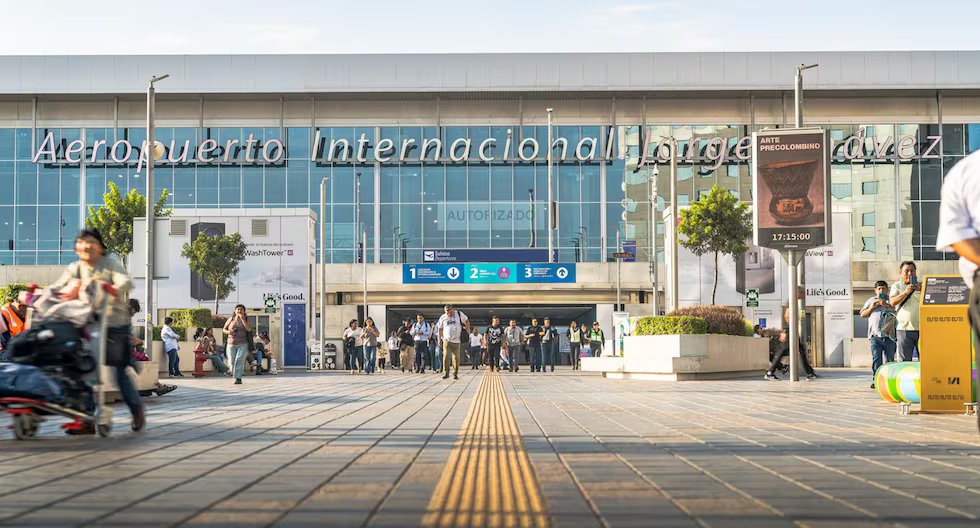
Air traffic in Peru has room to practically double in the next two decades. (Photo: Ositrán)
However, he stressed that a hub does not depend solely on airport infrastructure. It is also a business model of airlines, which decide where to concentrate their connections. He cited as examples LATAM in Lima, Avianca in Bogotá and Copa in Panama.
In that sense, he pointed out that Lima’s strength also lies in having a relevant domestic market and a city with a significant population.
“The great advantage of Peru is that it is a large, important country, with great import and export capacity and a city with a large population,” he explained.
With airport infrastructure advancing, ACI-LAC considers that another challenge is to enable airlines to decide more freely where to operate.
Currently, a good part of the international routes are conditioned by bilateral agreements between countries. Faced with this, ACI promotes greater liberalization and deregulation of air transport, so that companies have fewer restrictions to open new routes.

Air traffic in Peru has room to practically double in the next two decades.
/ ANTONIO MELGAREJO
Echevarne mentioned as a reference the ALAS agreement, signed by Southern Cone countries to move towards greater liberalization of air transport, and noted that ACI seeks to ensure that initiatives of this type can be extended to the rest of the region.
“It is not only important for airports like Lima, but also for regional airports, which is one of the great pending issues in our region,” he indicated.
In Peru, greater opening could allow regional airports to have more international flights and companies from other countries to operate within the territory.

The International Airport Council for Latin America and the Caribbean projects that passenger traffic in Peru will go from 43 million in 2025 to 95 million in 2044 and will reach 100 million by 2055.
The development of connectivity will also depend on Peru being able to advance more quickly in its regional airport projects. Echevarne considered that the country has been developing infrastructure, although processes linked to public procurement may slow down some works.
In parallel, he stated that the growth of airport offerings must be accompanied by a strategy to attract more international visitors and expand tourism promotion beyond traditional destinations.
“It is very important to work so that we go beyond the merely iconic, which in this case would be the typical Machu Picchu and Cusco, but there are many other very important destinations in Peru that are practically unknown,” he noted.
He also highlighted the potential of Peruvian gastronomy to attract tourists with greater purchasing power and generate additional travel demand. The Pope’s next visit to Peru, he added, could be a specific opportunity for international exposure, although its effect would be temporary.

The International Airport Council for Latin America and the Caribbean projects that passenger traffic in Peru will go from 43 million in 2025 to 95 million in 2044 and will reach 100 million by 2055.