Monday, May 4, 2026
    The GeoStrategic Consensus
    No Result
    View All Result
    • Login
    • HOME
    • AMERICAS
      • Argentina
      • Brazil
      • Canada
      • Chile
      • Colombia
      • Costa Rica
      • Cuba
      • Dominican Republic
      • Ecuador
      • El Salvador
      • Greenland
      • Guatemala
      • Honduras
      • Mexico
      • Nicaragua
      • Panama
      • Paraguay
      • Peru
      • United States
      • Uruguay
      • Venezuela
    • ASIA-PACIFIC
      • Australia
      • Brunei Darussalam
      • Cambodia
      • China
      • Federated States of Micronesia
      • Fiji
      • Indonesia
      • Japan
      • Kiribati
      • Laos
      • Malaysia
      • Marshall Islands
      • Mongolia
      • Myanmar
      • Nauru
      • New Zealand
      • North Korea
      • Palau
      • Papua New Guinea
      • Philippines
      • Samoa
      • Singapore
      • Solomon Islands
      • South Korea
      • Taiwan
      • Thailand
      • Timor-Leste
      • Tonga
      • Tuvalu
      • Vanuatu
      • Vietnam
    • CARICOM
      • CARICOM – Non-English
        • Haiti
        • Suriname
      • CARICOM Associates
        • Anguilla
        • Bermuda
        • British-Virgin-Islands
        • Cayman-Islands
        • Curacao
        • Turks-and-Caicos
      • CARICOM English
        • Antigua and Barbuda
        • Barbados
        • Belize
        • Dominica
        • Grenada
        • Guyana
        • Jamaica
        • Montserrat
        • Saint Kitts and Nevis
        • Saint Lucia
        • Saint Vincent and the Grenadines
        • The Bahamas
        • Trinidad and Tobago
    • EURASIA
      • Armenia
      • Azerbaijan
      • Balarus
      • Georgia
      • Kazakhstan
      • Kyrgyzstan
      • Moldova
      • Russia
      • Tajikistan
      • Turkmenistan
      • Ukraine
      • Uzbekistan
    • EUROPE
      • Albania
      • Andorra
      • Austria
      • Bosnia and Herzegovina
      • Bulgaria
      • Croatia
      • Cyprus
      • Czech Republic
      • Denmark
      • Estonia
      • Finland
      • France
      • Germany
      • Greece
      • Holy See
      • Hungary
      • Iceland
      • Ireland
      • Italy
      • Kosovo
      • Latvia
      • Liechtenstein
      • Lithuania
      • Luxembourg
      • Malta
      • Monaco
      • Montenegro
      • Netherlands
      • North Macedonia
      • Norway
      • Poland
      • Portugal
      • Romania
      • San Marino
      • Serbia
      • Slovakia
      • Slovenia
      • Spain
      • Sweden
      • Switzerland
      • United Kingdom
    • MIDDLE EAST AND NORTH AFRICA
      • Algeria
      • Bahrain
      • Egypt
      • Iran
      • Iraq
      • Israel
      • Jordan
      • Kuwait
      • Lebanon
      • Lybia
      • Morocco
      • Oman
      • Palestinian Territories
      • Qatar
      • Saudi Arabia
      • Syria
      • Tunisia
      • Turkey
      • United Arab Emirates
      • Western Sahara
      • Yemen
    • SOUTH ASIA
      • Afghanistan
      • Bangladesh
      • Bhutan
      • India
      • Maldives
      • Nepal
      • Pakistan
      • Sri Lanka
    • SUB-SAHARAN AFRICA
      • Angola
      • Benin
      • Botswana
      • Burkina Faso
      • Burundi
      • Cabo Verde
      • Cameroon
      • Central African Republic
      • Chad
      • Comoros
      • Cote d’Ivoire
      • Democratic Republic of the Congo
      • Djibouti
      • Equatorial Guinea
      • Eritrea
      • Eswatini
      • Ethiopia
      • Gabon
      • Gambia
      • Ghana
      • Guinea
      • Guinea Bissau
      • Kenya
      • Lesotho
      • Liberia
      • Madagascar
      • Malawi
      • Mali
      • Mauritania
      • Mauritius
      • Mozambique
      • Namibia
      • Niger
      • Nigeria
      • Republic of the Congo
      • Rwanda
      • Sao Tome and Principe
      • Senegal
      • Seychelles
      • Sierra Leone
      • Somalia
      • South Africa
      • South Sudan
      • Sudan
      • Tanzania
      • Togo
      • Uganda
      • Zambia
      • Zimbabwe
    • HOME
    • AMERICAS
      • Argentina
      • Brazil
      • Canada
      • Chile
      • Colombia
      • Costa Rica
      • Cuba
      • Dominican Republic
      • Ecuador
      • El Salvador
      • Greenland
      • Guatemala
      • Honduras
      • Mexico
      • Nicaragua
      • Panama
      • Paraguay
      • Peru
      • United States
      • Uruguay
      • Venezuela
    • ASIA-PACIFIC
      • Australia
      • Brunei Darussalam
      • Cambodia
      • China
      • Federated States of Micronesia
      • Fiji
      • Indonesia
      • Japan
      • Kiribati
      • Laos
      • Malaysia
      • Marshall Islands
      • Mongolia
      • Myanmar
      • Nauru
      • New Zealand
      • North Korea
      • Palau
      • Papua New Guinea
      • Philippines
      • Samoa
      • Singapore
      • Solomon Islands
      • South Korea
      • Taiwan
      • Thailand
      • Timor-Leste
      • Tonga
      • Tuvalu
      • Vanuatu
      • Vietnam
    • CARICOM
      • CARICOM – Non-English
        • Haiti
        • Suriname
      • CARICOM Associates
        • Anguilla
        • Bermuda
        • British-Virgin-Islands
        • Cayman-Islands
        • Curacao
        • Turks-and-Caicos
      • CARICOM English
        • Antigua and Barbuda
        • Barbados
        • Belize
        • Dominica
        • Grenada
        • Guyana
        • Jamaica
        • Montserrat
        • Saint Kitts and Nevis
        • Saint Lucia
        • Saint Vincent and the Grenadines
        • The Bahamas
        • Trinidad and Tobago
    • EURASIA
      • Armenia
      • Azerbaijan
      • Balarus
      • Georgia
      • Kazakhstan
      • Kyrgyzstan
      • Moldova
      • Russia
      • Tajikistan
      • Turkmenistan
      • Ukraine
      • Uzbekistan
    • EUROPE
      • Albania
      • Andorra
      • Austria
      • Bosnia and Herzegovina
      • Bulgaria
      • Croatia
      • Cyprus
      • Czech Republic
      • Denmark
      • Estonia
      • Finland
      • France
      • Germany
      • Greece
      • Holy See
      • Hungary
      • Iceland
      • Ireland
      • Italy
      • Kosovo
      • Latvia
      • Liechtenstein
      • Lithuania
      • Luxembourg
      • Malta
      • Monaco
      • Montenegro
      • Netherlands
      • North Macedonia
      • Norway
      • Poland
      • Portugal
      • Romania
      • San Marino
      • Serbia
      • Slovakia
      • Slovenia
      • Spain
      • Sweden
      • Switzerland
      • United Kingdom
    • MIDDLE EAST AND NORTH AFRICA
      • Algeria
      • Bahrain
      • Egypt
      • Iran
      • Iraq
      • Israel
      • Jordan
      • Kuwait
      • Lebanon
      • Lybia
      • Morocco
      • Oman
      • Palestinian Territories
      • Qatar
      • Saudi Arabia
      • Syria
      • Tunisia
      • Turkey
      • United Arab Emirates
      • Western Sahara
      • Yemen
    • SOUTH ASIA
      • Afghanistan
      • Bangladesh
      • Bhutan
      • India
      • Maldives
      • Nepal
      • Pakistan
      • Sri Lanka
    • SUB-SAHARAN AFRICA
      • Angola
      • Benin
      • Botswana
      • Burkina Faso
      • Burundi
      • Cabo Verde
      • Cameroon
      • Central African Republic
      • Chad
      • Comoros
      • Cote d’Ivoire
      • Democratic Republic of the Congo
      • Djibouti
      • Equatorial Guinea
      • Eritrea
      • Eswatini
      • Ethiopia
      • Gabon
      • Gambia
      • Ghana
      • Guinea
      • Guinea Bissau
      • Kenya
      • Lesotho
      • Liberia
      • Madagascar
      • Malawi
      • Mali
      • Mauritania
      • Mauritius
      • Mozambique
      • Namibia
      • Niger
      • Nigeria
      • Republic of the Congo
      • Rwanda
      • Sao Tome and Principe
      • Senegal
      • Seychelles
      • Sierra Leone
      • Somalia
      • South Africa
      • South Sudan
      • Sudan
      • Tanzania
      • Togo
      • Uganda
      • Zambia
      • Zimbabwe
    No Result
    View All Result
    Agentially
    No Result
    View All Result
    Home EUROPE Albania

    Parliament Blocks Balluku Arrest and Puts Justice on Trial

    The Analyst by The Analyst
    April 26, 2026
    in Albania
    Parliament Blocks Balluku Arrest and Puts Justice on Trial


    Change font size:


    READ ALSO

    Tensions for the election of the head of the DP in Korça, Salianji reacts: Democrats are brave, not sheep! The Rama-Berisha regime wants to forgive Niko Peleš

    VIDEO/ From tears to applause, they lifted him up as a hero! After the party with the world music star, Anis Mehmeti confesses: If you only knew what I’ve been through…

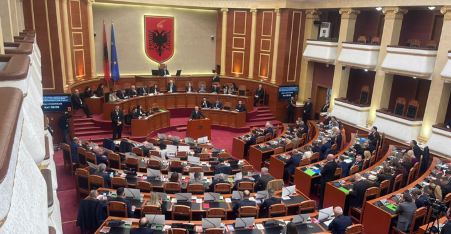
    TIRANA, March 12, 2026 – Albania’s Parliament, dominated by Prime Minister Edi Rama’s Socialist Party, has refused to authorize the arrest of former Deputy Prime Minister Belinda Balluku, blocking a request by the Special Prosecution Against Corruption and Organized Crime, SPAK, and triggering one of the gravest confrontations yet between political power and the justice reform the government once championed as a historic achievement.

    With 82 votes against SPAK’s request, the ruling majority shielded one of the government’s most powerful former officials from a prosecutorial move that had become a crucial test of whether Albania’s anti-corruption institutions are truly free to act when investigations reach the very top of power. Balluku, the former deputy prime minister and former minister of infrastructure and energy, is under investigation on charges related to repeated violations of equality in public tenders. Prosecutors had sought her arrest after months of legal, political and institutional maneuvering. Instead, Parliament closed ranks around her.

    The vote was not simply a refusal to grant one prosecutorial request. It was the culmination of a wider campaign of political and legal protection. The effort to shield Balluku had begun well before Thursday’s session, as the government resisted prosecutorial pressure, challenged restrictive measures against high-ranking officials, and backed legal changes widely seen by critics as designed to protect members of the executive from suspension or coercive measures before they leave office. What followed was a sustained attempt to politically contain the case, ending with Parliament itself becoming the last and most decisive barrier between Balluku and SPAK.

    That is why the Balluku affair now goes far beyond Balluku herself. It has become a defining test of whether Albania’s justice reform still applies when prosecutors move against members of the governing elite.

    Inside Parliament, Balluku was absent and waived her right to address lawmakers. Her defense was instead carried by Socialist deputies, most notably Ulsi Manja, who argued that prosecutors’ claims over the risk of evidence tampering no longer stood because Balluku had already been removed from executive office. The opposition countered that SPAK’s request was legally grounded and that Parliament should not substitute itself for the courts, but simply allow the justice system to proceed.

    This is where the controversy becomes institutionally explosive. Critics argue that the Socialist majority did not behave as a legislature safeguarding constitutional procedure, but as a political shield acting simultaneously as advocate and judge for one of its own. Rather than limiting itself to the formal question of whether the prosecution had submitted a valid request, the majority entered into the substance of the case, weighing evidence, assessing the necessity of arrest, and effectively judging the prosecution’s reasoning. Those are functions normally reserved for courts, not for a parliamentary majority bound by party discipline and obvious conflict of interest.

    One of the clearest formulations of that criticism came from university professor Blendi Kajsiu, who argued that the core problem was not merely what Socialist lawmakers said, but the position from which they said it. “Are they speaking as lawyers or as judges in Balluku’s case?” he asked, adding that “it is absurd to exercise these two functions simultaneously.” In Kajsiu’s reading, the ruling majority crossed a basic institutional line by transforming itself into both the political defense team of a colleague and the body deciding whether prosecutors should be allowed to move forward.

    The result is a deeply damaging perception that the ruling party has converted Parliament into a barrier against judicial action. For a government that for years claimed to be the political guarantor of justice reform, the reversal is stark. Rama repeatedly insisted in the past that the Socialist Party would not serve as a shield for officials facing justice. In the Balluku case, that promise collapsed in full public view.

    The symbolism of the day only reinforced that perception. Parliament was surrounded by a heavy police presence as opposition supporters gathered outside with anti-corruption slogans and calls for Albania to become “like Europe.” Inside, the ruling majority delivered precisely the outcome it had signaled in advance. The message was unmistakable: when anti-corruption justice reaches the political center of gravity, politics still has the means to push back.

    Opposition figures reacted furiously, describing the vote as proof that Rama was protecting not only Balluku, but also the wider system of power and interests tied to the government. Former president and opposition leader Sali Berisha moved quickly to turn the parliamentary vote into a broader political mobilization, declaring, “All Albania in Tirana. Let us continue our peaceful uprising until victory.” The statement was designed to frame the Balluku case not as an isolated legal episode, but as evidence of a government that, in the opposition’s view, now openly stands between justice and accountability.

    Independent criticism, however, did not come only from opposition politics. Kajsiu also argued that Parliament’s role in such a case should have been formal rather than obstructive, insisting that questions such as the proportionality of arrest, the weight of evidence, or the risk posed by the accused belong in court, not in the legislature. In that sense, the Balluku affair has intensified fears that Parliament was used not to preserve constitutional balance, but to block judicial accountability.

    The criticism also extended beyond party politics and academia. Ten Albanian civil society organizations issued a joint statement expressing concern over Parliament’s refusal to approve SPAK’s request, calling the case an important test for democratic institutions, equality before the law, and the credibility of justice reform. They argued that parliamentary immunity “cannot and should not serve as a shield against the application of security measures within the framework of a criminal proceeding” and stressed that immunity exists to protect a deputy’s freedom of speech and vote, not to obstruct a full and effective criminal investigation. In one of the statement’s strongest lines, the organizations said that “the Albanian public expects institutions to prove that no one is above the law and that justice reform remains an irreversible process on the country’s European path.” Signed by groups including the Albanian Helsinki Committee, IDM, ISP, AIS and others, the declaration broadened the reaction well beyond partisan conflict and showed that concern over the Balluku case has spread deeply into the civic sector.

    What gives the case even greater significance, however, is the unusually sharp international reaction. Western embassies and European partners made clear that the handling of high-level corruption cases remains central to Albania’s EU aspirations. Before the vote, the British Embassy stressed that “Parliamentary immunity should protect democratic processes; it should not be an obstacle to equal accountability before the law.” That statement directly challenged the argument that parliamentary protection could be used to stop a prosecutorial measure in such a politically sensitive case.

    Germany’s response was even more consequential because it linked the Balluku affair directly to the EU accession process. The German position underlined that “an indispensable condition for making progress in this merit-based process is the effective prosecution of corruption, including in high-level cases.” Berlin then made its expectations unmistakably clear: “Our clear expectation is that, in such cases as well, prosecution through the justice system should be able to proceed swiftly and without obstruction.”

    The Netherlands delivered a similar warning, saying that “a key requirement for progress in this merit-based process is the effective prosecution of corruption, including at the highest levels,” and adding that “we clearly expect that, in such cases, the justice system should be able to act swiftly and without obstacles. Albanian politics remains responsible for guaranteeing this process.”

    The European Commission also signaled that it had taken careful note of the confrontation. Its message was pointed and strategically important: “Ensuring an enabling environment for SPAK to carry out its work effectively is essential to credibly support Albania’s progress toward EU membership.” That formulation matters because it frames the issue not as a narrow domestic dispute over procedure, but as a broader question of whether Albania is preserving the political and institutional conditions necessary for justice reform to function credibly.

    Taken together, these reactions amount to far more than routine diplomatic concern. They suggest that the Balluku case is being viewed internationally as a stress test for Albania’s commitment to the rule of law. For years, justice reform has been one of Tirana’s strongest claims to progress before Brussels. But if that reform is seen as effective only until it reaches the upper levels of political power, its credibility may begin to erode both domestically and internationally.

    Rama responded defiantly, entering into a rare public clash with international partners. In defending Parliament’s decision, he argued that “the dignity of parliamentarians is not material for socio-political experiments,” portraying criticism from abroad as a form of pressure that crossed constitutional boundaries. He went further by suggesting that the Balluku investigation should continue “undisturbed, neither obstructed nor pushed by SPAK, by factors outside the boundaries of an independent judicial power.” In perhaps the clearest summary of his position, Rama insisted that “SPAK does not have a blank cheque to arrest politicians.”

    Those remarks are politically revealing. They show that Rama is no longer merely defending a specific parliamentary choice, but is openly challenging the broader premise that anti-corruption prosecutors should be able to move against high-ranking political figures without political mediation. His argument is that Parliament acted as any democratic legislature would in defense of constitutional dignity. His critics, however, see the opposite: a prime minister using the force of the majority to stop justice at the precise moment it reached the government’s core.

    That is why the Balluku affair matters beyond one politician and one legal file. It has exposed the unresolved contradiction at the heart of Albanian politics. Nearly all major actors publicly support justice reform, judicial independence and the fight against corruption. Yet when those same principles begin to threaten the political center of gravity, support becomes conditional, procedural, or openly resistant.

    The consequences of Thursday’s vote may therefore extend far beyond the immediate case. Domestically, it is likely to deepen public skepticism over whether senior officials are truly equal before the law. Politically, it gives the opposition a powerful rallying point at a moment of rising confrontation. Internationally, it raises the risk that Albania will be seen as wavering on one of the core tests of EU-oriented state building: whether high-level corruption can be investigated and prosecuted without political obstruction.

    The case against Balluku will continue in one form or another. But Parliament’s decision has already fixed its place in Albania’s political trajectory. This was not simply a vote on one prosecutor’s request. It was a moment that forced the country to confront a much larger question: whether democratic institutions are being used to protect accountability, or to prevent it.

    If Albania’s justice reform was meant to end the era of political untouchability, the Balluku vote has shown how fragile that promise still is.



    Source link

    Related Posts

    Tensions for the election of the head of the DP in Korça, Salianji reacts: Democrats are brave, not sheep! The Rama-Berisha regime wants to forgive Niko Peleš
    Albania

    Tensions for the election of the head of the DP in Korça, Salianji reacts: Democrats are brave, not sheep! The Rama-Berisha regime wants to forgive Niko Peleš

    May 4, 2026
    VIDEO/ From tears to applause, they lifted him up as a hero! After the party with the world music star, Anis Mehmeti confesses: If you only knew what I’ve been through…
    Albania

    VIDEO/ From tears to applause, they lifted him up as a hero! After the party with the world music star, Anis Mehmeti confesses: If you only knew what I’ve been through…

    May 4, 2026
    The car hits three minors in Durrës, two children are run over by the vehicle! The moment when the driver gets off and leaves the scene
    Albania

    The car hits three minors in Durrës, two children are run over by the vehicle! The moment when the driver gets off and leaves the scene

    May 4, 2026
    FOTOLAJM/ He killed two children and seriously injured another in Durrës, the driver of the “Benz” Nikoll Radaçi was found to be drunk at the wheel
    Albania

    FOTOLAJM/ He killed two children and seriously injured another in Durrës, the driver of the “Benz” Nikoll Radaçi was found to be drunk at the wheel

    May 4, 2026
    VIDEO/ 5 goals and an extraordinary spectacle at “Old Trafford”, Manchester United wins the battle with Liverpool!
    Albania

    VIDEO/ 5 goals and an extraordinary spectacle at “Old Trafford”, Manchester United wins the battle with Liverpool!

    May 3, 2026
    The “single” showbizz girls start their vacations after separating from their partners! Here are the luxury destinations they chose
    Albania

    The “single” showbizz girls start their vacations after separating from their partners! Here are the luxury destinations they chose

    May 3, 2026
    Next Post
    The phones of 300 important personalities were hacked with ‘phishing’, Germany points the finger at Moscow for the cyber attacks on “Signal”!

    The phones of 300 important personalities were hacked with 'phishing', Germany points the finger at Moscow for the cyber attacks on "Signal"!

    POPULAR NEWS

    Justin Bieber fans flood Coachella festival for headlining show – Entertainment

    Justin Bieber fans flood Coachella festival for headlining show – Entertainment

    April 20, 2026

    Over 600 flee homes as Army, NPA clash in Negros Occidental

    April 21, 2026

    Ex-DPWH exec recalls P800-M ‘delivery’ to Zaldy Co 

    April 20, 2026

    Former PM Paluckas suspends party membership, to waive immunity over criminal probe

    April 24, 2026
    Pres. Ali challenges CARICOM to transform into health research powerhouse

    Pres. Ali challenges CARICOM to transform into health research powerhouse

    April 23, 2026

    EDITOR'S PICK

    ‘Doeman’ stabbed to death during treatment of patient in trance – the True Time

    ‘Doeman’ stabbed to death during treatment of patient in trance – the True Time

    April 30, 2026
    Jacmel paralyzed by mobilization against insecurity

    Jacmel paralyzed by mobilization against insecurity

    April 18, 2026
    Only 18 percent of teachers in Serbia are satisfied with their salary: Where are we compared to the international average? – Society

    Only 18 percent of teachers in Serbia are satisfied with their salary: Where are we compared to the international average? – Society

    April 30, 2026
    Porsche gives up stake in Bugatti

    Porsche gives up stake in Bugatti

    April 28, 2026

    Recent Posts

    • KPMG and EY demote partners in end of job-for-life model in UK – The Irish Times
    • ‘It just seems bizarre’ – council intervenes as public green where children play is fenced off without permission
    • Rolands Zagorskis comments on rumors about health and poverty
    • Culture shock in Lithuania: an Instagram star was stunned by one of our laws

      © 2026 Agentially - Navigating shifting sovereignties and global risk .

      Welcome Back!

      Login to your account below

      Forgotten Password?

      Retrieve your password

      Please enter your username or email address to reset your password.

      Log In
      No Result
      View All Result

        © 2026 Agentially - Navigating shifting sovereignties and global risk .

        This website uses cookies. By continuing to use this website you are giving consent to cookies being used. Visit our Privacy and Cookie Policy.