The Ministry of Foreign Affairs of Panama categorically reaffirmed that the conduct of the country’s foreign policy falls exclusively on the Executive Branch, in response to the recent diplomatic efforts and rapprochements promoted by a group of deputies of the National Assembly with the government of Taiwan.
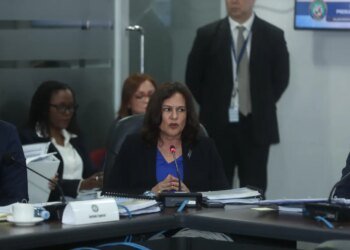
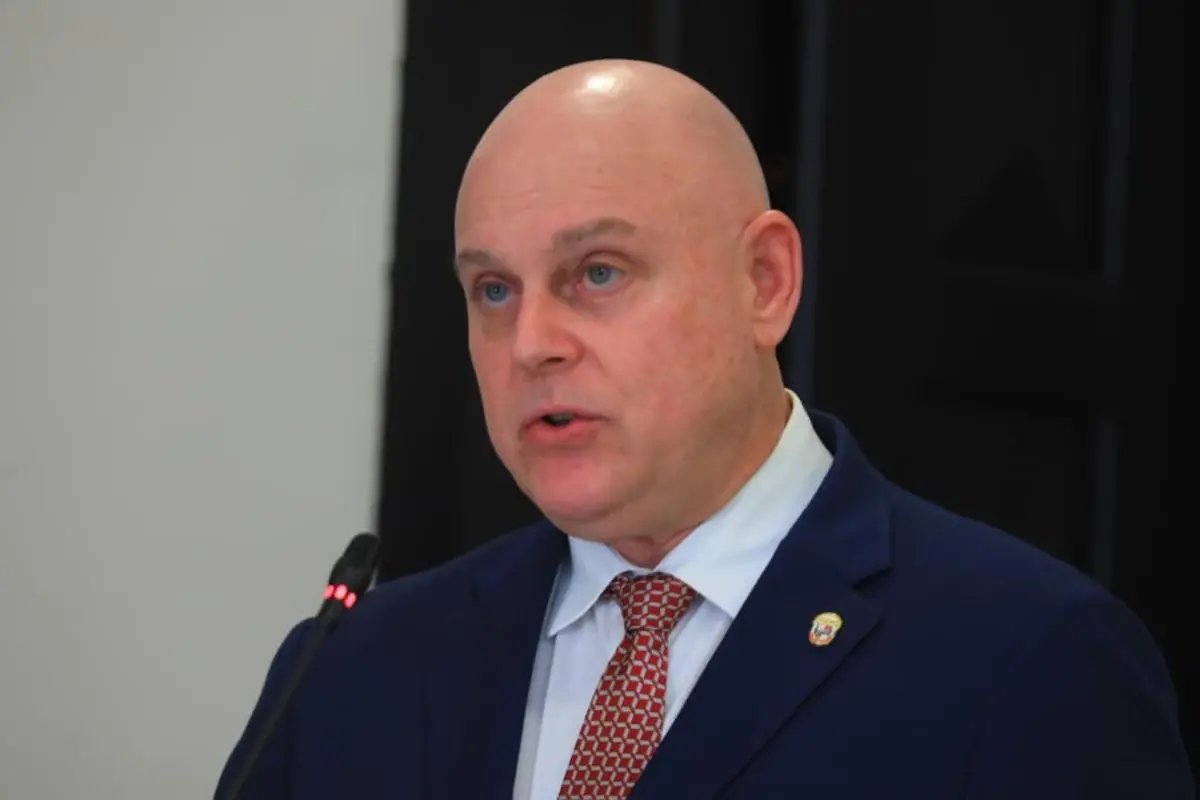
Carlos Guevara Mann, Vice Minister of Multilateral Affairs and Cooperation of the Panamanian Foreign Ministry, made clear the separation of constitutional functions between the powers of the State and ratified the validity and solidity of the bilateral ties that the country maintains with the People’s Republic of China.
“Panama’s foreign policy, as stated in the Constitution, is an area of action of the President of the Republic, José Raúl Mulino, with the participation of the Foreign Ministry. So the guidelines dictated by the president are those that are applied in international relations,” the vice minister emphasized, this Monday, during the 77th Anniversary of the Founding of the People’s Republic of China and the beginning of the mission of the ambassador, Zhang Xiangyan.
When approached about the position and actions of the deputies in the Legislative Body regarding Taiwan, Guevara Mann recalled that Panama operates under a democratic system with strict division of powers.
“Foreign policy is executed through the Chancellery and the actions of the Assembly correspond to the deputies; it is a different body from the State and the Executive has no interference in the actions of that body, as vice versa,” he commented.
Within the framework of the diplomatic relations established between Panama and the People’s Republic of China since 2017—which have now reached almost a decade of formal ties—the Foreign Ministry extended its congratulations to the Beijing government, highlighting that mutual relations are based on respect, international law and solidarity.
Guevara Mann highlighted the commercial and logistical weight that the Asian power represents for the Panamanian economy, pointing out that China is a first-rate user of the Panama Canal, a pillar of the country’s international maritime services and the main supplier and commercial interconnection for the Colon Free Zone.
“It is convenient for Panama to have a relationship with the main global players and in that sense we relate with the People’s Republic of China, as well as with other countries in the world (…). We want to strengthen and strengthen these ties on the basis of mutual respect, which is fundamental for us, and shared values”he indicated.
Likewise, he highlighted the historicity of these links, pointing out that the presence of the Chinese community in the isthmus dates back to the 19th century, accumulating more than 170 years of significant contributions to the economic and cultural development of the nation.
The Foreign Ministry official also highlighted that, under the current administration, key issues on the bilateral agenda have been unlocked.
He recalled that in recent days, a Panamanian delegation visited the People’s Republic of China, a trip in which important progress was achieved and obstacles were overcome in the maritime and port areas.
“In this administration, a maritime and port dispute has been resolved that is important to highlight (…). We hope that this situation can be maintained over time,” the diplomat noted.
Regarding the global political panorama and possible changes in the foreign or commercial policy of the United States, Guevara Mann maintained that the Panamanian position remains firm and independent.
“There is certainly an important variation in the correlation of forces in American trade, but that is independent of the relationship we have with the People’s Republic of China and other nations. We have maintained our position of maintaining cordial relations with global development actors,” he concluded.