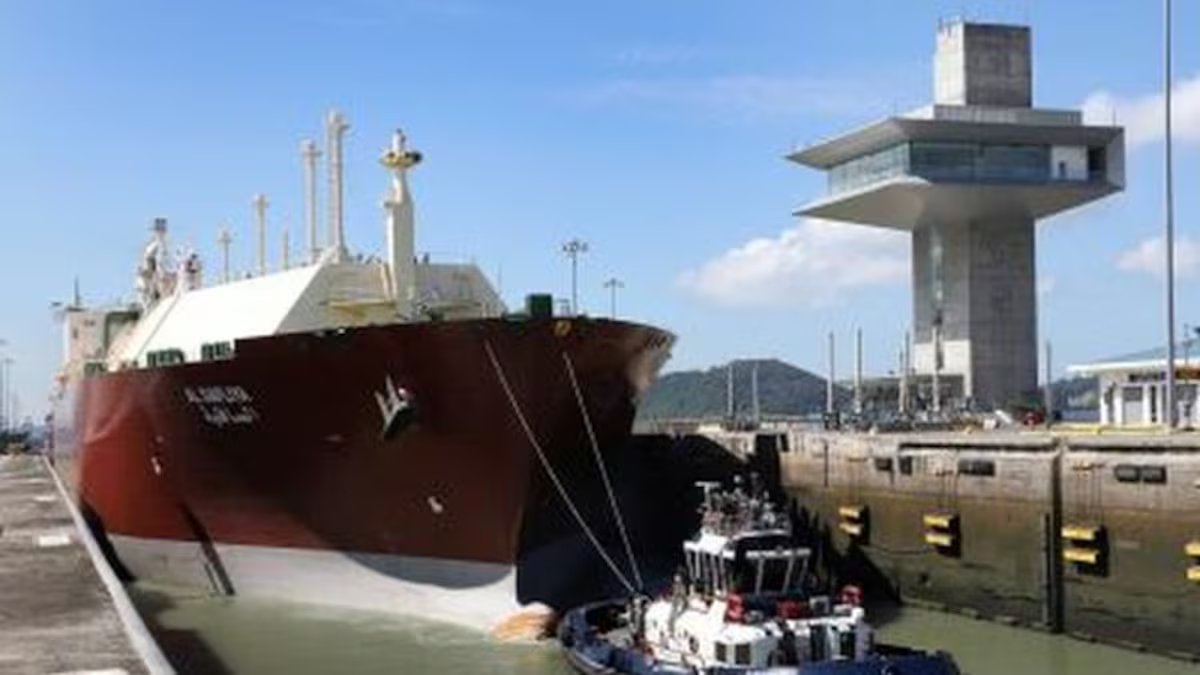
The interoceanic route registers an increase of 3.6% in the crossing of deep-draft vessels between October 2025 and March 2026. The container segment added 1,422 crossings and liquefied natural gas crossings are beginning to recover with 33 transits.
The transit of deep draft vessels through the Panama Canal continues to accumulate positive figures.
The advance of imports due to the tariffs imposed by the United States, added to an increase in transits of Liquefied Natural Gas vessels between the United States and Asia and a greater flow of imports in the region, has favored activity through the Panamanian interoceanic route in the last six months.
At the end of the first half of fiscal year 2026, a period from October 2025 to March of this year, 6,284 accumulated high-profile transitswhich represented an increase of 3.66% in contrast to the 6,062 crossings from the same period in 2025.
The administrator of the Panama Canal Authority, Ricaurte Vasquezhad anticipated in March that the figures for these first months were high and that they will continue that way due to changes in international routes due to the conflict in the Middle East.
“This year we have had between 36 and 38 daily transits. Cargoes such as liquefied natural gas (LNG), which come from Qatar, are likely to be diverted to the United States, generating more demand for the Canal”Vásquez commented on March 20 of this year.
Panama Canal expects greater transit of fuel ships due to crisis in the Middle East
The figures prove it, in the accumulated at the end of March, Transits of ships that transported Liquefied Natural Gas (LNG) totaled 33five more than those registered until February of this year and an increase of 73.68% in contrast to the 19 transits accumulated in the first half of 2025.
The administrator indicated that more LNG tanker reserves were expected given the situation in the Persian Gulf. “In a few weeks, we will be seeing a daily transit of these vessels”he added.

The flow of boats container ship It also grew in the last six months of fiscal year 2026 for the Canal. The Panamanian route registered 1,422 container ship transits, 52.08% more than what was reported between October 2024 and March 2025 when the accumulated number reached 935 crossings. Furthermore, the majority of these transits are recorded in the Neopanamax locks of the expanded Canal (1,016).

The segment bulk carrier is another of the Canal’s protagonistswith a cumulative total of 1,176 crossings in six months, compared to 1,113 in the same period of fiscal year 2025. In one year they increased 5.6%.
As for the chemical tankers, other colossi of the sea that transit through Panamanian waters, the transits totaled 1,190an increase of 8.47% in contrast to 1,097 crossings accumulated until March 2025.
Gas carriers, on the other hand, reported a slight decrease of 0.32% in the last year. They accumulate a total of 929 transits in the six months until March 2026, compared to the 932 registered until March 2025.
The RoRo segment or vessels that transport rolling cargoadded 451 transits in six months, 7.38% increase in contrast to the 420 in the same period of 2025.

Vessels that transport fuel such as oil or also called tankers, registered a cumulative of 256 transits in the first half of 2026, 16.89% more than the 219 registered in the six months of fiscal year 2025.

In contrast, the transit of deep-draft passenger vessels such as cruise ships was lower, going from 173 in the first half of 2025 to 160 crossings in the same period of this year. However, the Canal reports that larger cruise ships transited.
Events in March
The monthly report that the Canal makes to clients specifies that in the month of March the interoceanic waterway recorded a daily average of 37.03 transits of ocean vesselswith a total of 1,148 vessels mobilized in the month adding the most important ones and the smallest ones.

The largest proportion corresponded to vessels between 91 and less than 107 feet wide, which represented 55.75% of the total, followed by neopanamax vessels with 26.31%.
Regarding operation times, the average traffic within the Canal was 10.67 hourswhile the total time in Canal waters reached 9:39 p.m.. The flow of arrivals remained at an average of 37.2 ships per day.
The report also notes high demand for reservation slots, with usage levels exceeding availability in several categories.
Neopanamax vessels reached a utilization of 113.73%while regular ships recorded a 114.17%which shows pressure on operational capacity.
In terms of maintenance, the Canal Authority reported on a series of scheduled works in the Panamax and Neopanamax locks. between March and September 2026.
“These tasks seek to guarantee the continuity and efficiency of the service, although they imply temporary adjustments in traffic capacity.”
On the other hand, the entity announced modifications in the prequalification documents for strategic projects such as the energy corridor and the container transshipment terminals in Corozal and Telfers.
ACP extends deadlines for bidding for ports and gas pipeline
The changes include the extension of deadlines for consultations until April 8 and for the delivery of documents until June 8, 2026.