A delegation of Pacific nuclear survivors joined Indigenous advocates in Canberra on Wednesday to call on Prime Minister Anthony Albanese to sign and ratify an international disarmament agreement which aims to comprehensively ban and eliminate nuclear weapons in the region.
Members of the Parliamentary Friends of the Treaty on the Prohibition of Nuclear Weapons invited members of the Pacific civil society to Australia’s Federal parliament to lay bare the human and environmental toll of tests over several decades.
The Australian parliamentary friends forms a bipartisan, cross-party forum, which currently is comprised of 47 of the 226 MPs across both houses and from all sides of politics, who meet and interact with nuclear disarmament and non-proliferation proponents to discuss treaty matters and their ongoing issues.
They were also reportedly joined this week by Anangu-Yankunytjatjara woman and second-generation nuclear test survivor, Karina Lester, who recently spoke with National Indigenous Times about the impact on her family of the 1953 British nuclear tests at Emu Field in remote South Australia.
She urged mobs that were “tested on, mined on, threatened with nuclear waste dumps or feared the impacts on their people, country and culture” to find their voice and speak up at the public inquiry that had commenced last month in Melbourne.
Australia has not yet signed or ratified the treaty which the United Nations first established as a resolution in 2017.
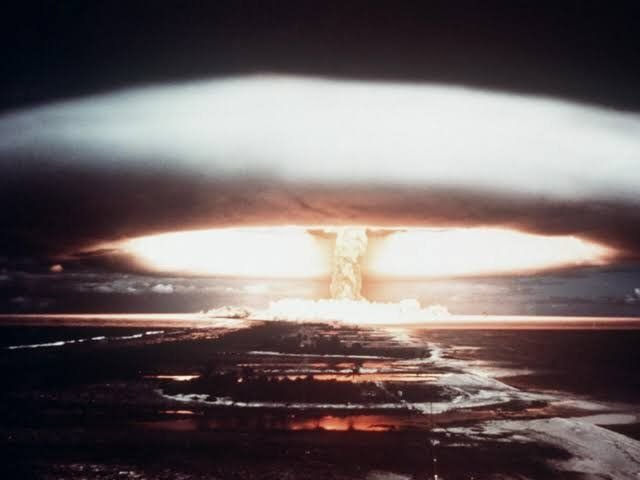
The invitation to multiple Pacific islander representatives coincided with two significant anniversaries falling on the first two days of the month: the 80th year of the first US test detonation on Bikini Atoll in the Marshall Islands followed by the 60th year of the first French test detonation at Mururoa Atoll, Mā’ohi Nui in colonial French Polynesia.
‘Powerful nations can have consequences that last for generations’
Pacific civil society members lined up to plea to Australian MPs from the Labor Party, the Liberal-National coalition, the Greens and Independents.
“The experiences of the Marshall Islands and other Pacific communities remind us the decisions made by powerful nations can have consequences that last for generations,” the spokesperson for a concerned Marshall Islands Student Association, Samuel Barton, told the gathering.
“We ask the world to remember our history, stand with survivors, pursue nuclear disarmament, and place human dignity, justice, and peace at the centre of global decision-making.”
The UN general assembly first decided nine years ago to convene a conference to negotiate a legally-binding instrument to prohibit the use of nuclear weapons.
The Australian government announced in 2023 that it was “considering the treaty systematically and methodically, as part of (Australia’s) ambitious agenda to advance nuclear non-proliferation and disarmament”.
According to the Labor government’s national defence strategy published two years ago, “Australia’s best protection against the increasing risk of nuclear escalation is (the) US extended nuclear deterrence and the pursuit of new avenues of arms control”.
But this implicit endorsement of nuclear weapons is incompatible with the Treaty on the Prohibition of Nuclear Weapons, the government has also admitted.
‘Australia must match its history with urgent new action’
Australia is the only state party to a nuclear-weapon-free zone treaty in any region of the world that has claimed to be protected by the nuclear weapons of another state.
Reverend James Bhagwan, General Secretary of the Pacific Conference of Churches, said that in a region of increasingly militarisation that signing the treaty “would be a clear commitment to a nuclear-free free Pacific and a genuine ocean of peace”.
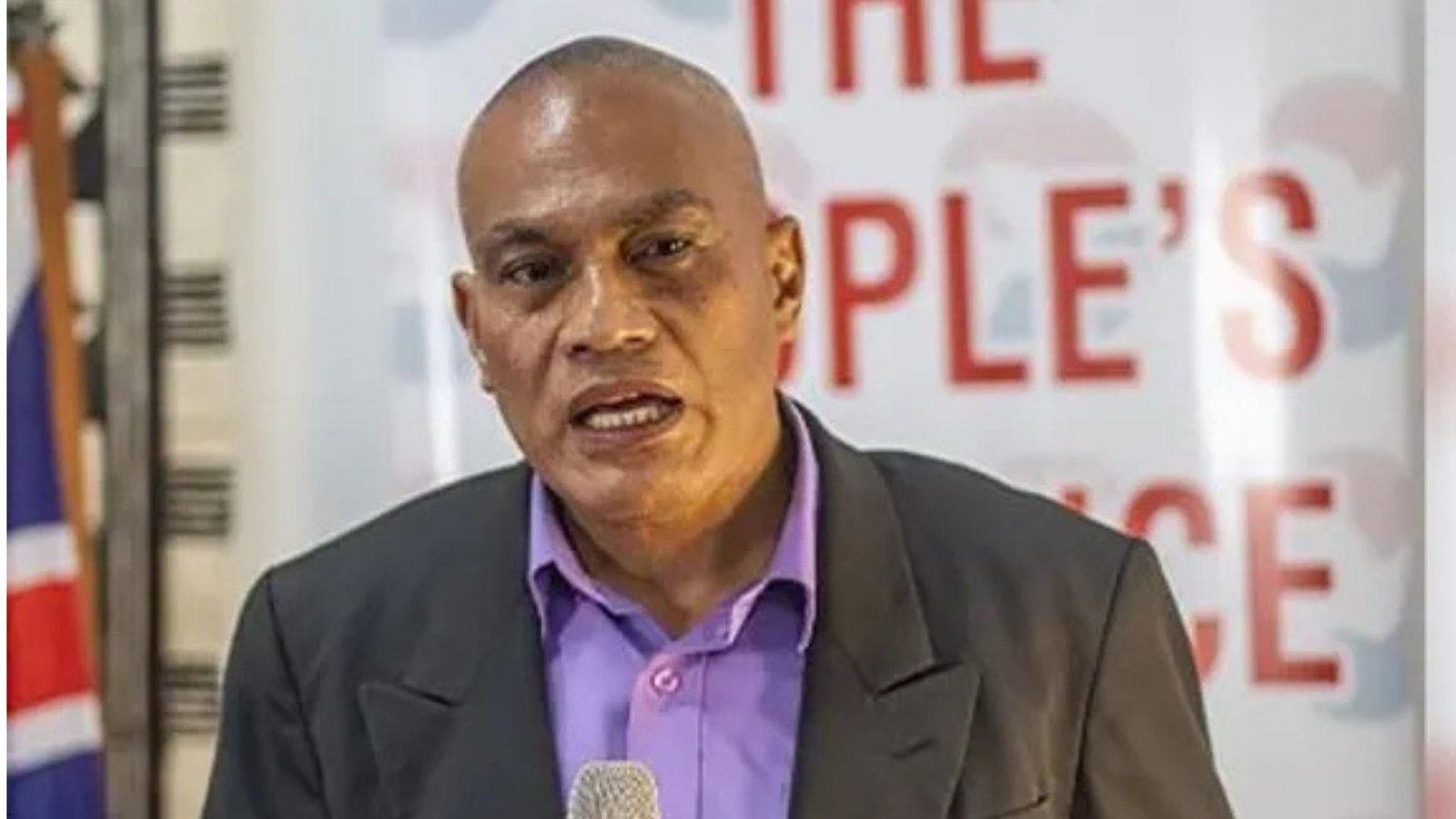
Merewalesi Tuilau, speaking on behalf of the Fiji Veterans and Families Association, added the Pacific “demands and deserves complete freedom from nuclear weapons and their threat – not simply management, but total elimination.
“Australia has shown it can lead,” Mr Tuilau said, “Australia must match its history with urgent new action”.
‘We want nuclear weapons testing to be relegated to history’
The anniversaries of the dual detonations in the Pacific were acknowledged after Labor member for Macquarie Susan Templeton put forward a motion to push the government to signing the treaty ahead of its ALP national conference later this month.
“With the legacy of nuclear testing still felt deeply in Australia, our region, right across the world, we want nuclear weapons testing to be relegated to history,” she said.
“I will continue to advocate for the importance of sustained international commitment to nuclear non-proliferation, including the Treaty on Nuclear Non-Proliferation and also the Treaty on the Prohibition of Nuclear Weapons.”
The Canberra event was a part of a wider lobby and advocacy tour that also took in Sydney and Melbourne, sharing heartfelt testimony from Indigenous communities affected by nuclear testing and calling for a Pacific region that is “decolonised, demilitarised, de-nuclearised and decarbonised”.
Articles 6 and 7 of the Treaty on the Prohibition of Nuclear Weapons call on “victim assistance, environmental remediation, and international cooperation and assistance” to address ongoing and unresolved humanitarian, human rights, and environmental impacts from nuclear weapons.