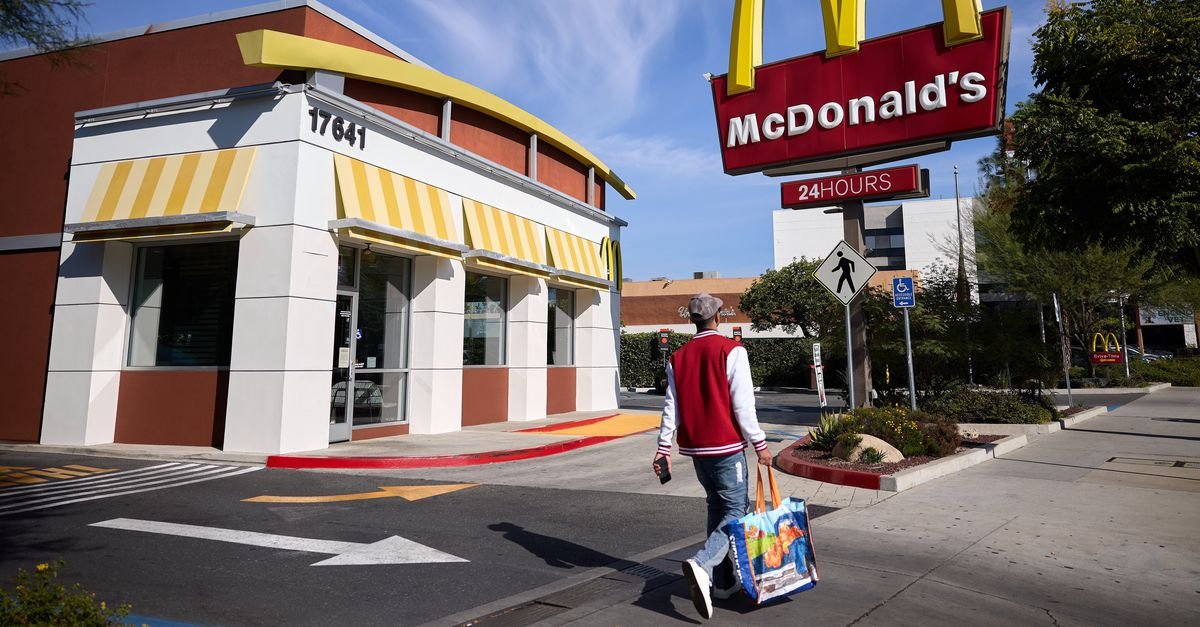
How do you get rich in today’s America? Founding an artificial-intelligence startup may look tempting, but most fail. Getting an advanced degree and slogging it out as a corporate lawyer or financier was once a reliable path to wealth, but now looks threatened by ah. Perhaps you should look instead to the company that has plausibly created more millionaires than any other in history: McDonald’s. Most of its outlets are franchises, run by independent firms that pay royalties to the brand—and often make a fortune. If fast food isn’t your thing, don’t fear: the franchising model can be found everywhere from hotels to Pilates studios.
They may not have the social cachet of a Wall Street corner office, but franchises make many Americans wealthy. If reports are to be believed, the country has even recently minted its first billionaire franchisee. They also boost growth. More countries should try creating a franchise economy—and America should protect the one it has from overregulation.
Franchises have long been sneered at. As the model spread in the 1970s and 1980s it was derided by economists as little more than a cheap growth tactic in which franchisees stumped up the capital to open new outlets. Critics claim that franchisees are not “true” entrepreneurs, in the mold of Elon Musk or Steve Jobs, but merely glorified store managers obsessed with the illusion of being their own boss. Yet franchising has come to account for a steadily growing share of American business: there are almost 850,000 franchise outlets, run by a quarter of a million business owners. One in eight businesses with at least one employee in America is a franchise—roughly double the share in its closest international rivals, such as Japan and Germany.
Franchising works because of the deep laws of economics: it productively aligns incentives and divides labor. It crops up when a business requires a lot of employees to be geographically dispersed; when monitoring staff would be hard or expensive; and when knowledge of how local markets work is important. In such conditions it makes sense to divide responsibility between a franchisor, who focuses on the brand and the product, and a franchisee, who adapts to local conditions.
The rest of the world can learn from the success of this model. Franchises thrive in part because of the strengths of American capitalism. Strong intellectual-property rights protect franchise brands, while deep capital markets make it easy for franchisees to borrow.
But franchises have also benefited from good regulation. A vast amount of public information exists about how franchise models work. That is because franchisors must disclose how they make money from franchisees, provide estimates of startup costs and ongoing fees, and reveal any legal issues they are facing. Many also disclose in detail the financial performance of existing franchisees. Franchising flourished after rules mandating transparent disclosure were introduced in 1979. Since 1986 the number of franchise outlets has almost tripled.
More recent attempts to regulate franchising have been less wise. Critics say franchising exploits and evades America’s weak labor protections, for example by making it difficult for workers to unionize. Such critics would make franchisors joint employers or franchisee workers. That would expose franchisors to huge legal risk: they could, for example, be sued if a franchisee, who hires and pays staff, failed to pay overtime correctly. Such a shift would make franchising much riskier and, by centralizing the system, undermine many of its advantages. It would ultimately be counterproductive for workers, who benefit from the many job opportunities franchises create, in industries mostly untouched by ah. Franchising may not be glamorous, but it is efficient. Best to keep it that way.
© 2026 The Economist Newspaper Limited. All rights reserved.