The Supreme Court recently made a sensational ruling on the exemption from compulsory education due to directional objections, objections to the philosophical direction of schools. Parents can only invoke this exemption if they can demonstrate that education in the public schools in their area is not provided in an objective, critical and pluralistic manner. If they fail to do so, they are not entitled to an exemption and are obliged to enroll their child in a school, even if it does not correspond with their beliefs. The ruling not only conflicts with the intention of the exemption, but also represents a potential violation of the freedom of education.
To understand the exemption, one must go back to the basic principles of our education system. This system was created to support parents in their fundamental right to raise their children according to their own philosophical and pedagogical beliefs. Education is an inseparable part of upbringing. Parents therefore have the right to choose education that actively supports their beliefs.
The government facilitates this right in two ways. First, it maintains public schools. Given the principle of equality, these are philosophically neutral and generally accessible. Secondly, through the freedom of education as laid down in Article 23 of the Constitution, the government allows citizens to establish schools with their own philosophical or pedagogical-didactic basis. Many of these so-called special schools receive the same funding as public schools. The idea behind this is that parents’ right to choose should not depend on their financial capacity: everyone should be able to send their child to a school of their own faith. Article 23 therefore ensures that parents can choose a school of their own conviction and is not an end in itself.
Principled discussion
During the parliamentary debate on the Compulsory Education Act in 1900, a fundamental discussion arose about whether the government could oblige parents to send their children to a school if there was no school of their persuasion nearby. This could be the case when only one religious belief predominated in an environment, meaning that only schools of that direction were available. It could also be that the parents had a philosophy of life for which there were insufficient children in the area to establish a school. Then parents could not be forced to send their child to public school, because they have more freedom of choice than just neutral education.
Article 5b Compulsory Education Act was created for that situation. Parents who have reservations about education at all schools in their area can apply for an exemption from the registration requirement on this basis.
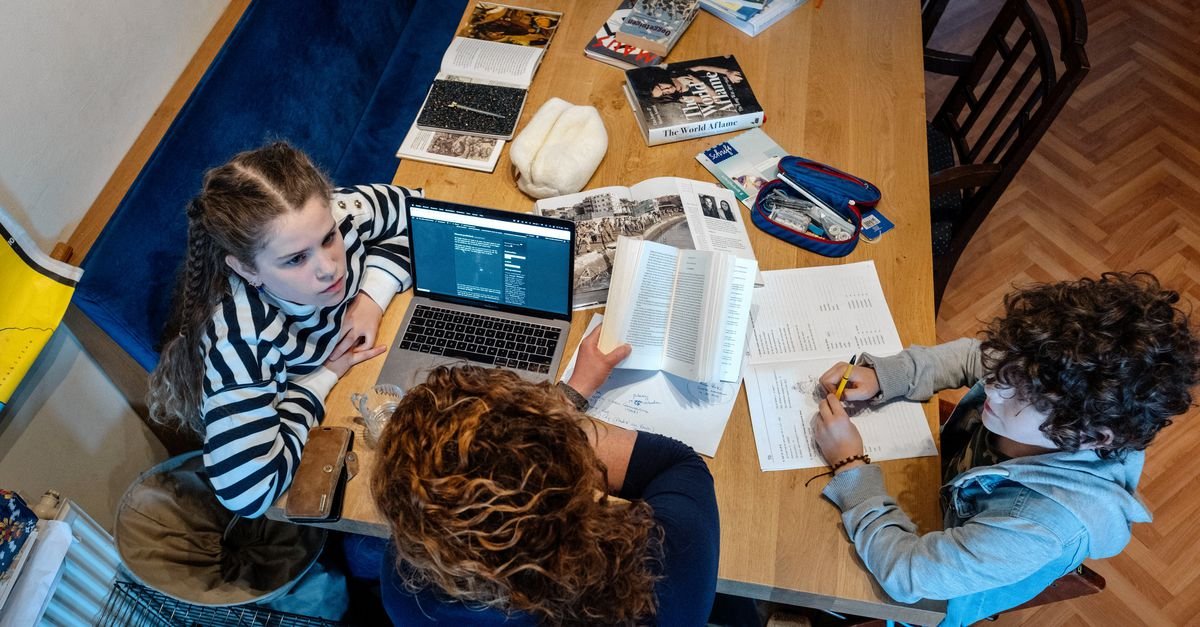
The legislature expressly chose not to include provisions on alternative education for exempt children, an omission that continues to this day. In practice, exempt parents homeschool their children, often together with other parents. Many of them welcome supervision or voluntarily have their children’s education certified through the Home Education Quality Mark Foundation.
Who guarantees that the argument that neutral education is sufficient will not later be used to question the special school itself?
The lack of a legal education obligation appears to be the reason why the Supreme Court has increasingly limited the exemption over the years. But in his zeal he has now fundamentally changed parental right: from a right to education that actively supports the beliefs of the parents, to a right to education that treats those beliefs only objectively, critically and pluralistically.
Hollowing out
This is a gradual change in the right of choice that underlies Article 23 of the Constitution. Although this article still guarantees the right to set up one’s own school, the reasoning of the Supreme Court can easily be extended. Who guarantees that the argument that neutral education is sufficient will not later be used to question the special school itself, for example when applying for funding for a new school of a certain persuasion? Some political parties have been advocating for the abolition of freedom of education for years. The Supreme Court’s ruling supports them in this.
The solution to combat this erosion of the right to choose lies in the abolition of the exemption and the introduction of a statutory scheme for home education. In the majority of European countries, homeschooling is a fully-fledged form of education and part of the right to choose, whereby parents do not have to justify their choice with reservations about existing schools.
In some countries, such as Ireland and Denmark, this right is even constitutionally enshrined. The compulsory education law can state that parents are exempt as long as they provide sufficient education, with supervision by the education inspectorate. There are plenty of examples of supervision abroad, including Belgium. Research shows that children who are homeschooled function at least as well as school-aged children. Claims that contradict this are based on prejudice.