San Salvador/It is impossible that Donald Trump’s war cabinet did not foresee, before attacking Iran, that the Shiite regime was going to threaten the free circulation of oil through the Strait of Hormuz. But if such a contingency forced, no matter how imaginable, to plan an adequate response, what went wrong in the White House’s calculations to display such inability to face the logistical, economic and political disaster that has brought about the paralysis of the area?
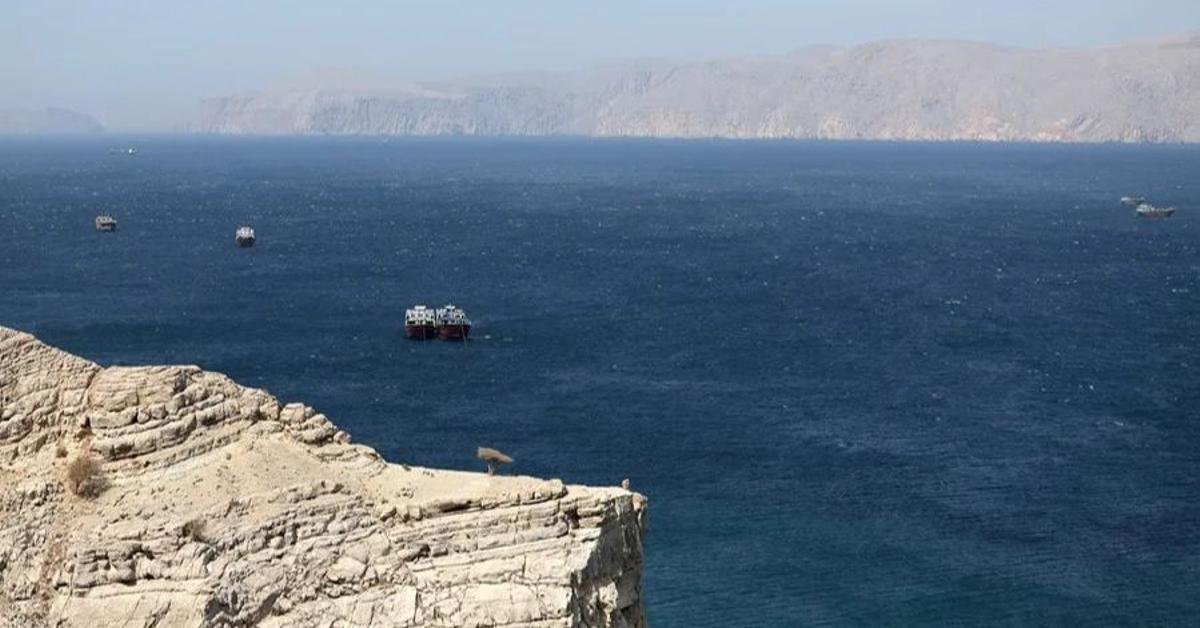
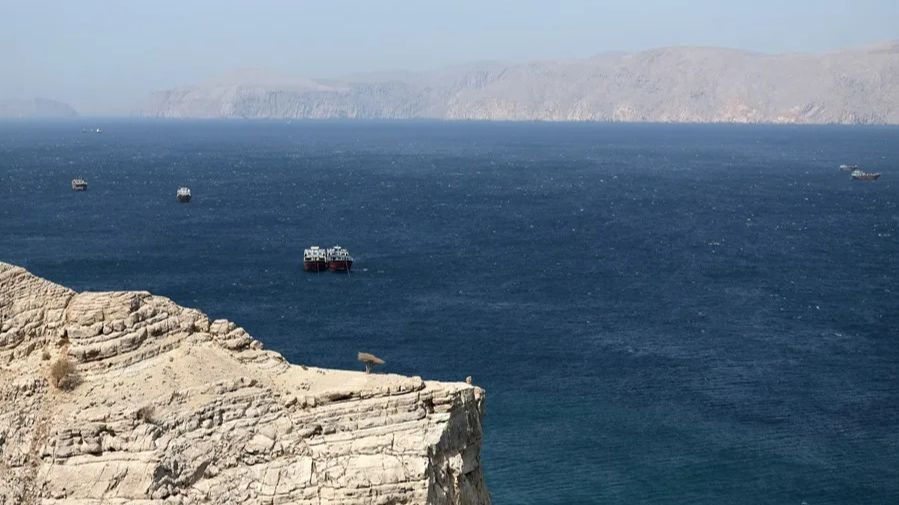
Although it is often stated, perhaps to save explanations, that Iran has “closed” the strait, the truth is that the despots of Tehran have only had to announce potential attacks on tankers crossing the route to raise the insurance prices of each ship, whose respective crews rightly fear venturing through this narrow channel that connects the Persian Gulf with that of Oman and leads to the Indian Ocean.
Although around twenty vessels were attacked by Iran from some part of the 1,500 kilometers of coastline it has in the strait, no oil tanker managed to be sunk throughout the month of March and not even enough damage was caused to prevent the effective advance of the attacked ships. Consequently, rather than the real ability of the Shiites to militarily block the Strait of Hormuz, what keeps the maritime flow there paralyzed is a mixture of tariff adjustments and fear.
With his understandable renunciation of sending troops to Iran, Donald Trump is also giving up control of the region
For all practical purposes, however, the circulation of crude oil has stopped. In an attempt to counter the situation, the United States has promised to launch a $20 billion maritime reinsurance plan and thus release that fifth of the world’s fuel moving through Hormuz. But moving on to concrete things has not been easy, nor was it easy to expect a regime change to occur in Iran with bombs and guided missiles.
Ali Khamenei, the supreme leader, met his death during the first attacks by the United States and Israel, followed by numerous leaders whose heads were cut off as they appeared, as happened to the influential secretary of the National Security Council, Ali Larijani, and a day later to the energetic Minister of Intelligence, Esmail Khatib, responsible for much of the repression unleashed against Iranian civilians a few months ago.
But Shiite Muslim fanaticism seems to be renewed like the mythological Hydra of Lerna, that aquatic monster that grew two heads wherever one was severed. With his understandable renunciation of sending troops to Iran, Donald Trump is also giving up control of the region, even though he claims to be achieving unprecedented military achievements in the Middle East. As long as there is one radical of the regime alive, neither Washington nor Tel Aviv can breathe easy. For Israel, the Iranian neighborhood will continue to be an existential risk; The United States, for its part, could face years of attacks in various parts of the globe. The limit of the Shiite compulsion for “martyrdom” cannot be overstated.
The Republican Party had already been losing in the polls against its Democratic adversaries by an average of six percentage points.
That is why the black hole into which the American president has entered seems to have no bottom. And Trump urgently needs to get out of it, at any cost. The more days he spends wallowing in that swamp, the tenant of the White House will not be shooting himself in the foot but in both femurs.
The Republican Party had already been losing in the polls against its Democratic adversaries by an average of six percentage points. The abuses of the Immigration and Customs Enforcement Service (ICE), the suspicious handling of Jeffrey Epstein’s files and the poor performance of the economy, among other issues, had been imposing on Trump himself a ceiling of 45% approval, one of the poorest in the last quarter of a century for a sitting president. With the war in Iran, these rates have plummeted below 40%, which could place the current ruler – considering the averages of both terms – as the most unpopular in the demographic history of the United States.
“No Gallup poll,” emeritus professor of political science Dr. J. David Gillespie maintained at the time, “has ever shown a majority in favor of Trump. His approval has changed just 14 points, between 35% and 49%. This is, by far, the smallest popularity range for a single president since scientific polls began.” (We can already imagine the academic rulings that the current Iranian fiasco will produce.)
The Republican president urgently needs to showcase an international victory with broad repercussions
If the Democrats – who also stand out in self-sabotage – are careful not to make blunders between now and November, nothing seems to indicate that Trump will retain the majorities he has in both chambers of Congress. Hence, the Republican president urgently needs two fundamental things: first, to reverse the serious failures committed internally since he returned to power; and second, to exhibit an international triumph with wide repercussions. In the latter, it seems to me, Cuba could be the card that Washington pulls out of its sleeve.
And there was little else Trump could do. The dismissals of Kristi Noem and Pam Bondi, Secretary of Homeland Security and Attorney General respectively – which occurred in less than a month – come too late to fool anyone. In parallel, 11 thousand kilometers from Washington DC, the Strait of Hormuz continues to be that artery that obstructs the circulation of the political blood of the president of the United States.









![[Han Sang-jin] Beyond ‘factory’ critique: BTS and Hybe](https://agentially.org/wp-content/uploads/2026/04/news-p.v1.20260415.7d26c619e14d494fa1d4a78f566916ff_T1.jpg)