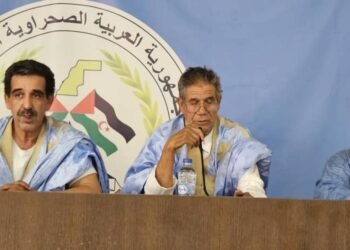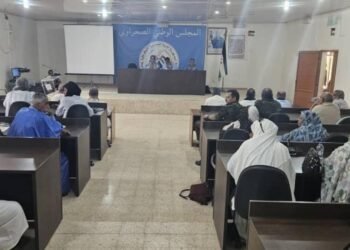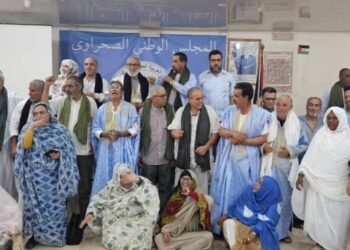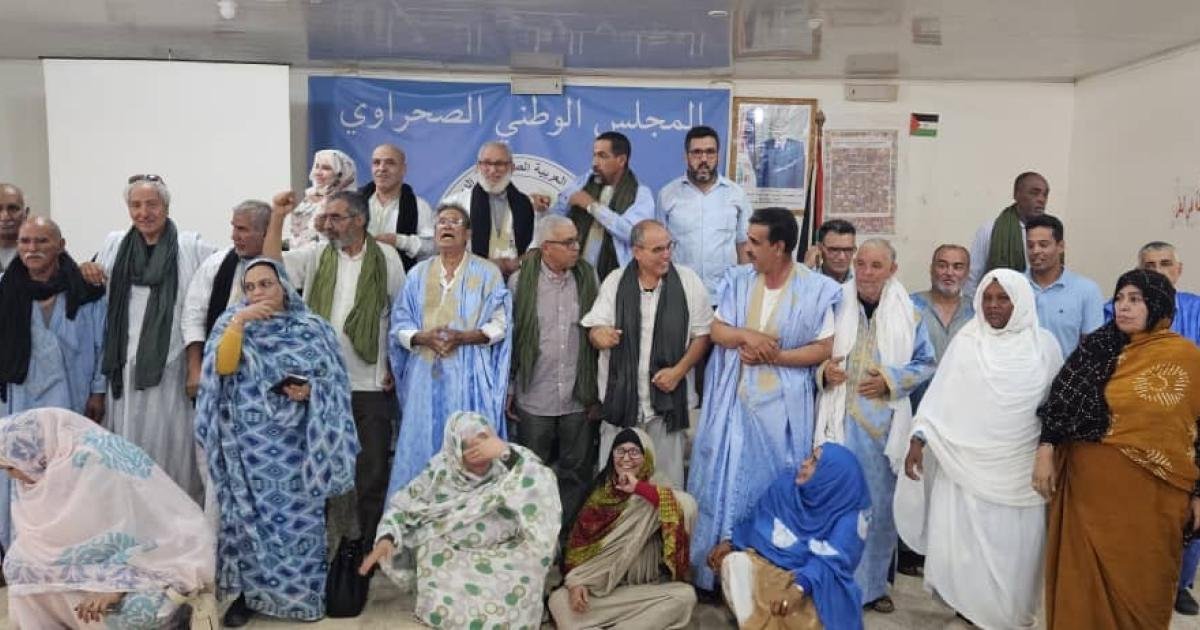
Al-Shahid Al-Hafiz, July 1, 2026 (SPS) – The Sahrawi National Council represents one of the most important national institutions that embodies the political will of the Sahrawi people to build their institutions and exercise their right to self-determination, as its establishment came in a decisive historical circumstance characterized by the liquidation of the Spanish colonization of Western Sahara and attempts to circumvent the right of the Sahrawi people to freedom and independence.
Since its inception, the National Council has been a tool for expressing Sahrawi national sovereignty, and an institution that has contributed to organizing political, legislative and oversight life, and its roles have developed through the various stages that the national issue has passed through.
First: The establishment of the Interim Sahrawi National Council (1975 – 1995)
The establishment of the Interim Sahrawi National Council came as a national and historical response to the transformations that Western Sahara witnessed in 1975, especially after the Madrid Agreement, through which the colonial powers tried to impose a new reality that exceeds the will of the Sahrawi people and their right to self-determination.
In this context, the majority of the members of the Sahrawi General Assembly affiliated with the Spanish administration announced its dissolution, and refused to be a tool for passing partition and occupation projects. 67 members of the General Assembly and 60 sheikhs and notables of the Sahrawi community signed a historic declaration according to which the Interim Sahrawi National Council was established on November 28, 1975 in the city of Guelta Zemmour.
The members of the Council announced their joining the Popular Front for the Liberation of Saguia El Hamra and Oued Eddahab, stressing their rejection of the tripartite conspiracy aimed at dividing Western Sahara, displacing its people, and confiscating their right to freedom and independence.
The Council also sent letters to international and regional bodies, in which it called on the international community to assume its historical responsibilities, and called on the Moroccan, Mauritanian and Spanish peoples to stand against the aggression to which the Sahrawi people were subjected.
The Interim Sahrawi National Council held its first meeting on December 30, 1975, where it discussed the political and military situation that the Sahrawi people were experiencing, and ways to confront expansionist ambitions. It also discussed organizing the national administration and forming structures that help manage the affairs of citizens.
During this phase, the Council established temporary advisory municipal councils and specialized committees in various fields, including:
– Social Affairs and Health Committee.
– Defense Committee.
– Foreign Relations Committee.
– Economic Committee.
– Interior Committee.
– Public Works Committee.
– Agriculture Committee.
– Trade Committee.
– Education and Justice Committee.
The Council was initially composed of 52 members, including members of the Political Bureau of the Popular Front and heads of departments, and was headed by a president and a vice-president, in addition to the heads of committees.
During this stage, the Council played the role of a primary advisory and legislative body, contributing to representing the Sahrawi people externally, providing opinion and advice to the national leadership, and participating in formulating general trends and policies.
However, the Council during this period relied on appointment, not election, and did not have an integrated internal system or legal framework that would regulate its relationship with the executive authority.
This phase continued until the ninth conference of the Popular Front for the Liberation of Saguia El Hamra and Oued Eddahab in 1995, when a new phase began in building the legislative and oversight institution.
Second: The development of the Sahrawi National Council (1995 – 2026)
With the political transformations witnessed by the Sahrawi issue, especially after the ceasefire in 1991 and the launch of the peace process under the supervision of the United Nations, the need emerged to strengthen the building of national institutions and develop their roles.
The Ninth Conference of the Front in 1995 approved the activation of the role of the Sahrawi National Council as a legislative and supervisory institution that exercises its functions in a more independent and organized manner.
Since that date, the National Council has exercised a set of powers, including:
– Monitoring the performance of executive bodies and bodies at the local, regional and central levels.
– Follow up and evaluate government programs.
– Approving, amending, or rejecting government programs.
– Issuing regulations, recommendations and statements.
– Conducting field visits to follow up on program implementation.
– Directing oral and written questions to members of the government.
– Conducting interrogations and forming investigation committees.
– Listening to officials in charge of national files.
– Enacting laws and legislation regulating national life.
– Ratifying international agreements, treaties and protocols.
The formation of the National Council also moved from appointment to election, and its members were now elected by direct secret ballot by Sahrawi citizens.
This stage represented an important shift in the process of building the state and institutions, as the Council came to represent the various segments of Sahrawi society.
The number of council members in the first electoral experiment was set at 101, including representatives from the occupied territories. Conditions for candidacy were also set, including Sahrawi nationality, integrity, competence, and political or professional experience.
Through the Front’s successive conferences, the National Council has witnessed continuous reforms with the aim of strengthening its legislative and oversight role.
During the Tenth Conference in 1999, the number of members was reduced to 51 members with the aim of enabling the institution to focus on oversight and legislative tasks, after some members were combining executive and legislative tasks.
Council sessions were also organized and a more specialized system was adopted, with the possibility of holding exceptional sessions when necessary.
In the eleventh conference in 2003 in the liberated Tafariti region, the number of members was amended to 53 members, and the term of the term was linked to the period extending between two conferences.
As for the Sixteenth Conference of the Front in 2023, it approved reducing the number of members of the National Council to 51 members, while reviewing the duration of the sessions in line with the requirements of legislative and oversight work.
conclusion
The path of the Sahrawi National Council reflects the development of the Sahrawi institutional experience, from a temporary national body that arose under conditions of war and occupation, to a legislative and oversight institution that plays essential roles in building the Sahrawi state.
The National Council has continued to carry the memory of the national founding, defend the will of the Sahrawi people and their legitimate rights, and recall the sacrifices of the pioneers of the national movement, foremost of whom is the martyr Mahfouz Ali Biba, whose name was linked to the development of institutional work. (SPA)