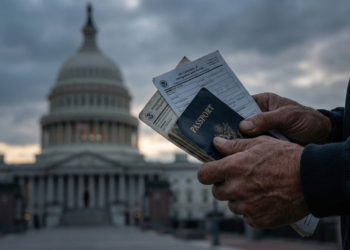
The Ombudsman’s Office gave a period of 24 hours to the Government to report the location of the 25 deported foreigners from the United States who arrived in Costa Rica on Saturday, April 11, as part of the memorandum of understanding signed between the president Rodrigo Chaves and Kristi NoemUnited States special envoy for the Shield of the Americas.
Two days after their arrival, the entity indicated who has not received information about the place where this group remainswhich has prevented him from carrying out an on-site inspection in order to verify the conditions in which they are found.
According to the Ombudsman’s Office, although initial contacts were made with the General Directorate of Migration and Immigration (DGME) to obtain the data, information was not providedwhich forced a formal request to be submitted this Monday.
The defender of the inhabitants, Angie Cruickshank Lambertrequested the Vice Ministry of the Interior and Police, Manuel Jimenez Stellerwhich within a maximum period of 24 hours facilitate the location of these peopleas well as details about the expected time of stay in the place where they are located.
He also requested information on the fate of those people who cannot be transferred to their countries of origin in the short term.
The entity also requested a copy of the care protocol that is being applied for this group and whether interinstitutional coordination has already been activated. to guarantee the protection of their fundamental rights. A maximum period of three days was established for this information.
The Ombudsman indicated that These actions seek to follow up on recommendations previously issued to the Costa Rican State. in deportation processes, with the aim of avoiding a repetition of situations such as those recorded in February 2025, when a group of 200 people in conditions that raised questions.
The Nation He requested a position from the General Directorate of Migration and Immigration, but at the time of going to press he had not received a response.
First group of 25 foreigners deported
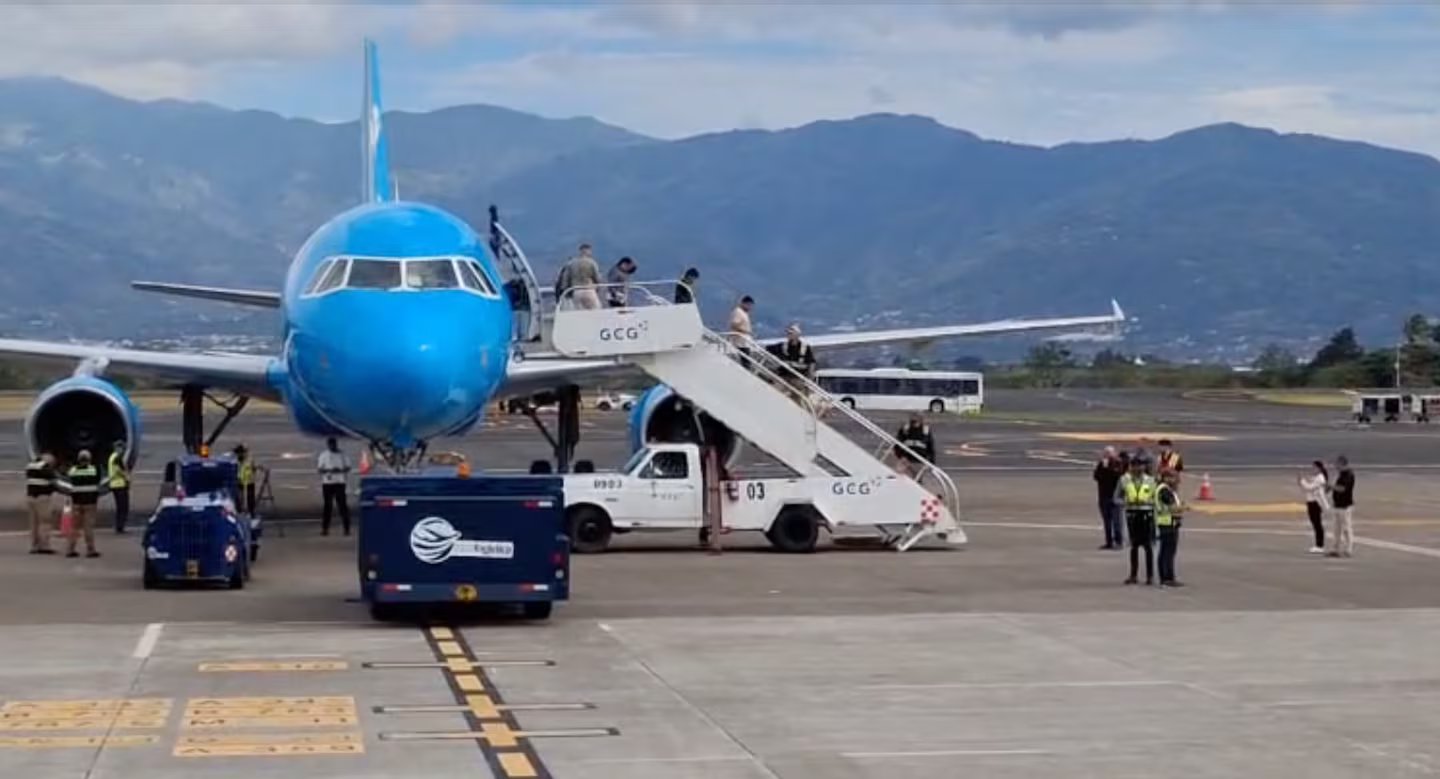
On the afternoon of Saturday, April 11, Costa Rica received the first group of 25 foreigners deported by the United States, following the agreement signed between Chaves and the government of Donald Trump.
The agreement will allow the North American power deport up to 25 people per week to Costa Rican soil.
According to a press release from the General Directorate of Immigration and Immigration, a Costa Rican woman was also deported within the group. The migrants have nationalities of Albania, Cameroon, China, Guatemala, Honduras, India, Kenya and Morocco.
This is the breakdown by nationality:
- Albania: 1 (woman)
- Cameroon: 4 (2 men and 2 women)
- China: 2 (men)
- Guatemala: 8 (5 men – 3 women)
- Honduras: 4 (2 men – 2 women)
- India: 3 (men)
- Kenya: 1 (female)
- Morocco: 2 (men)
The flight, from the Global X airline, arrived at the Juan Santamaría international airport this Saturday afternoon, coming from San DiegoUSA.
The Directorate reported that exempted visas for deportees from Albania, Cameroon, Kenya, China, India and Morocco.
In the case of the four Hondurans, the police record requirement was waived. However, of all of them, consultations were made with the systems of the Judiciary, Interpol, among other international organizations.
According to the statement, migrants would receive primary care from the professional Migration police, with the cooperation of the International Organization for Migration (IOM).
In addition, it mentioned that the IOM offered its cooperation to migrants so that, free of charge, receive lodging, food and humanitarian assistance during the first seven days of your stay in the country, counted from your entry.
According to the information, the people would be housed in a hotel paid for by IOM, in order to determine those who will apply for the “Assisted Voluntary Return” program.
People who, during the first seven days after entry, express their desire to remain in Costa Rica may do so legally. A temporary immigration regularization program will be authorized for humanitarian reasons.
The DGME added that migrants may, at any time, apply for the special category of refuge, complying with the ordinary procedures established in the legislation.