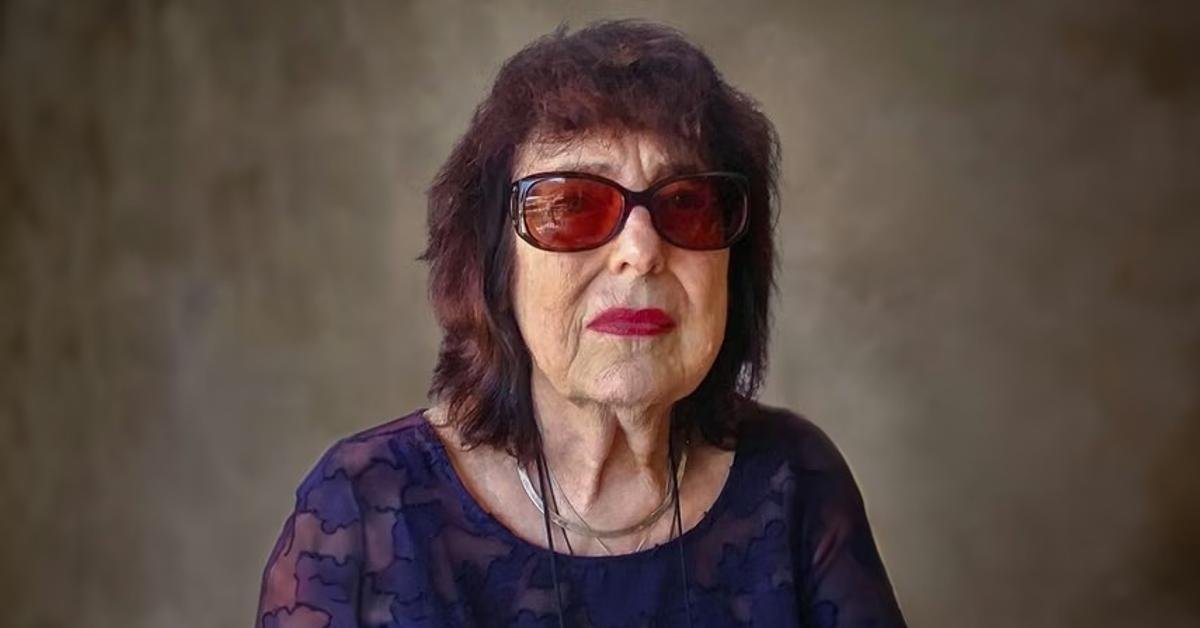
Havana/The Cuban writer Nedda G. de Anhalt, whose work contributed to preserving the memory of numerous intellectuals banished or silenced by the Havana regime, died last Sunday, November 8 in Mexico City, at the age of 92. The news was spread by the writer Luis de la Paz, who received confirmation from Mónica Gutiérrez, a friend and collaborator of the author for almost two decades.
As Gutiérrez explained to Las Americas Newspaperthe writer had recently suffered from pneumonia, but seemed to respond to treatment. death it happened suddenlyafter dinner, as a result of cardiac arrest. She was buried on Tuesday, November 10, in the Bet Hajaim Jewish cemetery, in the State of Mexico.
Born in Havana on February 5, 1934, with the name Nedda Gurwitz Zuchowicz, she was the daughter of Jewish emigrants. He studied Law at the University of Havana and Literature at Sarah Lawrence College in New York. In Mexico she married Enrique Anhalt Kronheim, with whom she had her son Eduardo. She became a Mexican naturalized in 1967, although Cuba never disappeared from her intellectual concerns.
She became a Mexican naturalized in 1967, although Cuba never disappeared from her intellectual concerns.
His career covered narrative, poetry, essays, interviews and film criticism. He published story books such as The random mail, The banquet, Unheard of stories and At a good time green mangoes. In them he developed a writing attentive to human contradictions, with an ironic look and a sensitivity marked by displacement, family memory and loss.
However, one of his most important contributions was the recovery of fundamental voices of Cuban culture. In Red and orange on red, Tell her I think of her and Cubans gathered interviews with figures such as Lydia Cabrera, Reinaldo Arenas, Guillermo Cabrera Infante, Eugenio Florit, Enrique Labrador Ruiz, Eloísa Lezama Lima and María Elena Cruz Varela.
These volumes constitute much more than a collection of conversations. They are an archive of experiences, discrepancies and memories that allow us to reconstruct a part of Cuban literature frequently excluded from the cultural institutions of the Island. Anhalt did not limit himself to asking about the books: he also looked for the human being behind each work, his wounds, his loyalties and his ruptures.
Anhalt was interested precisely in authors who broke with the Revolution or were marginalized for political reasons.
Its limited presence in the official Cuban publishing circuit is inseparable from that intellectual choice. While state institutions have for decades privileged certain versions of cultural history, Anhalt was interested precisely in authors who broke with the Revolution or were marginalized for political reasons. His work questions, from the testimonies, the intention of reducing national literature to that produced under the protection of the State.
The writer also dedicated several essays to figures and episodes that reveal her interest in individual freedom and injustice. Among them stand out Meetings with Cabrera Infante and Why Dreyfus?. His passion for the seventh art was reflected in titles such as A desire called cinema, Cinema: the great seduction and My loves in the dark room.
Advanced age did not stop his activity. In 2023 he published the novel In the airwritten decades before, and in 2025 they appeared Satie and mewhere he recovered family stories affected by the Holocaust, and the collection of poems Monet and Voltaire. She still organized scattered letters, poems, and essays, worried about the fate of her manuscripts and the difficulty of republishing her books.
With her death, a writer who made conversation a form of resistance to oblivion disappears.