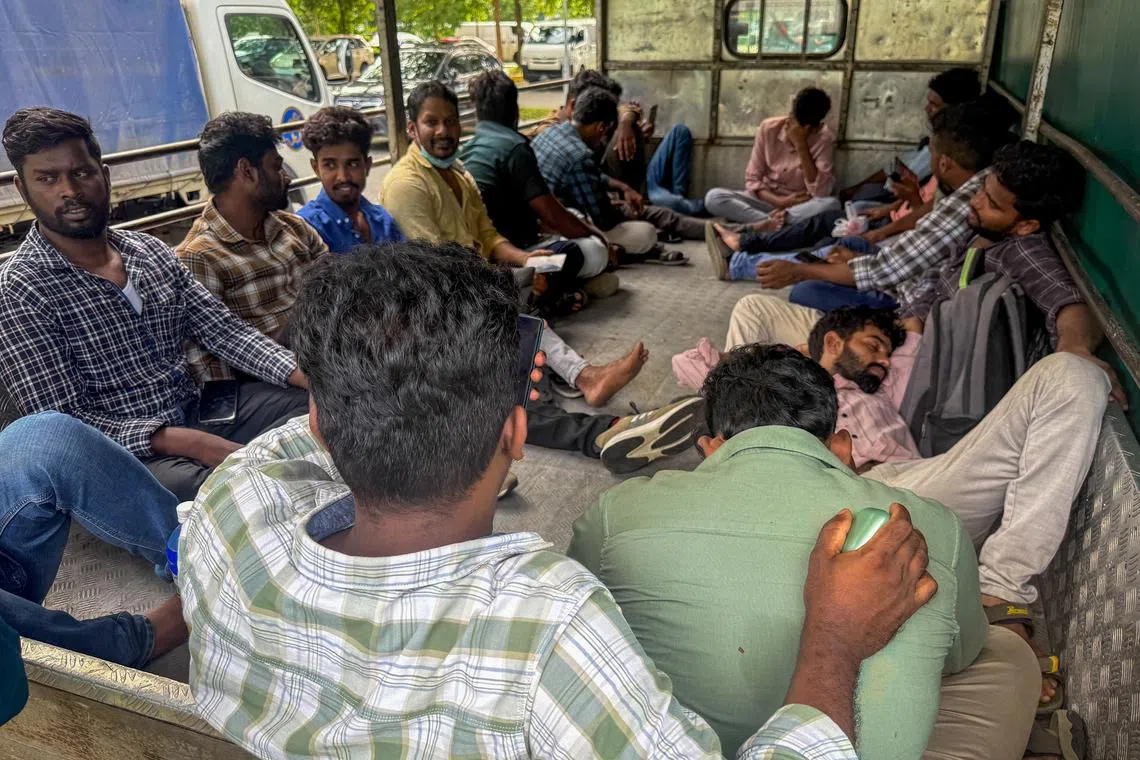
SINGAPORE – The number of workers claiming they are owed wages by air-con services company KPA Engineering and related firm SK Industries has climbed to around 400.
The Straits Times on June 23 learnt that another 100 migrant workers from India and Bangladesh have alerted the authorities to issues related to unpaid wages and housing arrangements.
The Migrant Workers’ Centre (MWC) – a non-governmental organisation (NGO) that works on fair employment practices and the well-being of migrant workers in Singapore – had a day earlier met more than 300 affected workers from the two companies and offered them help.
The firms share a common director, who is linked to five other firms providing air-con, plumbing and building services. The affected workers said they have not been able to contact the man for a few weeks.
The business director has two registered addresses, with one home in a private estate near Bukit Timah leased to a foreign national for about eight months.
ST learnt that creditors have been trying to contact the director for a few weeks over claims of unpaid loans.
Business registry checks showed that KPA Engineering was set up in 2014, and currently has one other active director.
The man then set up a separate firm in 2019 by himself, and another in 2020 that lists three former directors.
He then registered SK Industries in 2023. He is the sole director, but the firm has a shareholder.
In 2025, he registered three companies in one day, each with him as the sole director.
The issue first came to light when over 100 workers turned up at the Ministry of Manpower (MOM) Services Centre in Bendemeer with complaints that their employers KPA Engineering and SK Industries had failed to pay them their wages for more than two months.
The affected workers, many housed at Tuas View Dormitory, told ST that they initially had access to food provided by an external caterer hired by their employers.
But this stopped a few days ago because the caterers claimed they were not paid. ST understands one supplier is owed around $4,000.
Michael Lim, director of Migrant Workers Segment, NTUC, said that MWC has met more than 300 affected workers to offer help.
The NGO, which provided transport for the workers to return to their dorms from the MOM office in Bendemeer on June 22, has been providing meals for the affected workers.
Meanwhile, MOM and the Tripartite Alliance for Dispute Management (TADM) are looking into the workers’ complaints regarding unpaid wages and other issues including housing arrangements.
The alliance said the affected workers are allowed to seek new employment while their complaints are being addressed.
Workers are usually issued with a Special Pass which allows them to legally remain in Singapore to resolve issues like salary disputes and employment transfers.
Ethan Guo, executive director of Transient Workers Count Too, said several workers from KPA Engineering had reached out to the non-profit organisation a week ago. They were advised to lodge a salary claim with TADM.
Guo said that while affected workers can transfer to a new employer, they may have to pay fees to employment agencies.
“If they are lucky enough to find a job through an employment agency, the standard fee is two months’ salary for a two-year contract, which they cannot afford to pay since they are already in financial difficulty,” he added.
Guo said that MOM typically encourages workers to voice out and seek help early if they are owed salary.
“The reality, however, is that employers usually persuade the workers to wait, sometimes making small payments along the way,” he said.
“And the workers, having sunk in a lot of money in recruitment fees, are also reluctant to make a complaint for fear of losing their jobs.
“That’s because the employers have the ability to cancel their work permits and repatriate them at any time.”
Prashant Somosundram, deputy director of Humanitarian Organization for Migration Economics, said workers may not fully understand the claims process, and may lack the language ability and documents needed to pursue their claims confidently.
“At present, workers often have very limited options to recover unpaid salaries from bankrupt employers,” he said.
“If a worker has done the work, they must be paid. Wage recovery should not be treated as charity or discretionary assistance.”
-
Additional reporting by Jemima Ryan and Emily Koh