The creation of a controlled emissions area in the Northeast Atlantic was formally adopted on May 1, at a meeting of the International Maritime Organization (IMO), in London, and is expected to come into force in September 2027.
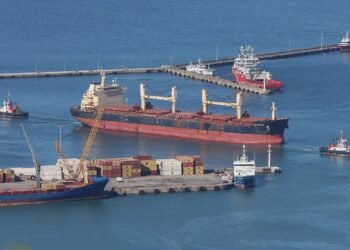
This decision, formalized during the 84th session of the Marine Environment Protection Committee (CPMM 84), creates the largest maritime pollutant exclusion zone in the world, covering the waters of Portugal, Spain, France, the United Kingdom, Ireland, Iceland, the Faroe Islands and Greenland.
In a statement, the environmental association Zero, which participated in the meeting as part of the Clean Shipping Coalitionhighlights that the formal adoption of this Controlled Emissions Area (ECA) represents “a historic milestone”. The measure will serve as a link between existing control zones in the North, Baltic and Mediterranean Seas, as well as new areas in the Arctic Canadian and Norway.
Impacts on health and ecosystem
According to technical analyzes by ICCT and the University of Porto, the implementation of this ECA will have drastic benefits for public health in a region home to more than 190 million people. It is estimated that, by 2030, sulfur oxide (SOx) emissions will fall by 82% and fine particles (PM2.5) 64%.
These reductions could prevent between 2,900 and 4,300 premature deaths by 2050, generating savings in healthcare that could reach 29 billion euros.
Furthermore, a 36% drop in emissions is expected carbon black, a pollutant critical to Arctic warming.
Technological requirements and restrictions
From September 2027, ships operating in these waters will be required to use fuels with a lower sulfur content.
However, the rules will be even stricter for new vessels: all ships built from January 1, 2027 must comply with strict nitrogen oxide emission limits (Tier III).
Zero and other environmental groups are now defending the extension of these measures to the Madeira, Azores and Canary archipelagos. They also demand a total ban on exhaust gas cleaning systems (scrubbers), noting that countries such as Denmark, Finland and Sweden have already banned these systems, which discharge pollutants directly into the sea.
Political tensions in the IMO
Despite the success of ECA, the general picture of carbon neutrality for maritime transport faces diplomatic resistance. Negotiations in London were marked by pressure from the United States administration and Saudi Arabia to remove carbon tax mechanisms.
While a bloc of 55 countries, including Portugal and Brazil, defends a global price on carbon, a coalition of 51 nations opposes these tax measures.
Russia’s position also made the process more difficult, with Moscow declaring a formal reservation to the Northeast Atlantic ECA agreement, which means that, for now, the country does not intend to apply these environmental standards to its fleets.