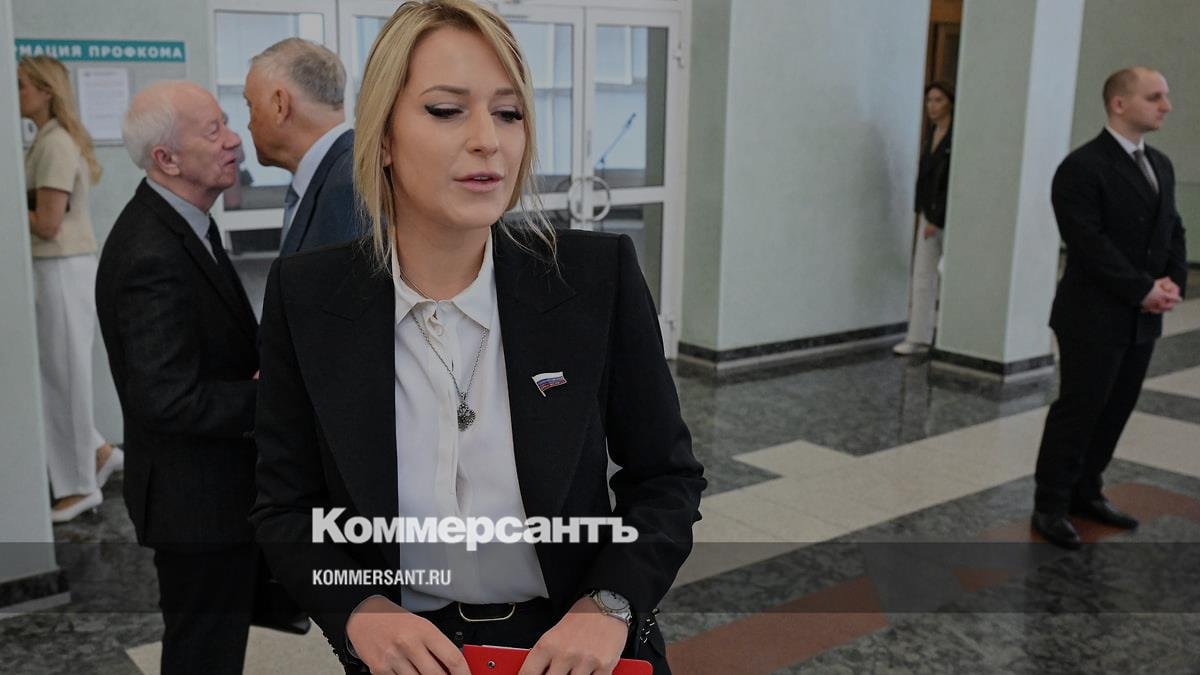
The upcoming elections became the main topic of the regular meeting of the All-Russian Coordination Council of Commissioners for Human Rights on June 17. The event was held for the first time under the chairmanship of the new Ombudsman of the Russian Federation, Yana Lantratova. Human rights activists identified key areas of work during the election campaign and shared their experience. And former Moscow Ombudsman Tatyana Potyaeva even spoke about the positive legacy of the “Navalnov era.”
Yana Lantratova’s work was presented to journalists on the way to the House of Human Rights, where the meeting traditionally took place. There, the federal ombudsman, first, together with her Kherson colleague, sent a car with humanitarian aid for residents of the new territories, and then, despite the pouring rain, patiently answered questions from journalists about the morning strike of the Ukrainian Armed Forces on a bus with children in the Bryansk region.
In the building itself, the public was greeted by a photo exhibition about the human rights path of the new federal commissioner. The organizers hung pictures not only at the entrance, but also in the corridors on the way to the meeting room.
In them, ombudsmen and journalists could see Mrs. Lantratova, either carefully clarifying something with a Russian military man, or smiling, surrounded by dozens of children.
At the beginning of the meeting, welcoming words were heard from the honored guests. One of them, Deputy Head of the Russian Presidential Administration for Public Projects Alexander Zhuravsky, reminded the ombudsmen about the provocations of the “collective West” being prepared for the elections and advised them to work more actively with young people, who do not always perceive information on social networks critically. “It’s better to start prevention at school,” the official explained. “Yes, we are currently having parliamentary elections, but there are also presidential elections ahead.” Therefore, now, according to Mr. Zhuravsky, is the time to start working with “young citizens of the Russian Federation, who in 2030 will vote for their president for the first time.”
The likelihood of provocations from specifically the “Kyiv regime” was confirmed by Yana Lantratova in her opening speech. In her opinion, the ombudsmen should place the most important emphasis on “explanatory work” and, in particular, on communicating to citizens the specifics of remote electronic voting. She later told Kommersant that out of 1,763 complaints regarding voting rights received by the commissioners over the past three years, about 70% were resolved by providing people with all the necessary explanations. “No difficulties arise,” the ombudsman assured.
Among other significant problems of human rights work, Ms. Lantratova in her speech named ensuring the accessibility of polling stations for people with disabilities and the safety of citizens voting abroad and in front-line territories. She also announced that she had reached an agreement with the Central Election Commission (CEC) to provide authorized persons with access keys for video surveillance of polling stations in real time during the election period. In this regard, colleagues were asked to think about creating a single monitoring group.
The speech of the chairman of the council was followed by speeches from regional ombudsmen who shared their experience of working in elections.
For example, commissioner in the Sverdlovsk region Tatyana Merzlyakova said that the presidential elections in 2024 were “the calmest” in her region in a long time: “You know, the day is already ending, and we don’t even have a comment. I’m not used to this.”
At the same time, she was greatly impressed by the way “New People” monitored the elections: “They don’t leave this headquarters at all, they do everything electronically. They show me: why are there a lot of remote ballots there? Why is there more home voting than necessary?..” Among the population groups that require special attention in terms of protecting voting rights, the Ombudsman named people with disabilities, people without a fixed place of residence and prisoners. She dwelled on the latter separately, recalling how residents of the local pre-trial detention center last year voted for the governor of the neighboring Perm Territory: “They ask which of them is the current one, for whom should they vote? Sometimes they feel like they need to show who they voted for.”
The same topic was picked up at the end of the meeting by the former Commissioner for Human Rights in Moscow, Tatyana Potyaeva, who spoke at the council in her new status as an adviser—or, as she herself put it, a “mentor”—to the mayor of the capital, Sergei Sobyanin.
From her speech it followed that the right of non-resident residents of pre-trial detention centers to vote in elections to the authorities of their regions is largely the merit of the Moscow Ombudsman and the legacy of the “Navalnov era.”
In the 2010s, when non-systemic oppositionists periodically found themselves under arrest, they expressed a desire to vote in a pre-trial detention center, but did not have such a right, since they were not at their place of residence. Ms. Potyaeva, according to her, repeatedly described this problem in her reports, addressed the head of the Central Election Commission Ella Pamfilova and the then Ombudsman Tatyana Moskalkova, and as a result, the necessary changes were made to the legislation.
At the end of the event, Ms. Pamfilova herself appeared in the hall, having come to the ombudsmen right from the first after the official start of the Duma campaign meetings Central Election Commission. For some time, the former Commissioner for Human Rights in the Russian Federation (Ella Pamfilova held this post in 2014–2016) gave signs of attention to old acquaintances: “I see a lot of relatives, many work. And I’m very glad – God bless you!..” And then, taking Yana Lantratova’s hands, she blessed her for a new job: “Thank God, it wasn’t a random person who came! Despite her youth, she has so much baggage! I have known her for a long time, in different capacities and in different situations. Everything goes through the heart, and for us this is the main thing.” The emotional introduction was followed by a short official part, during which a memorandum of cooperation between the Central Election Commission and the Institute of Ombudsmen was signed.
In the final part of the meeting, already without distinguished guests and the press, Ms. Lantratova, according to Kommersant’s information, promised her regional colleagues to do everything possible to expand their local offices. And the commissioners responded by saying that they congratulated her on her appointment and “accepted her into their family.”