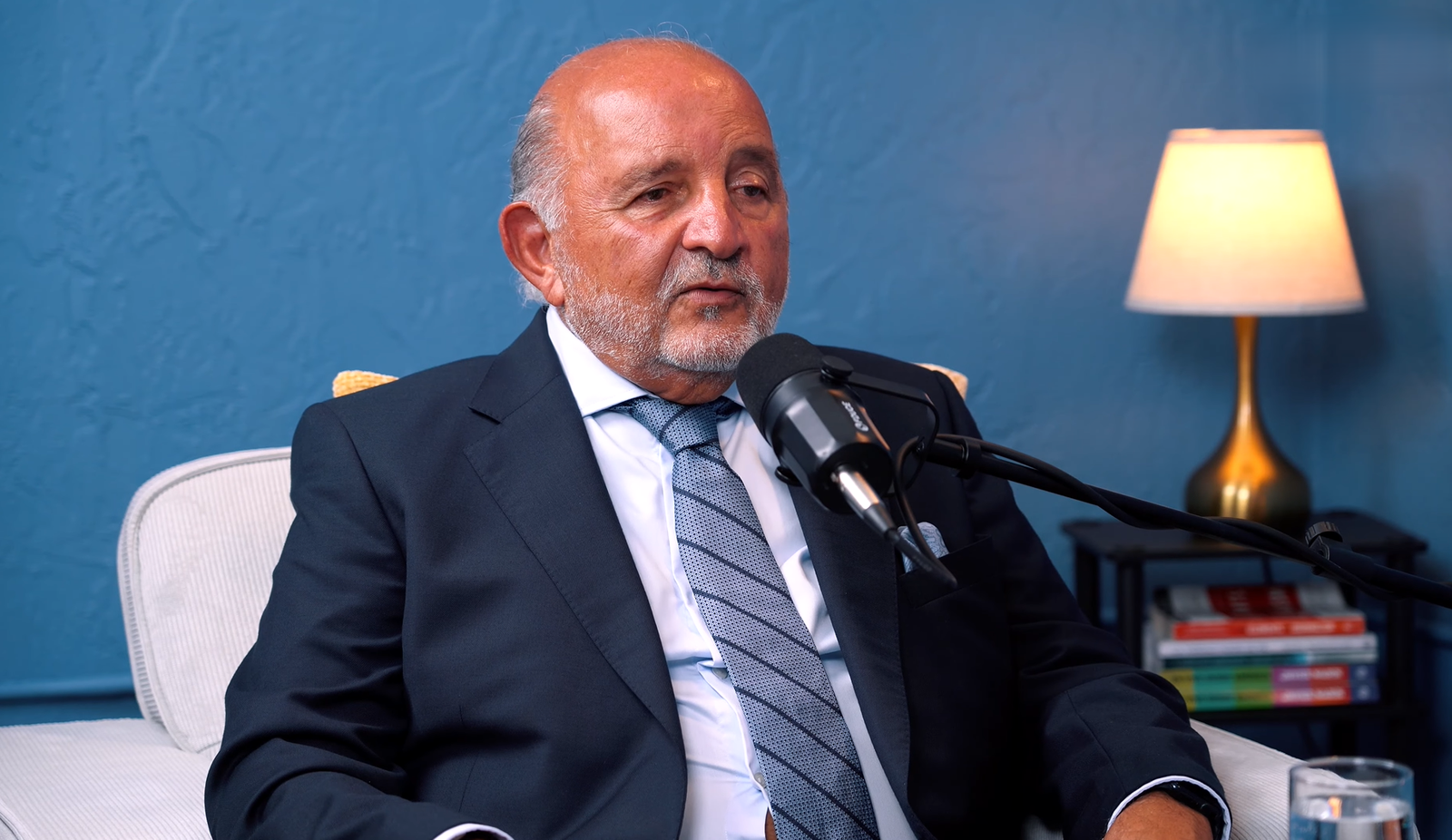
Nelson Mezerhane remembers with some nostalgia the beginnings of the IDEA Group (Democratic Initiative of Spain and the Americas), an institution that, after 11 years of work, has remained at the forefront of the fight for democracy in the region, particularly in Venezuela.
In that sense, the businessman — who is preparing for the summit that will take place next Tuesday, November 10 at Miami Dade College — highlights the importance of the moment the country is going through, which he considers the prelude to a true change towards democracy.
Mezerhane affirms that it will not only be vital to specify an electoral route – defending the results of July 28, 2024 and the victory of Edmundo González Urrutia – but also to lay the foundations of a free society. This joint effort will require, in particular, the commitment and investment of the business sector, both Venezuelan and international.
Although the businessman highlights the role played by the United States in the current situation, he firmly maintains that the reconstruction of the country is not limited to the electoral level, but requires constant work to build solid institutions that support freedom.
The IDEA Group operates under this framework, which is preparing to celebrate its 11th anniversary with the real perspective of a transition process in Venezuela that it considers irreversible. This is a democracy for which the organization has worked tirelessly and which, once achieved, it will be prepared to defend and consolidate.
— Can you tell us a little about the next event that the IDEA group is going to have in Miami?
— IDEA is an institute created 11 years ago to fight for democracy, the rule of law and human rights, sponsored by Mezerhane and with the intellectual and logistical support of many ideas for democracy from Dr. Asdrubal Aguiar. Miami Dade College gave us the headquarters from the beginning as support for this initiative, called the Democratic Initiative of Spain and the Americas. For this reason, the main meetings have been held there for 11 years, although forums are held in many other places. This year the meeting has a lot of meaning because of what is happening in Latin America and particularly in Venezuela. We have fought for the liberation of Cuba, Nicaragua and all the countries that have been under the yoke of dictators who are progressively disappearing. On this occasion we will address the compatibility of artificial intelligence, the mechanisms of digital journalism and the preservation of democracy, truth and freedom of expression. Within this broad topic, in my speech I am going to touch on the need to invest in the structure of democracy. I am not referring to investing only where there is democracy, but to calling on businessmen to understand that solid foundations are those that allow freedom of expression, free investment, private property, human rights and free education to exist. Sometimes that structure is put aside to simply talk about politics. That is very good and everyone can support the party they want, but the main thing here is to invest in ensuring that the foundations of democracies are solid.
—What can you tell us about the recognition that will be given to María Corina Machado?
— We will present the Freedom Prize to María Corina Machadoan award that we established in honor of Sebastián Piñera. María Corina deserves it; It is a symbol of the freedom of Venezuela and the one that drove what is happening. We cannot regret that he will not be there to receive him; on the contrary, we are very happy that he was able to return to Venezuela. What we are experiencing has been the work of many people, we must also recognize that the United States took a step forward; The Trump administration made decisions and thanks to that María Corina is in Venezuela, and the police do not attack people as they did until very recently.
— In that sense, how do you personally evaluate the changes that have been taking place in Venezuela and what do you think is still missing?
— We must return to institutionality: return to a country that has a 100% independent judiciary and a Supreme Court of Justice, those are the fundamental bases of legal security. That takes time and meetings have been seen to be somewhat rigged by already known characters. Everything indicates that this is being built with international support. Asking for help when you face an authoritarian regime is not treason; Even Simón Bolívar asked the English for help to free himself from Spain. The process has been slow, but that is also something relative, because it has been more than 27 years of manufacturing a corrupt machinery for the control of the country, we see that even with the significant number of political prisoners. I think it will take a few months, but we will have God through elections in the middle of next year. Although I have maintained the idea that this is not the time to talk about elections – because the elected president is Edmundo González and the virtual vice president is María Corina Machado, so power should have been given to a government board and then call elections -, in the end things happen as they can be handled. The United States and Secretary of State Marco Rubio have done a great job and they must be recognized. Some people criticize and it is true that not everything is perfect, for example there are the oil contracts which in themselves are not a problem, the problem is with whom they were signed. That said, the United States was the country that truly played a transcendental role in this entire process and it must be recognized.
— During every process there are challenges and risks. Do you think there is any risk that this process could be stopped or reversed?
— I don’t think there is a risk of reversal, although there is a risk of critical moments or attempts at conflict occurring, because they built a machinery for 27 or 28 years, that does not disappear overnight. However, it is not irreversible because the Venezuelan people have not bowed down or allowed themselves to be trampled throughout all this time and all this suffering. There will be setbacks along the way and we will have to fight, because freedom must be achieved and fought for.
— You talk about fighting for freedom, do you then believe that there is a duty of citizens to defend the current process and the objective of achieving democracy?
– Absolutely. Citizens have learned a lot about politics and young people have democracy in their hearts and want something better for their country. This is going to be a one-way fight; Nobody is going to back down. The unfortunate thing is that there are many stones in the way: by this I mean the old politics or the old politicians who stumble and hinder the passage to reach that superhighway of democracy, rule of law, human rights, prosperity and development.
— The work of the IDEA Group has been dedicated to supporting democracy. If the transition takes place and once Venezuela is a democratic country, what will be the role of the organization?
— He will continue fighting for the democratic stability of Venezuela and any other country. We have fought for the freedom of Cuba, we did it for Bolivia and we continue to insist for Nicaragua. Even the Ukrainian Foreign Ministry asked us to establish a position on its political situation and the war. We are not going to stop because Venezuela is democratic; On the contrary, we are going to get stronger. We will ask Venezuelan, Mexican, Colombian or any nationality businessmen to invest in a fund so that the structures of democracy are solid and we have the resources to defend them.
—What message would Nelson Mezerhane give to businessmen and what does he say about the role they should play?
— Addressing businessmen I would say: open your eyes. Tomorrow don’t say “look what happened to me”, but ask yourselves what you did to prevent it from happening. If they did big businesses in a country with institutional or democratic weaknesses, the risks remain. The call is to strengthen the foundations of freedom in the country where they are going to invest, and that is done by investing in institutions and society. That is the main message I have to give.