Peace negotiations between the United States and the Iran came to an end without an agreement, throwing the future of the fragile ceasefire between the two opposing countries in the war into uncertainty. Middle East.
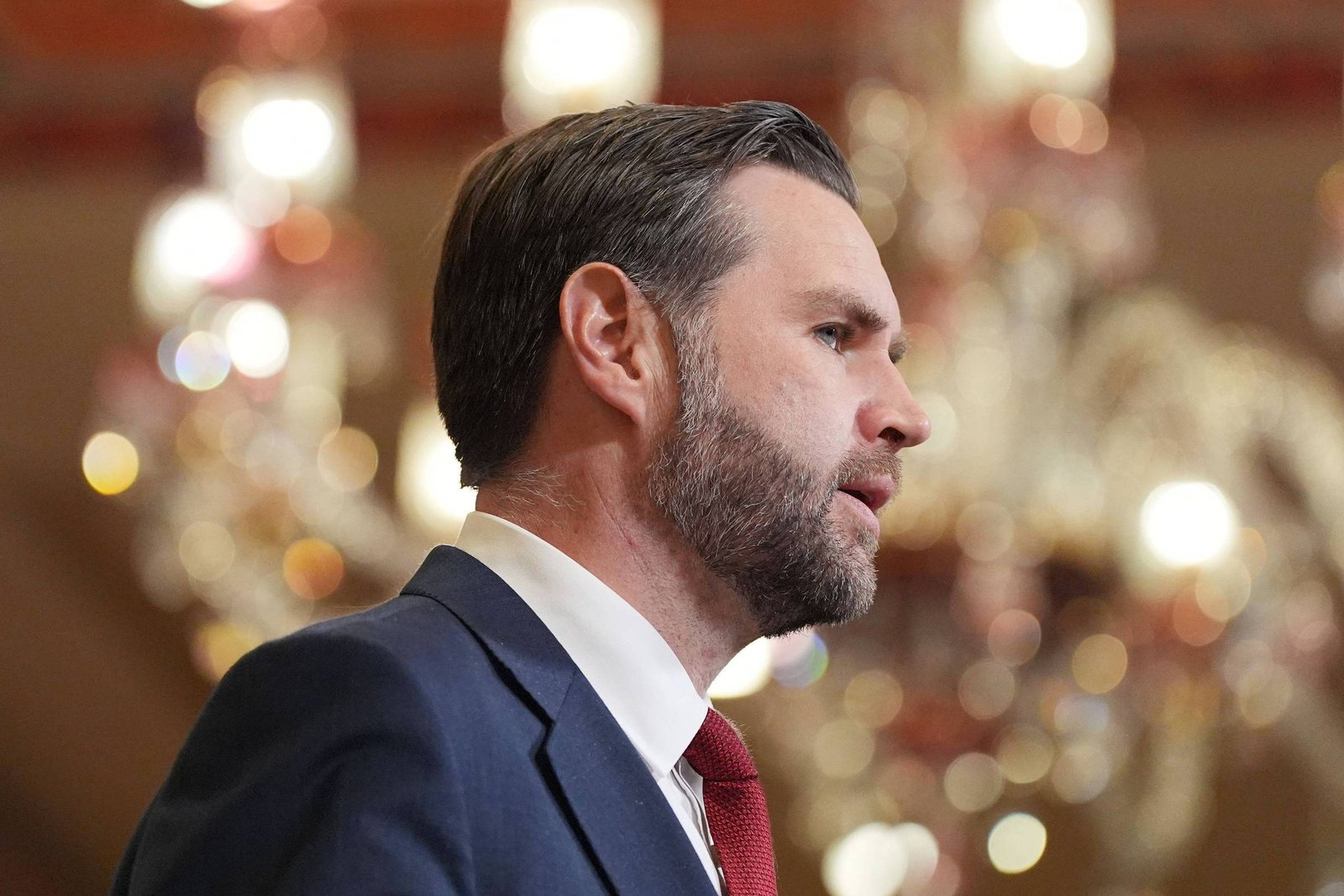
The American Vice President, JD Vance, said in a press conference this Saturday (11), already Sunday morning (12) at Pakistanhaving made a final offer to Iran in the talks — and stated that he will return to his country.
“We talked for 21 hours,” said the vice president. donald trump in a brief statement to the press at a hotel in Islamabad, the Pakistani capital, the country that serves as mediator in the conflict. “We will return to the US without a deal. We made it very clear what our limits were, what we could give in and what we couldn’t, and they chose not to accept our terms.”
The speech contradicts previous statements by the Iranian delegation, which said it expected more discussions on Sunday. After Vance’s interview, however, the Persian country’s state TV confirmed the end of the negotiations, blaming the failure on “excessive demands” from the US.
“The good news is that we have had meaningful discussions with the Iranians. The bad news is that we have not reached an agreement, and I think that is much worse news for Iran than for the United States,” said the American vice president. It is unclear whether there will be a new round of discussions at a later date or whether the countries will resume bombings in the war, which has killed thousands of people across the region.
“We need to see a commitment (from Iran) that they will not seek a nuclear weapon and that they will not seek tools that would make the development of a nuclear weapon possible,” said Vance — Iran has always denied wanting the bomb, although it has enriched uranium to levels far above what is needed for civilian uses.
“We were very flexible, but unfortunately we didn’t make any progress,” said Trump’s vice president. “We’re leaving here with a very simple proposal, a method of understanding that is our best and final offer. We’ll see if the Iranians accept it,” concluded Vance, who spoke to the press alongside Trump’s Middle East envoy, Steve Witkoff, and the president’s son-in-law, Jared Kushner.
On Saturday, in what was the highest-level meeting between Washington and Tehran since the 1979 Islamic Revolutionthe delegations held three rounds of conversations — the third only ended in the early hours of Sunday (12), Saturday night in Brazil.
The Iranian delegation consisted of more than 70 members and was headed by Parliament Speaker Mohammad Baqer Ghalibaf and Foreign Minister Abbas Araghchi. The Iranians arrived in Pakistan on Friday (10) wearing black robes as a sign of mourning for the death of the Ayatollah Ali Khamenei. They took shoes and bags from students killed during the US bombing of a girls’ school near a military complex.
The conversations took place at the five-star Serena hotel, with gardens and Moorish architecture, which is one of the most fortified buildings in Islamabad and has its own security system. The address is close to the Marriott hotel, the scene of one of Pakistan’s worst terrorist attacks in 2008, when a truck carrying 600 kg of explosives opened a seven-meter-deep hole and left the ambassador of the Czech Republic among the dead.
Islamabad reinforced the security scheme with thousands of agents in the city, including paramilitary and army troops, who set up checkpoints and blockades throughout the capital. Shops and offices were closed.
Also on Saturday, the Iranian state broadcaster stated that the Tehran delegation presented demands related to the Strait of Hormuz, the release of blocked Iranian assets, the payment of reparations to cover damage caused by the war and a ceasefire that covers the entire region.
The last time the US and Iran negotiated eye to eye was over the 2015 nuclear agreement, which exchanged the end of sanctions on theocracy for an intricate verification scheme under which the country’s uranium enrichment capacity would be restricted for 15 years, aiming to curb the search for the atomic bomb.
Trump canceled the nuclear deal in 2018, during his first term. That year, Khamenei banned further direct talks between US and Iranian officials.
On Friday, the American posted on social media that the only reason the Iranians were still alive was to negotiate an agreement. “The Iranians don’t seem to realize that they have no tricks up their sleeves except to extort the world through international waterways. The only reason they are still alive today is to negotiate!”