The state of civic space in Nauru is rated as ‘obstructed’. Concerns documented in recent years include restrictions on media freedom due to prohibitively high visa fees for foreign journalists to visit the country. Very few journalists have been able to access the country to report on human rights issues such as the treatment of asylum seekers and refugees. Further, Nauru has not yet ratified the International Covenant on Civil and Political Rights (ICCPR).
In May 2026, the Nauru government issued a directive to all public servants and employees of state-owned enterprises in-country and abroad to adhere to the One-China Principle. It said that officials must “ensure consistency in the use of terminology and references in official conduct, communications, engagements, and administrative practices across all government departments. It further advised officials to “avoid using terminology, symbols, flags, emblems, or representations which are inconsistent with the One China Principle”.
In June 2026, the Nauruan government issued a rare statement insisting it is a “friendly” and “welcoming” country after a whistleblower – independent Australian MP Andrew Wilkie – alleged “serious threats of physical violence” were made against a group of asylum seekers removed there by the Australian government.
Expression
UN Human Rights Council recommendations rejected
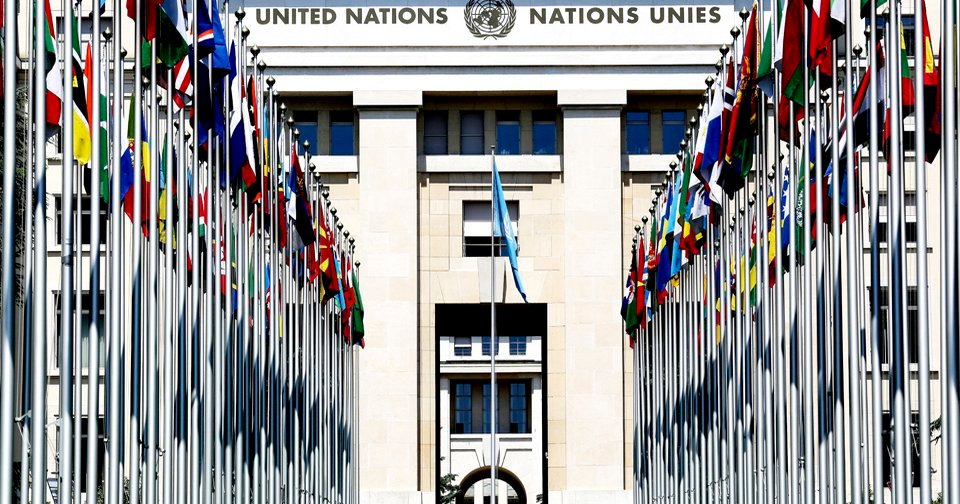
In June 2026, the UN Human Rights Council adopted the Universal Periodic Review (UPR) of Nauru that took place in January 2026.
The recommendations include reviewing prohibitively high foreign journalist visa fees to enable foreign journalists to visit the country. However, the government did not accept the recommendation.
According to a 2025 ABCID study, foreign journalists have been refused visas to report in Nauru. It is believed this is to prevent reporting on asylum seekers sent from Australia, an arrangement that has existed since 2013. In February 2020, the International Criminal Court found that detention conditions of refugees in Nauru may constitute a breach of international law.
Another recommendation was to take concrete measures to guarantee the rights to freedom of opinion and expression, particularly by decriminalising defamation. The government also did not accept this recommendation.
Association
National human rights body law passed
One of the UPR recommendations was creating a national human rights institution in accordance with the Paris Principles. In response to this the Nauru government said it had accepted it and had passed a law in December 2025.
The government stated that the Human Rights Commission Act had undergone several amendments to incorporate relevant advice and instructions from the Cabinet as well as key stakeholders to ensure that it can be effectively implemented in accordance with Nauru’s community standards.
Among the functions of the Commission are to develop, conduct or manage information and education programmes; coordinate with institutions, bodies or authorities with similar objectives and engage with regional and international human rights bodies and organisations.
Other functions include reviewing and making recommendations on government policies relating to human rights; monitoring the implementation of and compliance with regional and international treaties, conventions and other instruments and preparing and submitting annual and other reports to the Parliament on the state.
The body can also carry out studies, surveys or consultations concerning human rights; review and make recommendations to the Minister on human rights-related legislation; receive complaints of alleged violations and investigate alleged violations on its own accord or on a complaint.
However, an initial assessment of the law, raises concerns that the law may not be aligned with the Paris Principles.