The Pacific nation of Nauru — in name, at least — may soon be no more.
The world’s third smallest sovereign nation by size, second by population and the smallest republic stands ready to return to its traditional origins after taking a further step towards being renamed Naoero.
The proposed change is a nod to its Indigenous roots.
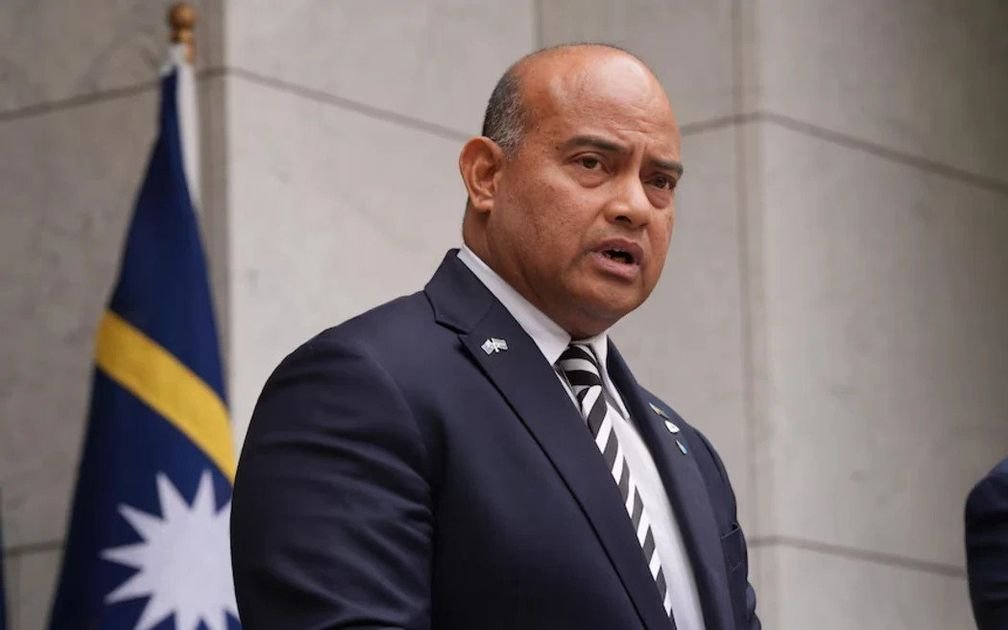
According to President David Adeang in a recent speech to Nauru’s parliament, the switch will “more faithfully honour our nation’s heritage, our language, and our identity”.
Nauru’s parliament recently passed the proposal unanimously among its 16-seat chamber.
However the microstate — which has around 8500 registered voters — will ultimately decide in the upcoming referendum on whether to make the change official.
It is expected be comfortably passed by the Nauruan people.
Mr Adeang framed the context of a change as “bringing our name home”.
“Nauru emerged because Naoero could not be properly pronounced by foreign tongues – and was changed not by our choice, but for convenience,” the Nauruan government said.
“This name change will be reflected right across the country, from the renaming of the national aircraft and ships to official identity regionally and internationally, including at the United Nations and across national official records and symbols.”
Naoero — pronounced simply Now-roo — is the term Nauruans already use in their Indigenous Dorerin Naoero language.
However Nauru remains commonplace for the rest of the world as a part of a colonial-era adaptation, even after its full independence.
In 1798, the 21 square-kilometre landmass was first called Pleasant Island by a sighting British seafarer up until imperial Germany annexed the island in 1888. The name Nauru then first entered official records, although variants of Nawodo and Navoda Onawero were also used at times.
Nauru gained full independence in 1968 as a United Nations trust territory, which had been administered primarily by Australia for the previous 49 years, while maintaining the Nauru spelling and its pronunciation.
Mr Adeang first tabled the name change bill in parliament on January 29 following a 90-day layover.
“It is about dignity – it is about pride,” he said. “It is about honouring those who came before us.”
The Australian High Commission is already using both Nauru and Naoero in official communications.
For anthropological scholars on Indigenous place names, such changes are never just a matter of subtle spelling differences.
The importance of reverting back to Indigenous names has long been part of exercising the cloud of past colonial powers.
In arguing for Naoero in parliament, the Nauruan Government pointed to other nations which have changed their official names to better reflect local languages, including Türkiye from Turkey and Eswatini from Swaziland, while in the nearby Federated State of Micronesia the island state of Chuuk dumped its colonial name Truk by 1990 to restore and reflect the island’s cultural identity better.
The Māori Party’s push to officially rename New Zealand to Aotearoa failed to gather political momentum, despite more than 70,000 signatures backing the optimistic move in 2021.
The Cook Islands has also long thought about whether dropping its name from the celebrated British explorer in favour of Kūki ‘Āirani from its own Cook Islands Māori language, but the suggestion has not gone past the discussion point.
UNESCO officially classifies Nauru’s language as “severely endangered” where only English — and not Dorerin Naoero — is taught in schools.