COVER STORY
PAPUA New Guinea seems to have forgotten the one animal species that defines and sets it apart from all the countries of the world – its Birds of Paradise.
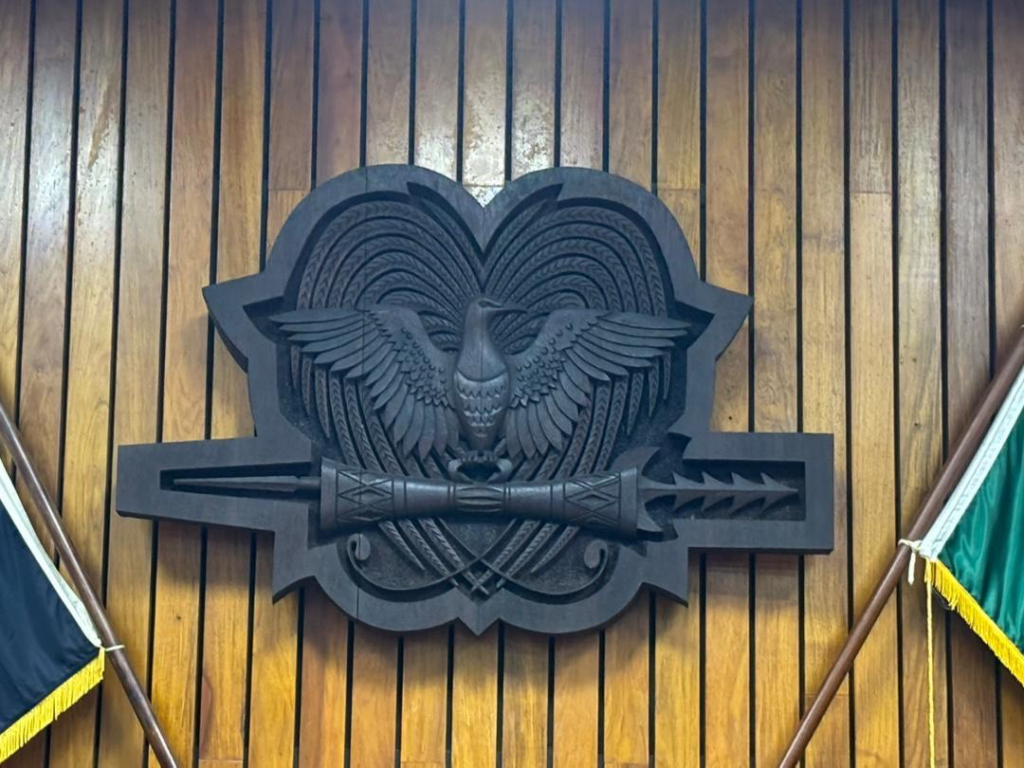
The bird of paradise is emblazoned on the country’s flag, is the national emblem, is minted on the currency, is represented on the national airline and portrayed in song and dance across every cultural grouping.
The national goals and directive principles call for its protection in goal number 4. Tourists flock to see the birds in their natural environment and their features are of immense monetary and cultural value.
Of the world’s 44 birds of paradise species, 38 are to be found on the island of New Guinea and 12 of which are only to be found in PNG. Yet today, silence permeates the air as to whether these birds are safe in their natural habitat.

The country’s birds of paradise may be endangered as conservation efforts to protect them remain limited.
There are laws protecting the native birds but the effectiveness of those legal bindings vary in practice. All bird of paradise species are protected under the Fauna (Protection and Control) Act 1976, which allows the government to declare certain species “protected fauna” and make it illegal to hunt, kill, capture or possess them without a permit.
A 2021 publication released by the Papua New Guinea Conservation and Environment Protection Authority (Cepa) included a consolidated list of PNG’s protected fauna, complied from the Protection and Control Act 1976 and subsequent amendments.
It says that there are 36 species classified as protected fauna. But enforcement of the law on the “protected fauna” is inconsistent or weak because hunting and illegal trade continue despite warning of harsher penalties and pledges of better protection.
As per the IUCN CSS (International Union for Conservation of Nature Centre for Species Survival) PNG, hosted by Port Moresby Nature Park, a 2025 species gap analysis for birds showed that there are 44 bird of paradise species found in PNG, Indonesia and Australia.
Of these, 38 are found on the island of New Guinea, and 12 are endemic to Papua New Guinea.
The 12 endemic species have been catergorised by the IUCN as:
• SEVEN are the least concern to extinction: Crinkle-collared Manucode (Manucodia chalybatus), Growling Riflebird (Lophorina – Ptiloris in Birds of New guinea intercedens), Stephanie’s Astrapia (Astrapia stephaniae), Huon Astrapia (Astrapia rothschildi), Eastern superb bird-of-paradise; lesser lophorina on Avibase (Lophorina minor), Ribbon-tailed astrapia (Astrapia mayeri) and Ribbon-tailed asterpia (Astrapia mayeri).
• THREE are nearly a threat to extinction: Blue Bird-of Paradise (Paradisornis rudolphi), Wahnes’s Parotia (Parotia wahnesi) and Emperor Bird-of-Paradise (Paradisaea guilielmi).
• ONE is yet to be assessed: Eastern Parotia (Parotia helenae).
As part of conservation efforts, the Port Moresby Nature Park have been preserving and breeding seven species. They are the Raggiana Bird of Paradise (Paradisaea raggiana), Lesser Bird of Paradise (Paradisaea minor), Magnificent Bird of Paradise (Cicinnurus magnificus), Eastern Parotia (Parotia helenae), Trumpet Manucode (Phonygammus keraudrenii), Crinkle-collared Manucode (Manucodia chalybatus) and Growling Riflebird (Ptiloris intercedens).
Port Moresby Nature Park head bird keeper Rebecca Gaimbili says that there are awareness and educational programmes held at the park that focus on feather preservations of the Birds of Paradise, its importance as a national identity, laws protecting these species (International Flora and Fauna Act, 1979) and regulations under the Convention on International Trade of Endangered Species of Wild Flora and Fauna (CITES) that concern these species.
In 2021, the park successfully bred in captivity its first Raggiana Bird of Paradise hatchling as part of its ongoing breeding programme.
Currently, there have been three Reggiana hatchlings bred successfully at the park, with the recent one born last year.
In addition, the park for the first time in 2025 bred a Trumpet Manucode in captivity.
With a boom in the country’s population and a cultural demand for feathers, it is anybody’s guess what the exact number of these birds existing today. There is no doubt that the number is decreasing on a daily basis.
Gaimbili says that in PNG and parts of West Papua, the feathers of the Birds of Paradise are traditionally used in ceremonial dresses, headdresses and in cultural performances.
“Certain species were highly valued because of their long plumes and bright colours. These feathers are important for tribal identity, status and cultural ceremonies.
“Historically, hunting was usually on a small scale and regulated by customary practices, which limited a decline in its population.”
The birds of paradise continue to play a significant role in shaping the cultural identity of PNG, with its presence reflected in both traditional practices and national symbols. Widely recognised for their striking appearance, the birds are featured on the country’s currency, symbolizing PNG’s rich natural heritage.
Their feathers are also commonly used in traditional and modern jewelry and ceremonial attire, particularly during cultural festivals and dances.
During these events, performers incorporate bird of paradise feathers into elaborate costumes and mimic the birds’ unique movements in dance, highlighting long-standing cultural traditions and storytelling.
The bird of paradise is also predominantly displayed on the national flag and forms part of the country’s national emblem, reinforcing its status as a unifying symbol.
In the corporate space, the bird is used as the logo of Air Nuigini, reflecting its continued relevance in today’s national identity.
The bird of paradise remains one of the most enduring symbols of PNG, representing the connection between the country’s natural environment and its cultural heritage. But with the current data suggesting a decline in the number of these birds, PNG’s national goals and directive principles also face uncertainty.
The fourth national goal on natural resources and the environment embodies the fundamental principle of protecting and using natural resources wisely for both present and future generations.

Comparably, the fifth national goal on Papua New Guinean ways highlights that the development in the country should be guided by traditional values, cultures, and social systems, rather than copying foreign models without adaptation.
This goes to show that as the demand for the colourful long plumes of the birds of paradise increases, these national goals support conservation in theory. But in practice, they can fall short due to poor enforcement, economic incentives, and cultural demand for feathers.
The IUCN CSS-PNG established in 2025, has been supporting the park to address conservation gaps for endemic Papua New Guinean species such as the Birds of Paradise.
National Cultural Commission executive director, Steven Kilanda said he is working the Cepa to establish an agreement to protect the bird of paradise in the country.
Kilanda said: “Culture is related to the environment and to the plant and wild life. We must stop hunting certain species of birds and marsupials and preserve them. Birds of paradise species are among those very rare birds. We cannot find them in other parts of the world. If it means for us to establish parks to preserve them, we should do it.”
Kilanda said corporate interests such as mining and logging were depleting the natural habitat for the birds of paradise.
The NCC is encouraging locals in the Malamata area of East Sepik and the Malumanda area of Enga to work together protect their wild life, especially the birds of paradise species in the area. These species remain a high priority and are captured in the conservation plans for IUCN-PNG and the Port Moresby Nature Park.
By implementing the Assess-Plan-Act model, the centre identifies extinction risks and mobilses coordinated conservation efforts. But the Birds of Paradise species are assessed globally by IUCN species specialist groups. And the national centre has not rolled out assessment and monitoring plans focused on these birds in the country as yet.
Steward Sengi, the IUCN CSS- PNG Species Survival officer, says since the establishment of the national centre, it has been working on supporting organisations such as the Port Moresby Nature Park to secure support from the IUCN.
“Currently, the centre is conducting a species gap analysis to identify the correct statistics, changes and new classifications and would identify priority species that need assessment, reassessment and human conservation efforts.
“Once completed, the report would be made available for all conservation organisations in the country and would assist in the next phase – which is the red list assessment.”
Sengi explains that the red list assessment will connect all conservation organisations in the country to pledge the threatened species they have been working on as part of their Reverse the Red Species Pledge for global mapping of all threaten species, networking and securement of support from the IUCN.
The IUCN – PNG will start assessing and monitoring the species by establishing a birds of paradise species specialist group and national species specialist group once it has completed its national red list project framework document which will guide all these processes.