An anniversary is a renewal of expectations regarding our society. The fact that we celebrate the 205 years of the republic reminds us of the allusions of our writers. Two of the best-known phrases in Peruvian literature are examples of the uncertainty and sadness that has accompanied us. In “The Black Heralds”, faced with the realization of the blows of life, Cesar Vallejo He responds with a phrase of bewilderment: “I don’t know.” Confusion is one of the keys to a work that explores original pain in a national key.
LOOK: I read you like a book, by Irene Vallejo
The other phrase that has stayed with us is evidently “At what point did Peru get screwed?” The phrase comes right after a description of Lima’s “gray midday.” Being “fucked” is a common thread that will run through the fate of the characters and the society presented in Vargas Llosa’s novel. To the phrases of Vallejo and Vargas Llosa we can add that of Inca Garcilaso in the “Royal Commentaries”, when after recounting the execution of the Inca Túpac Amaru, the last rebel of Vilcabamba, he refers to our history with a sentence: “Because in everything it is a tragedy.”

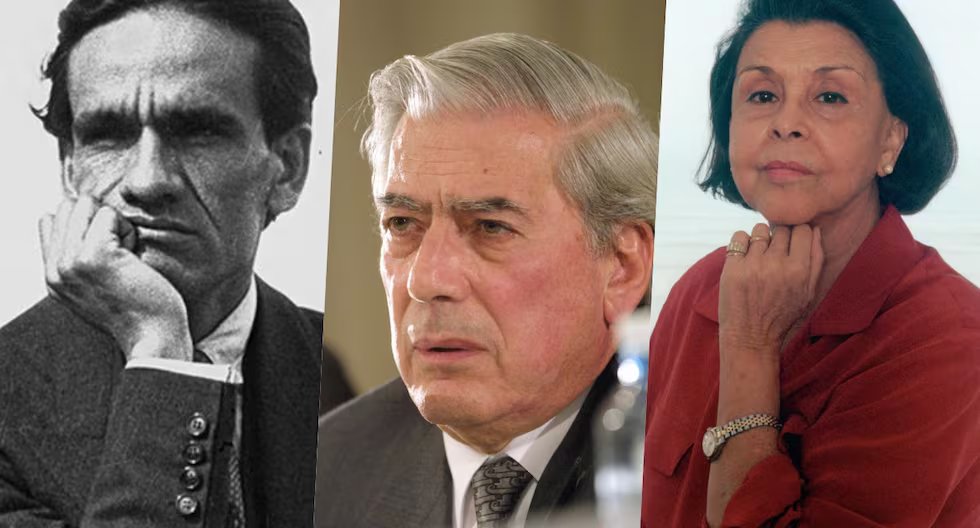
Mario Vargas Llosa.
The idea of being a doomed country is behind the vision in these passages. However, it is also true that towards the end of his life Vallejo underwent a transformation, excited by a slogan. The Spanish civil war exalts him. The famous poem “Masa”, so recited at the closing ceremonies of Peruvian schools, is a song to universal solidarity. This final conviction in Vallejo can be replicated in Vargas Llosa’s latest novel, “I Dedicate My Silence to Him.” According to the protagonist of that book, the salvation of Peru can only come from popular art. Popular music, in particular, offers us a principle of social unity, where ethnic differences can be resolved. Both Vargas Llosa and Vallejo embraced, at the end of their works, the possibility of a future.
Among us, the idea of a doomed country, fatally handed over to a destiny, is expressed in common sayings. “We are in Peru” is a hateful phrase that I frequently hear as an explanation for all the excesses that surround us. In this vision of our country, we are a petrified society, unable to advance or improve.

Blanca Varela.
/ House of Peruvian Literature
And yet, Peruvian society has never stopped moving. Today’s writers no longer conceive Peruvian history as a condemnation or a paralysis. In the fictions of the generation of Jeremías Gamboa, Karina Pacheco, Susanne Noltenius, Ulises Gutiérrez, Renato Cisneros, Gustavo Rodríguez and many others, situations of mobility are presented in which the characters are capable of altering their destiny. For example, just read “The Beginning of the World” by Gamboa.
Regarding the phrases, I remember the speech that Borges gave at the celebration for the anniversary of Buenos Aires, in 1936. Entitled “Tasks and destiny of Buenos Aires”, he stated that the city imposed on its inhabitants “a secret and terrible duty”, which is the “duty of hope”.
That hope, applied to a country, is what links us to the idea of the homeland. The ‘homeland’, a word that is rarely used, is the way of naming “the country” from love, which is the condition of hope. This is what Marco Martos was referring to when he stated that our homeland was the place chosen to build “all your dreams here.” Blanca Varela also said it: “If Peruvians felt that we were all Peruvians, we would be a more dignified country.”