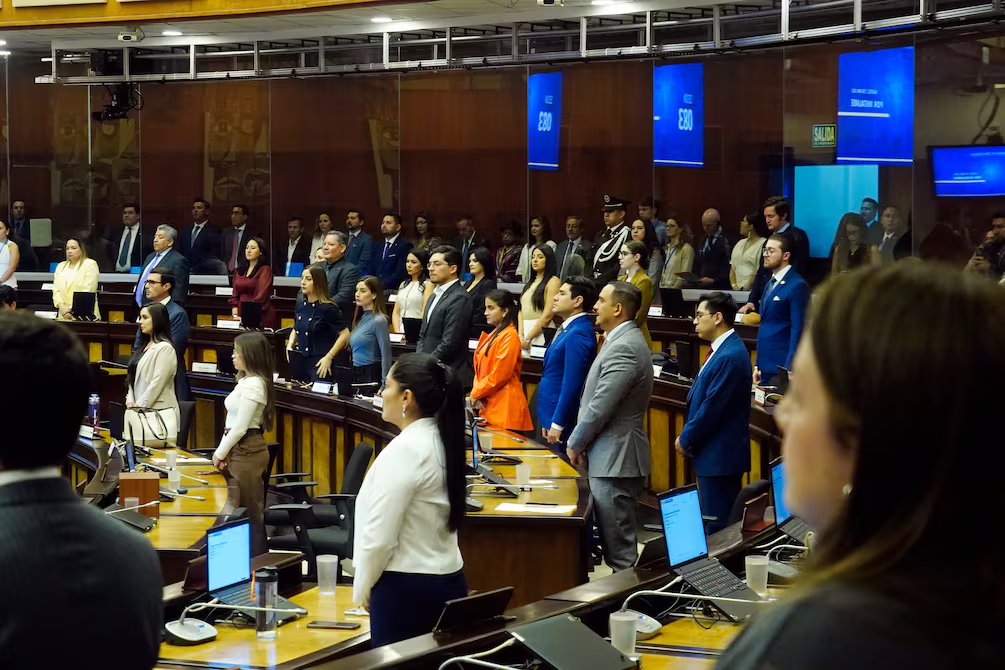
The plenary session of the National Assembly was convened to hear and resolve on the Strategic Economic Cooperation Agreement (SECA) between Ecuador and South Korea, considered one of the most extensive trade agreements negotiated by the country.


Session No. 085 will be held on Tuesday, April 14, 2026, at 10:00, at the headquarters of the Legislative Function, in Quito, according to the call issued by the president of the Legislature, Niels Olsen Peet. For the approval of the text, it is necessary absolute majoritywhich corresponds to half plus one of its members.
As a second item on the agenda, legislators must debate the report on this agreement signed between Ecuador and the Republic of Korea, which is currently in the approval process in both countries.
The treatment of the SECA comes after the analysis carried out by the International Relations Commission, which received authorities from the Executive and representatives of productive sectors. Among them was Chancellor Gabriela Sommerfeld, who defended the agreement as a key tool for the country’s insertion into the Asia-Pacific region.
According to what the Government stated, the agreement contemplates the progressive elimination of tariffs for thousands of Ecuadorian products. In total, more than 7,400 tariff items will go to 0% immediately, while others will be reduced in terms of up to three and five years, including products such as coffee, cocoa, bananas, and derivatives.
In addition, the SECA includes a specific chapter for small and medium-sized companies, with the aim of facilitating their access to international trade. This would allow producers from sectors such as cocoa, coffee or pitahaya to enter the Korean market under similar conditions to large exporters.
The agreement also covers twenty-three chapters that include various topics, such as investment, trade in services, cooperation, intellectual property and technology transfer, with the aim of modernizing the country’s productive structure and attracting foreign investment.
Another highlight is access to a market of more than 51 million people, with high purchasing power, which opens opportunities to diversify Ecuadorian exports.
However, the agreement contemplates protection mechanisms for sensitive sectors, such as differentiated deadlines, specific exclusions and safeguards, in order to allow a gradual adaptation of the national industry.
In addition to the SECA, the plenary session will address other issues in the same session, including the total objection to the draft Comprehensive Organic Code for Agricultural Reactivation and Fisheries, as well as the objection to labor reforms related to youth.
(YO)