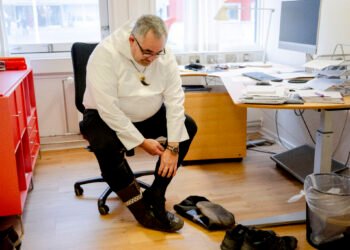
The TV viewers followed the foreign minister Lars Løkke Rasmussen and naalakkersuisoq for foreign affairs Vivian Motzfeldt, who took a much-needed smoke break after high-stakes negotiations in Washington.
Negotiations, which ended up cornering the biggest threat to the kingdom since World War II high level working group.
The TV viewers followed the foreign minister Lars Løkke Rasmussen and naalakkersuisoq for foreign affairs Vivian Motzfeldt, who took a much-needed smoke break after high-stakes negotiations in Washington.
Negotiations, which ended up cornering the biggest threat to the kingdom since World War II high level working group.
Since then concrete information has been scarce.
Naalakkersuisoq for foreign affairs Múte B. Egede was also concise in his response to Sermitsiaq when we asked at Monday’s press conference whether the ongoing negotiations in the working group include a revision or even a repeal of chapter 11 of the defense agreement of 1951. It is this chapter that exempts the Americans from environmental responsibility for its abandoned bases in Greenland.
– We do not negotiate through the press. We are following the diplomatic track, was the reply.
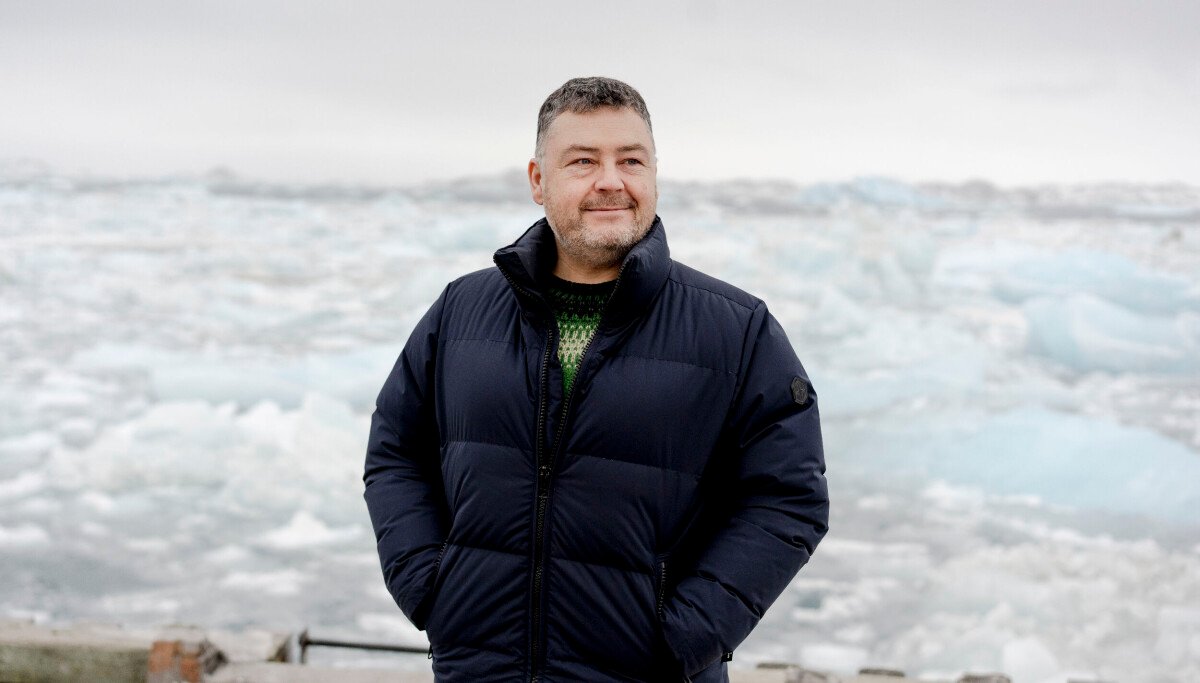
But the chairman of Naleraq and deputy chairman of the foreign and security policy committee in Inatsisartut Pele Broberg is not satisfied with that.
– Inatsisartut already decided in 2023 that Naalakkersuisut should identify specific parts of the defense agreement complex where Greenland’s interests should be strengthened. I have to state today that Naalakkersuisut seems remarkably passive at a time when Greenland is more central in the security policy discussions than at any time in recent times, says Pele Broberg to Sermitsiaq.
– From the Danish side, we repeatedly hear that the dialogue with the Americans takes place as a bilateral cooperation between Denmark and the USA. At the same time, we see negotiations and working groups where it is still the Kingdom of Denmark that appears as the primary party. It leaves the impression of a Naalakkersuisut, which is placed on a side track in the most central discussions about Greenland’s future role. It’s not good enough. When American military presence, defense agreements, investments, raw materials, security policy and environmental responsibility are discussed in Greenland, Greenland should not be a spectator. Greenland should be an active and equal participant at the table.
The polluter pays – of course
The immediate threat to Greenland seems to have been overblown, but the circle around the American president continues to be stingy against the Greenlandic population; most recently the special envoy Jeff Landry, who on National Day welcomed Greenland as the USA’s 51st state as early as next year.
It is an often heard assessment that in an inflamed situation it is better to let time pass in a working group than to react to provocations.
– Wouldn’t it be a better tactic for Greenland to duck its neck than to get the USA on its back?
– I do not believe that the choice is between keeping a low profile or going into conflict with the United States. The problem is rather that Greenland does not seem to have a clear voice at the table today. If it is correct that Article 11 of the defense agreement may result in Greenland or Denmark being left with the bill for environmental clean-up after American activities, then the question should of course be raised in the ongoing negotiations. The principle must be that whoever pollutes also takes responsibility for the clean-up.
The agreement on Danish clean-up of the American bases in Greenland was signed in 2018.
– Therefore, several years ago Naalakkersuisut should have presented a clear Greenlandic strategy for how this environmental issue should be handled in the future, says Pele Broberg.
Come forth freely
But Pele Broberg does not stop here.
– The central question for me is actually even bigger than the responsibility for clean-up. I miss that naalakkersuisut presents at all what concrete Greenlandic demands they want fulfilled in connection with the ongoing modernization of the cooperation with the USA. Environmental responsibility could be one of them. Greenlandic co-determination could be another. Local economic gains, education, jobs and respect for the wishes of the Greenlandic people could be others. Therefore, I do not believe that Greenland should keep a low profile. On the contrary, Greenland should actively put forward its own demands and interests. But I also do not believe that the purpose should simply be to change a single provision in an agreement from 1951.
– The aim must be to ensure that Greenland is no longer just a geographical area that other states negotiate on, but a real and equal party when decisions are made about our country. When Denmark describes the relationship with the USA as a bilateral cooperation between Denmark and the USA, while Greenland continues to be outside the central negotiations on matters that concern our own country, the question is no longer whether Greenland has gained more influence.
– The question is why Naalakkersuisut accepts that we have not received it. And that, in my opinion, is the question that naalakkersuisut owes the Greenlandic people an answer to, says Pele Broberg.