Although the icing comes later of the year compared to previously, there are still major challenges with the supply of goods during the winter period, especially in North and East Greenland.
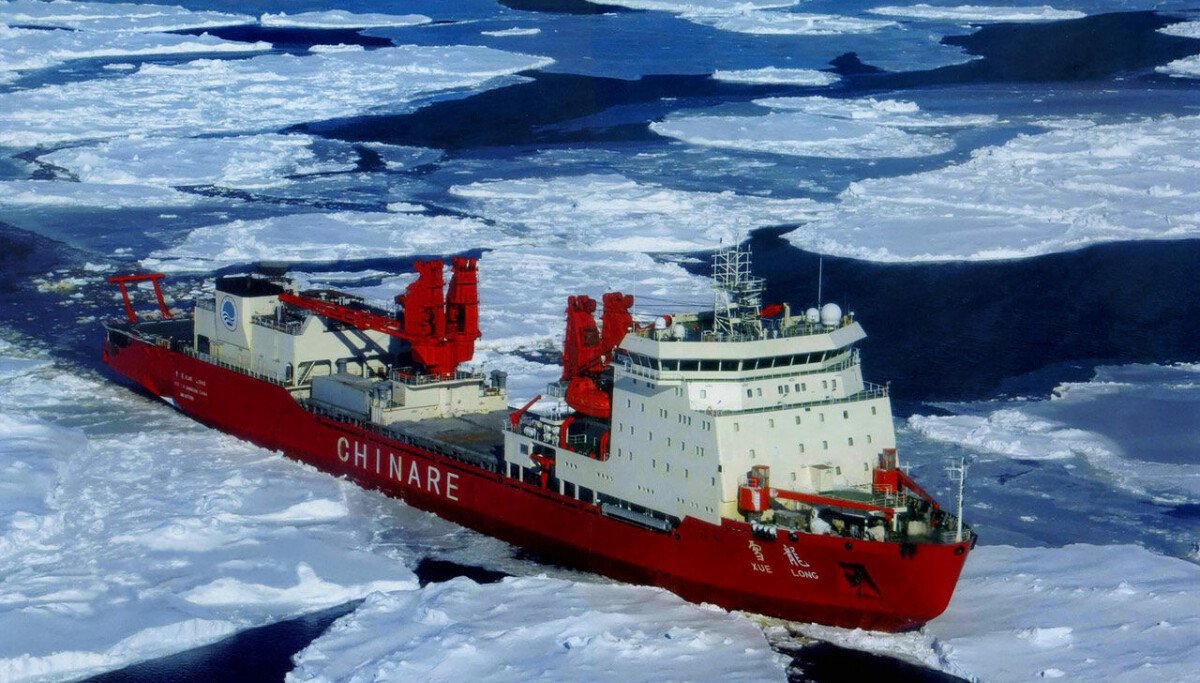
Therefore, Naalakkersuisut should pave the way for Royal Arctic Line A/S (RAL) to acquire icebreakers that also function as supply ships, in order to remedy the situation.
Although the icing comes later of the year compared to previously, there are still major challenges with the supply of goods during the winter period, especially in North and East Greenland.
Therefore, Naalakkersuisut should pave the way for Royal Arctic Line A/S (RAL) to acquire icebreakers that also function as supply ships, in order to remedy the situation.
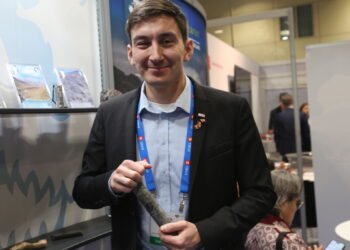
This is the opinion of Isak Johannesen, Naleraq, who is a member of Inatsisartut, who via section 37 asks questions to Naalakkersuisut precisely on the subject.
But Naalakkersuisut will not acquire or build icebreakers to support the national freight and goods supply because of the icebreakers’ high acquisition and operating costs.
This is stated by Aqqaluaq B. Egede, Inuit Ataqatigiit, who is Naalakkersuisoq for Social Affairs, Labor Market, Housing, Infrastructure and Outer Districts.
RAL also does not believe that it is not necessary to use icebreakers for the supply of goods in the areas that have ice in winter.
Adapts
It appears in the reply note to Isak Johannensen, who lives in Upernavik, that Naalakkersuisut is continuously investigating the possibility of improving the national supply of goods.

– Royal Arctic Line A/S’ sailing plans were last adapted in October 2025. Here, the supply of goods was specially adapted to meet current customer needs, which is normal practice when Naalakkersuisut approves the shipping company’s sailing plans, says Aqqaluaq B. Egede.
Isak Johannesen also wants to get an answer as to whether Naalakkersuisut will take advantage of the opportunity to extend the supply period in the areas where icing has started at a later time compared to before.
– Naalakkersuisut adapts the national supply of goods after the delay of the winter season. For example, Royal Arctic Line tried in 2024 and 2025 to call at Tasiilaq as late in the year as possible to take advantage of the longer winter periods.
– Naalakkersuisut is also in ongoing dialogue with RAL and Denmark’s Meteorological Surveys (DMI) to organize the national freight supply according to national ice conditions, says Naalakkersuisoq for Infrastructure and Infrastructure.
According to Naalakkersuisut, the obstacles to the use of icebreakers, which also have a function as a supply ship, depend to a large extent on the region in question. North Greenland and East Greenland, for example, have vastly different ice conditions in winter, says Aqqaluaq B. Egede.
Significant risk
At the same time, Naalakkersuisut learns that the extent of the ice varies considerably from year to year in certain areas, and that the extent of the ice on the open sea can change quickly.
But RAL’s current fleet cannot sail in risky waters, he states.
– If RAL plans to call at times when there is great uncertainty about the extent of the ice, this will entail a significant risk of damage to the ship and crew.
– Furthermore, RAL cannot guarantee that its ships will be able to call at ice-filled areas during the winter months, even if the areas are periodically ice-free, says Aqqaluaq B. Egede.
At the same time, he states that the ships bring supplies to a limited extent, as there is uncertainty as to whether the ships can call at the ports. And when this is the case, the overall operation will not be profitable, informs Naalakkersuisoq.
Safe departures
It is important for Naalakkersuisut and RAL to ensure that the voyage is safe for both ship and crew. According to RAL, the voyage must be planned well in advance before cargo can arrive with the ship.
– Pilersuisoq plans the shipment of goods according to the sailing schedule and prefers to send cargo forward with safe departures, rather than departures that may not materialize.
– The current system of sailing plans for a year ahead allows for planning the transport of goods so that there are supplies for the entire period.
– In our country, it is possible to transport goods by ship when there is no ice and to handle goods by plane and helicopter when there is ice, states Aqqaluaq B. Egede.
It is not possible for Naalakkersuisut to explain the financial consequences if you acquire an icebreaker, says Naalakkersuisut.
Far too expensive
Niels Clemensen, who is the managing director of RAL, says that the shipping company has no plans to acquire an icebreaker that also functions as a supply ship. He also points out that the owners, who are Naalakkersuisut, have not asked RAL to change the current concept either.
– If the owners want us to build an icebreaker, we will build it. But the costs of that will be reflected going forward. Technically, it can easily be done. But it is a matter of price.
– It will be much more expensive to operate compared to the ships we have now. But our ships are also built to sail in waters with ice, he says.
He says that there are several factors that must be covered before deciding to acquire an icebreaker.
The topic for debate
Isak Johannesen says that he will bring the answer from Naalakkersuisut to debate in Naleraq’s group in Inatsisartut in connection with Inatsisartut’s spring meeting.
He says that the subject must be put on the agenda in Inatsisartut during the year. He believes that, on the basis of this, an investigation should be initiated into the possibilities of acquiring an icebreaker that functions as a supply ship.