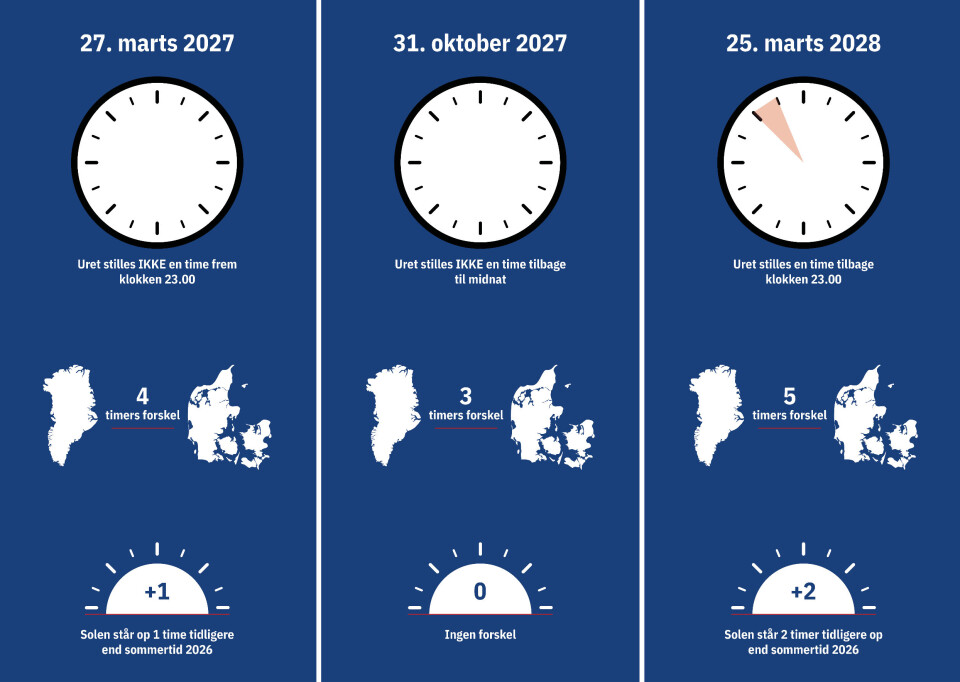
Thursday 12 November must Inatsisartut make a final decision onwhether Greenland’s standard time zone should be changed back to UTC-3 and whether summer time should be abolished.
The standard time zone covers the whole country with the exception of Pituffik Space Base and the weather station Danmarkshavn.
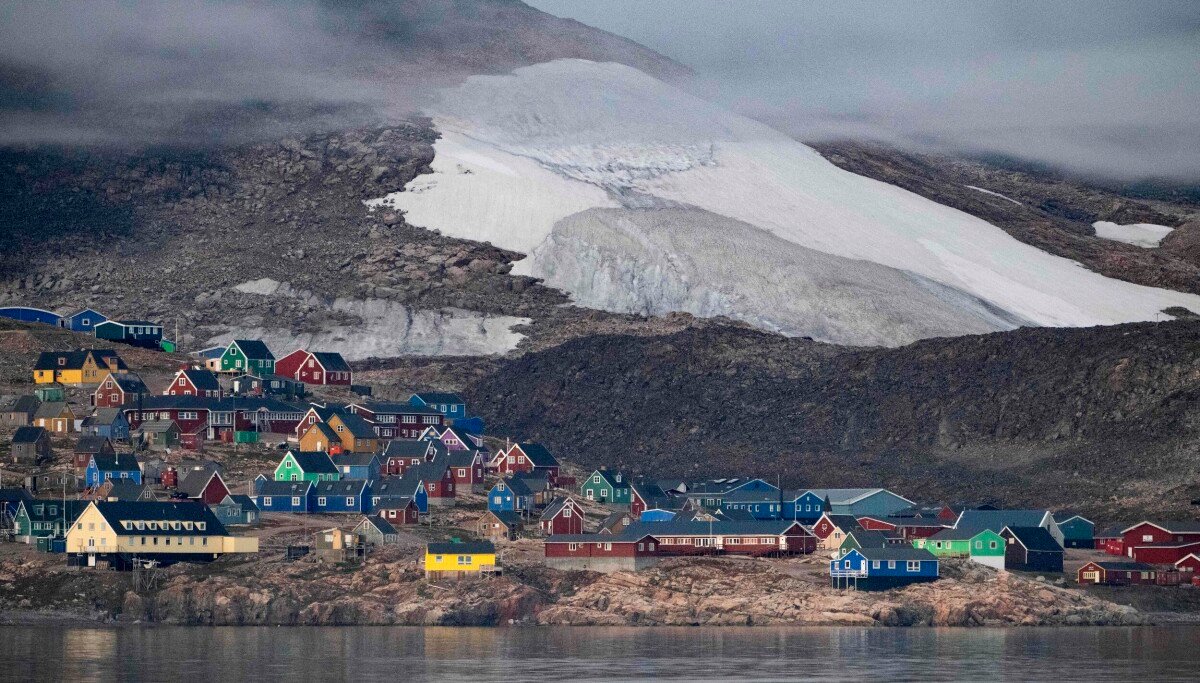
But it didn’t used to be like that. Before 2024, Ittoqqortoormiit also had its own time zone. They used to be in UTC-1, but after the rest of the country moved to UTC-2, it was decided that the northeastern city should follow suit.
Now, however, Ittoqqortoormiit realizes that they can be moved to UTC-3 – i.e. two hours from their original time zone – if Inatsisartut votes for the changes to the determination of the time. And the residents don’t want that.
They have already noticed changes at the current time zone.
– It’s getting darker. It gets dark earlier, especially in winter, we can experience that it already gets dark at 12 o’clock and at 1 or 1:30 p.m. it is completely dark, says Hans Brønlund, who is chairman of the local committee in Ittoqqortoormiit.
He states that several people say that they suffer from depression-like symptoms in the winter, and that there is a feeling that the darkness lasts longer.
From 23 November to 18 January there is polar night in Ittoqqortoormiit, when the sun does not rise at all.
Advantages and disadvantages
Hans Brønlund also points out that the time zone affects air traffic. To get to Ittoqqortoormiit you have to fly from Iceland to Nerlerit Inaat and from there continue by helicopter.
– In winter, we find that when the plane comes from Iceland, most people spend the night in Nerlerit Inaat. It’s because they can’t fly the helicopter when it’s so dark. Sometimes the weather turns bad the next day, so people end up there for several days.
In the past, when Ittoqqortoormiit was in UTC-1 and the rest of Greenland was in UTC-3, there was a two-hour time difference. This is how Hans Brønlund wants it to be again.
However, he acknowledges that the time difference affected business and private individuals. For example, you had to wait an extra two hours to get in touch with the bank or the health service.
The question of whether public health or the interests of the business world should be given the highest weight when it comes to time zones takes up a lot of space in the debate about returning to UTC-3, as many in West Greenland experience sleep problems in the new time zone.
However, the National Medical Board has stated in a consultation responsethat changes from a health perspective are neutral to slightly positive, although any health gains must be expected to be modest.
Ittoqqortoormiit may get its own time zone
The bill, which Inatsisartut must decide on on November 12, has been submitted by Siumut.
Naleraq also wanted to make changes to the provision of the time, but their bill was rejected by Inatsisartut on 21 October. The key difference between the proposals is that Naleraq requires the citizens of Qaanaaq, Tasiilaq and Ittoqqortoormiit to be consulted before setting time zone changes in those areas.
In the consultation response to Naleraq’s bill, the Local Committee of Ittoqqortoormiit submitted a response stating that they had conducted a consultation among the citizens of the city using a questionnaire and Facebook.
54 citizens voted for Ittoqqortoormiit to return to UTC-1, while 53 citizens voted for Ittoqqortoormiit to follow the West Coast to UTC-3. There are 328 people living in Ittoqqortoormiit.
However, Hans Brønlund does not believe that the opinion poll is fair.
– It’s because that hearing was done in the summer, so they haven’t thought about the darkness, I can imagine, he says and says that he has spoken to many in the city who want to return to UTC-1.
Siumut has written in his bill that Naalakkersuisut can lay down rules that specified areas must follow a different time zone than standard time for Greenland.
Hans Brønlund hopes that Naalakkersusiut will make use of this opportunity if the bill is passed.
– I just want to hope that there will be more consultation about the time zone in the winter instead of in the summer, so that it might make more sense for the people over here, he says.