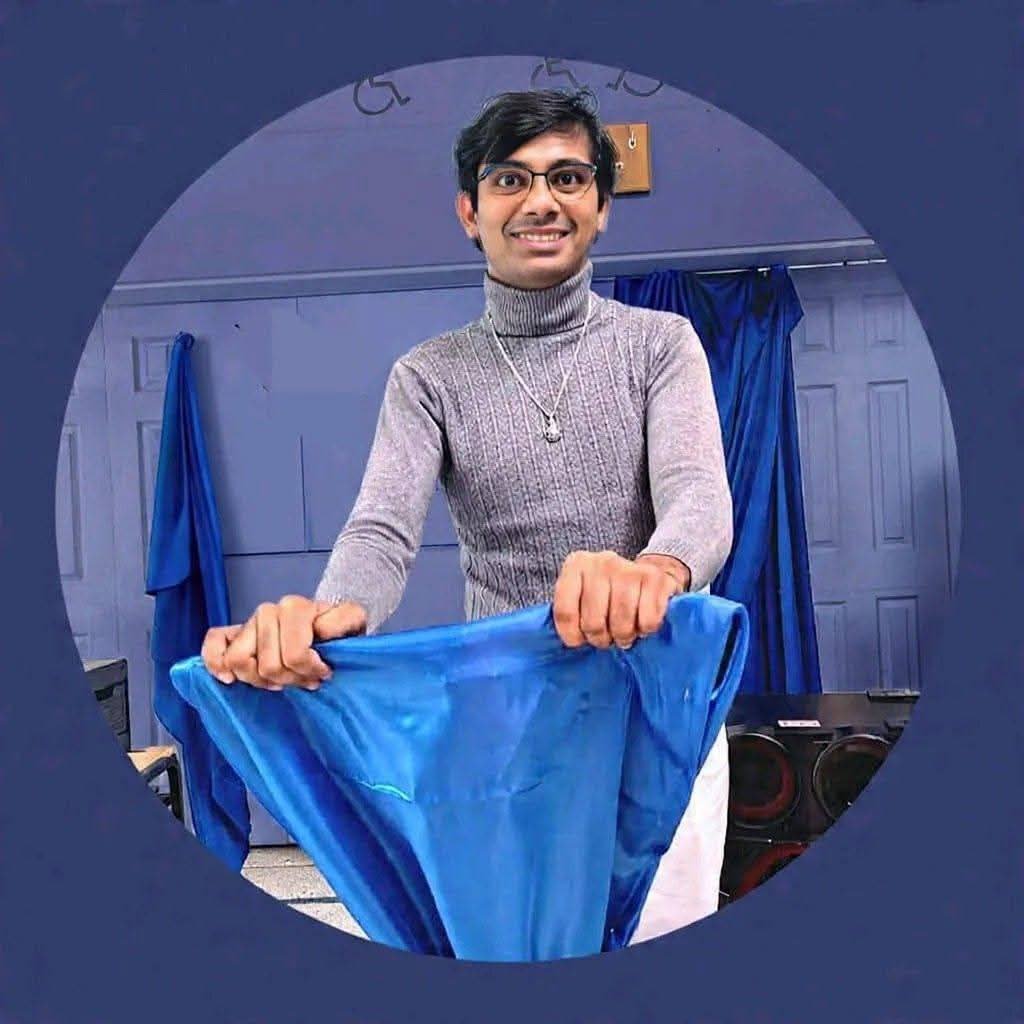
When Sunderlal Vylan Sonny was born, his mother immediately noticed there were some things about her newborn son that were different. According to Jualla, he was “a big baby, almost ten pounds, with twisted fingers and feet and stiff limbs.” It was 1999, and at that time, there was no answer to what made him different, so she accepted the response when she took him to the clinic and was told that everything was fine. At 18 months old, however, Jualla again noticed that something was wrong. Her son was still not attempting to turn over or make sounds, which prompted her to go to a clinic again for the doctors to have a closer look. Sonny was eventually diagnosed with cerebral palsy (CP), with the doctors indicating that he had suffered a lack of oxygen to his brain during delivery.
This diagnosis answered one question but left Jualla with many more. She didn’t know what having CP would mean for his development. Moreover, she wanted medical information as to how she could help him and learn basic functions. Jualla said the doctors did not give her much hope, saying that CP was incurable and nothing could be done for him. Determined and resilient, however, she refused to accept this response.
Bound by humble means, limited resources and without a large family or community to rely on, Sonny and Jualla’s road was marked by challenges. Private therapy or treatment overseas was beyond Jualla’s means and she received no clear path forward from the doctors who diagnosed Sonny. Independently, Jualla began researching CP, observing her son, and incorporating remedies that came naturally to her, trying to understand how he communicated and what might help him develop.
“If I don’t understand my child, who would?” she said. “He couldn’t talk, but he could hear.” Based on this, she began talking to him consistently throughout the day, teaching him to associate happy faces and sad faces with the respective emotions, and working with him to show her when he was hurt and whenever he was in pain rather than expressing himself through emotional explosions. By watching and learning from each other, they developed their own methods of communicating.
At home, Jualla turned ordinary things into practical exercises. She labelled objects around the house in large letters, such as the doors, walls, kitchen and ordinary objects, wanting him to begin recognising words. She used television and video games as tools to spark his interest and for them to enjoy together. In her research, she learnt that employing various methods of stimulation for the brain would be a catalyst to his development.
Devoting this time and effort to her son was not always easy, but Jualla took her responsibility as a parent seriously, not only giving him tools to develop his capacity, but emotional support—the hope and courage he needed.
At just over three years old, Sonny began attending the Princess Elizabeth Centre, which offers education for children with disabilities. There, he had access to speech therapy, physiotherapy, swimming, gym facilities, nursing and medical care. For the first few years, Jualla and Sonny would take the bus together every day, until they were introduced to the PTSC ELDAMO bus service, which catered to transporting children with disabilities.
When he was eight years old, spurred by the progress from his developmental therapy at Princess Elizabeth Centre, Sonny began walking and talking. At 11, a trainer agreed to work with him in the gym and he began using the treadmill and lifting weights. Sonny remembers that because extra therapy came at a cost that they could not afford, his mother would take him to the beach to play in the sand and waves as a form of therapeutic movement. Although his knees and back were bent, with continued exercise and therapy, his body got stronger and began to straighten.
As he got older and his physical state improved, his mental and emotional health began to suffer. He became acutely aware of the difference between himself and the children around him. Watching his cousins and other children in his neighbourhood run and play, he struggled to keep up. He remembers feeling left behind and, during his preteen years, his self-esteem took a hit. “I was depressed,” he said, “and I felt so left out.”
Sonny believes that his mother not only supported his mental and physical development, but also introduced him to God and prayer, which buoyed his emotional strength. Faith had been important to Jualla through some of the more difficult periods of her own life, and she wanted Sonny to have that foundation too. Over time, he cultivated his own relationship with God and his mind started to open.
Writing also became important during the years when he was dealing with frustration. When something was bothering him, he would type it on a laptop. Jualla would read what he had written and use it to start a conversation. The writing eventually became more than a way to express frustration; instead, it was a record of his experiences.
The idea for A Crooked Path Made Straight, which Sonny co-wrote with his mother, developed during the COVID-19 pandemic. With school, gym and other activities shut down, the two had more time at home and Jualla suggested that he tell his story. They began sharing parts of it on social media. People responded, and the two started thinking about what might happen if they put the story into a book.
The result is not a medical account of cerebral palsy. It is an account of what happened after the diagnosis and through resilience: the years of work that followed and the relationship between a mother trying to understand her child and a child trying to understand himself.
Sonny wants other people to take something practical from it. His advice is to stop deciding that something cannot be done before making an attempt. His mother had always pushed him to try first, “then make your judgement,” he said. Jualla believes too many parents of children with disabilities become discouraged when progress does not come quickly. She wants them to work with their children early, seek out whatever therapy is available and keep looking for ways to communicate. She also wants more support for families as the cost of therapy and specialised care can be difficult for parents to manage. Jualla believes rehabilitation services for children with disabilities need to be more accessible, while parents should also have access to counselling and support.
The title of their book comes from their understanding of challenging years: the path was not straightforward. For Sonny and Jualla, however, the important thing was never whether the road looked like everyone else’s; it was learning how to keep moving along it, conquering each new challenge, together.