Friday, June 12, 2026
    The GeoStrategic Consensus
    No Result
    View All Result
    • Login
    • HOME
    • AMERICAS
      • Argentina
      • Brazil
      • Canada
      • Chile
      • Colombia
      • Costa Rica
      • Cuba
      • Dominican Republic
      • Ecuador
      • El Salvador
      • Greenland
      • Guatemala
      • Honduras
      • Mexico
      • Nicaragua
      • Panama
      • Paraguay
      • Peru
      • United States
      • Uruguay
      • Venezuela
    • ASIA-PACIFIC
      • Australia
      • Brunei Darussalam
      • Cambodia
      • China
      • Federated States of Micronesia
      • Fiji
      • Indonesia
      • Japan
      • Kiribati
      • Laos
      • Malaysia
      • Marshall Islands
      • Mongolia
      • Myanmar
      • Nauru
      • New Zealand
      • North Korea
      • Palau
      • Papua New Guinea
      • Philippines
      • Samoa
      • Singapore
      • Solomon Islands
      • South Korea
      • Taiwan
      • Thailand
      • Timor-Leste
      • Tonga
      • Tuvalu
      • Vanuatu
      • Vietnam
    • CARICOM
      • CARICOM – Non-English
        • Haiti
        • Suriname
      • CARICOM Associates
        • Anguilla
        • Bermuda
        • British-Virgin-Islands
        • Cayman-Islands
        • Curacao
        • Turks-and-Caicos
      • CARICOM English
        • Antigua and Barbuda
        • Barbados
        • Belize
        • Dominica
        • Grenada
        • Guyana
        • Jamaica
        • Montserrat
        • Saint Kitts and Nevis
        • Saint Lucia
        • Saint Vincent and the Grenadines
        • The Bahamas
        • Trinidad and Tobago
    • EURASIA
      • Armenia
      • Azerbaijan
      • Balarus
      • Georgia
      • Kazakhstan
      • Kyrgyzstan
      • Moldova
      • Russia
      • Tajikistan
      • Turkmenistan
      • Ukraine
      • Uzbekistan
    • EUROPE
      • Albania
      • Andorra
      • Austria
      • Bosnia and Herzegovina
      • Bulgaria
      • Croatia
      • Cyprus
      • Czech Republic
      • Denmark
      • Estonia
      • Finland
      • France
      • Germany
      • Greece
      • Holy See
      • Hungary
      • Iceland
      • Ireland
      • Italy
      • Kosovo
      • Latvia
      • Liechtenstein
      • Lithuania
      • Luxembourg
      • Malta
      • Monaco
      • Montenegro
      • Netherlands
      • North Macedonia
      • Norway
      • Poland
      • Portugal
      • Romania
      • San Marino
      • Serbia
      • Slovakia
      • Slovenia
      • Spain
      • Sweden
      • Switzerland
      • United Kingdom
    • MIDDLE EAST AND NORTH AFRICA
      • Algeria
      • Bahrain
      • Egypt
      • Iran
      • Iraq
      • Israel
      • Jordan
      • Kuwait
      • Lebanon
      • Lybia
      • Morocco
      • Oman
      • Palestinian Territories
      • Qatar
      • Saudi Arabia
      • Syria
      • Tunisia
      • Turkey
      • United Arab Emirates
      • Western Sahara
      • Yemen
    • SOUTH ASIA
      • Afghanistan
      • Bangladesh
      • Bhutan
      • India
      • Maldives
      • Nepal
      • Pakistan
      • Sri Lanka
    • SUB-SAHARAN AFRICA
      • Angola
      • Benin
      • Botswana
      • Burkina Faso
      • Burundi
      • Cabo Verde
      • Cameroon
      • Central African Republic
      • Chad
      • Comoros
      • Cote d’Ivoire
      • Democratic Republic of the Congo
      • Djibouti
      • Equatorial Guinea
      • Eritrea
      • Eswatini
      • Ethiopia
      • Gabon
      • Gambia
      • Ghana
      • Guinea
      • Guinea Bissau
      • Kenya
      • Lesotho
      • Liberia
      • Madagascar
      • Malawi
      • Mali
      • Mauritania
      • Mauritius
      • Mozambique
      • Namibia
      • Niger
      • Nigeria
      • Republic of the Congo
      • Rwanda
      • Sao Tome and Principe
      • Senegal
      • Seychelles
      • Sierra Leone
      • Somalia
      • South Africa
      • South Sudan
      • Sudan
      • Tanzania
      • Togo
      • Uganda
      • Zambia
      • Zimbabwe
    • HOME
    • AMERICAS
      • Argentina
      • Brazil
      • Canada
      • Chile
      • Colombia
      • Costa Rica
      • Cuba
      • Dominican Republic
      • Ecuador
      • El Salvador
      • Greenland
      • Guatemala
      • Honduras
      • Mexico
      • Nicaragua
      • Panama
      • Paraguay
      • Peru
      • United States
      • Uruguay
      • Venezuela
    • ASIA-PACIFIC
      • Australia
      • Brunei Darussalam
      • Cambodia
      • China
      • Federated States of Micronesia
      • Fiji
      • Indonesia
      • Japan
      • Kiribati
      • Laos
      • Malaysia
      • Marshall Islands
      • Mongolia
      • Myanmar
      • Nauru
      • New Zealand
      • North Korea
      • Palau
      • Papua New Guinea
      • Philippines
      • Samoa
      • Singapore
      • Solomon Islands
      • South Korea
      • Taiwan
      • Thailand
      • Timor-Leste
      • Tonga
      • Tuvalu
      • Vanuatu
      • Vietnam
    • CARICOM
      • CARICOM – Non-English
        • Haiti
        • Suriname
      • CARICOM Associates
        • Anguilla
        • Bermuda
        • British-Virgin-Islands
        • Cayman-Islands
        • Curacao
        • Turks-and-Caicos
      • CARICOM English
        • Antigua and Barbuda
        • Barbados
        • Belize
        • Dominica
        • Grenada
        • Guyana
        • Jamaica
        • Montserrat
        • Saint Kitts and Nevis
        • Saint Lucia
        • Saint Vincent and the Grenadines
        • The Bahamas
        • Trinidad and Tobago
    • EURASIA
      • Armenia
      • Azerbaijan
      • Balarus
      • Georgia
      • Kazakhstan
      • Kyrgyzstan
      • Moldova
      • Russia
      • Tajikistan
      • Turkmenistan
      • Ukraine
      • Uzbekistan
    • EUROPE
      • Albania
      • Andorra
      • Austria
      • Bosnia and Herzegovina
      • Bulgaria
      • Croatia
      • Cyprus
      • Czech Republic
      • Denmark
      • Estonia
      • Finland
      • France
      • Germany
      • Greece
      • Holy See
      • Hungary
      • Iceland
      • Ireland
      • Italy
      • Kosovo
      • Latvia
      • Liechtenstein
      • Lithuania
      • Luxembourg
      • Malta
      • Monaco
      • Montenegro
      • Netherlands
      • North Macedonia
      • Norway
      • Poland
      • Portugal
      • Romania
      • San Marino
      • Serbia
      • Slovakia
      • Slovenia
      • Spain
      • Sweden
      • Switzerland
      • United Kingdom
    • MIDDLE EAST AND NORTH AFRICA
      • Algeria
      • Bahrain
      • Egypt
      • Iran
      • Iraq
      • Israel
      • Jordan
      • Kuwait
      • Lebanon
      • Lybia
      • Morocco
      • Oman
      • Palestinian Territories
      • Qatar
      • Saudi Arabia
      • Syria
      • Tunisia
      • Turkey
      • United Arab Emirates
      • Western Sahara
      • Yemen
    • SOUTH ASIA
      • Afghanistan
      • Bangladesh
      • Bhutan
      • India
      • Maldives
      • Nepal
      • Pakistan
      • Sri Lanka
    • SUB-SAHARAN AFRICA
      • Angola
      • Benin
      • Botswana
      • Burkina Faso
      • Burundi
      • Cabo Verde
      • Cameroon
      • Central African Republic
      • Chad
      • Comoros
      • Cote d’Ivoire
      • Democratic Republic of the Congo
      • Djibouti
      • Equatorial Guinea
      • Eritrea
      • Eswatini
      • Ethiopia
      • Gabon
      • Gambia
      • Ghana
      • Guinea
      • Guinea Bissau
      • Kenya
      • Lesotho
      • Liberia
      • Madagascar
      • Malawi
      • Mali
      • Mauritania
      • Mauritius
      • Mozambique
      • Namibia
      • Niger
      • Nigeria
      • Republic of the Congo
      • Rwanda
      • Sao Tome and Principe
      • Senegal
      • Seychelles
      • Sierra Leone
      • Somalia
      • South Africa
      • South Sudan
      • Sudan
      • Tanzania
      • Togo
      • Uganda
      • Zambia
      • Zimbabwe
    No Result
    View All Result
    Agentially
    No Result
    View All Result
    Home AMERICAS United States

    Morocco’s desalination strategy: A blueprint for Africa?

    The Analyst by The Analyst
    June 12, 2026
    in United States
    Morocco’s desalination strategy: A blueprint for Africa?


    • Morocco aims to source 60% of its drinking water from the ocean by 2030.
    • The country is building Africa’s largest desalination plant near Casablanca, powered entirely by renewable energy from a wind farm.
    • While the technology offers hope for drought-stricken regions across Africa, experts warn the costly process remains out of reach for many farmers.

    AI-generated summary was reviewed by a CNN editor.

    READ ALSO

    China and Myanmar detain U.S. citizens in separate incidents, causing alarm

    War will continue unless US respects Iran’s interests, senior Iranian official tells CNN

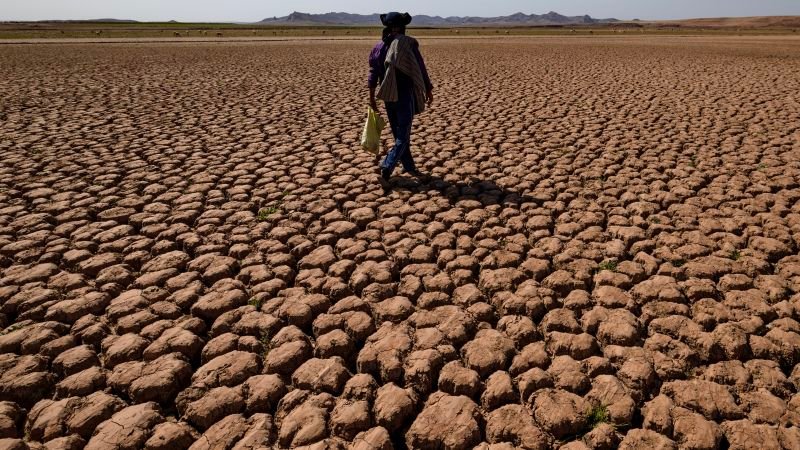
    As the world enters an era of “water bankruptcy” and much of it is forced to adapt to a hotter, drier future, both cities and farms could increasingly rely on desalination — turning seawater into fresh water.

    There were more than 22,000 desalination plants operating globally in 2024, mostly in the Middle East and North Africa — the world’s most water-scarce regions. A growing number of African nations are betting on the technology, and by 2030, Morocco wants to get 60% of its drinking water from the ocean.

    The country declared an end to a seven-year drought in January, after a winter of heavy rain refilled reservoirs that had fallen to historic lows. But the relief did not change Morocco’s long-term strategy.

    “Relying exclusively on rainfall and dam inflows is no longer sufficient,” Nizar Baraka, Morocco’s minister of equipment and water, told CNN. Drought, he added, is no longer “an exceptional or temporary phenomenon. What we are witnessing is a structural transformation of the climate cycle.”

    Morocco’s plan is to turn the Atlantic into fresh water to drink and irrigate crops in coastal cities, while dam water and rainfall will flow inland, to the farms and oases most vulnerable to drought. But the process is costly — financially and environmentally.

    Leading Morocco’s strategy is a $650 million project under construction around 25 miles south of Casablanca. It will be the largest desalination plant in Africa, and according to its developers, the largest in the world powered entirely by renewables — drawing its power from a 360-megawatt wind farm in the disputed territory of Western Sahara.

    Phase I is expected to start operations in February 2027, with Phase 2 completed in August 2028. At full capacity, it will pump 79 billion gallons of drinking water a year for 7.5 million people in the Casablanca area and irrigate 20,000 acres of farmland.

    Construction of the Casablanca desalination plant, set to be Africa's largest and the world's biggest powered entirely by renewables.

    The country already operates 17 desalination plants, producing about 108 billion gallons of water a year — nine times more than in 2021 — with 11 more planned or under construction, Baraka explained.

    To finance and build such mega-projects, Morocco has embraced public-private partnerships (PPP). For Casablanca, financing closed in May 2025, with Spain’s Acciona — a multinational conglomerate specializing in renewables and water management — as lead developer alongside Moroccan partners, with the Spanish government covering over half of the cost.

    The desalination drive is part of a broader, roughly $14 billion national water plan, which also funds building dams, wastewater reuse, and a network of “water highways” — pipelines that move surplus rainfall from basins in the north to drier regions southward.

    Most modern desalination plants use a process called seawater reverse osmosis (SWRO): high-pressure pumps force seawater through fine membranes that filter out the salt. The technology is reliable but energy-intensive, so most plants worldwide run on fossil fuels — emitting planet-heating carbon to solve a climate-driven problem.

    The Chtouka Aït Baha desalination plant — opened in 2022 south of Agadir — is one of Morocco's flagship projects. The tubes pictured contain the key to desalination: membranes where high-pressure pumps force seawater through to filter out salts.

    Morocco’s plan is to tie new desalination plants to wind and solar farm developments, taking advantage of the country’s vast renewable energy potential. “The objective is twofold,” Baraka said. “First, to reduce long-term operating costs, and second, to minimize the carbon footprint of water production.” As of 2024, renewables generated just over a quarter of the country’s electricity.

    But desalination has another impact on the environment. Every gallon of fresh water produced leaves behind 1 to 1.5 gallons of brine — water with chemical residues and twice the salt concentration of the sea — which is normally discharged back into the ocean.

    Poorly managed brine can damage marine ecosystems, creating oxygen-depleted “death zones” that kill seagrass beds and plankton populations. The new Casablanca plant features a 1.5-mile discharge pipe designed to dilute brine before it reaches the seabed. While researchers see dilution as an optimal approach, they note that Morocco lacks national regulations setting how much is required, and limits in many plants are set by financial backers, not by law.

    The agricultural sector consumes 87% of Morocco’s water, and employs almost a third of its workforce. But the seven-year drought halved cereal production and led to rising unemployment in rural areas.

    Desalination is presented as a solution to irrigate fields without rainfall — for those who can afford it.

    In Souss-Massa — the region behind 85% of Morocco’s fruit and vegetable exports — the Chtouka Aït Baha desalination plant supplies 1,500 farmers growing tomatoes and fruit, mostly for European supermarkets.

    Mohamed Boumarg, who once cultivated 12 acres of cherry tomatoes, was able to farm 50, with 60% for export. “Desalination has saved agriculture in Chtouka,” he told AFP in July 2025. A farm manager told AFP they had to accept the higher price of desalinated water, “or we close up shop.”

    At this farm in the Chtouka Aït Baha region, the heart of Morocco's greenhouse export sector,  crops depend on desalinated water to keep the volume and quality international markets demand.

    Youssef Brouziyne, regional representative for the Middle East and North Africa (MENA) at the International Water Management Institute (IWMI), told CNN that seawater desalination “remains 1.5 to 4 times more expensive than many traditional freshwater sources.”

    Brouziyne explained that desalination can realistically support areas like Chtouka: “coastal, high-value, export-oriented, greenhouse-based production where water productivity and margins justify the cost.”

    “Desalinated water,” he added, “despite the very remarkable cost reduction breakthrough of Morocco and other MENA countries, is still too expensive for broad-scale irrigated agriculture,” leaving staple crops like wheat dependent on seasonal rains.

    A man and children approach a water tank in the Moroccan village of Sidi Bouchta in August 2024, supplied by a mobile desalination unit — a compact station trucked to communities without reliable water supplies

    For smallholders, he noted, access will depend on targeted subsidies, blending desalinated water with cheaper sources like treated wastewater, smaller solar-powered systems, and growing crops that earn enough to justify the cost.

    Morocco hosted the World Water Congress in Marrakech last December, where Baraka pitched the country’s experience as proof that water, energy and food security can be tackled together.

    “Our goal,” he said, “is not to present a single model to be copied, but to share experience, know-how, and practical solutions that can be adapted to each country’s specific needs.”

    Across Africa, desalination is gaining ground. Algeria already runs one of the Mediterranean’s largest desalination programs, Egypt is quickly expanding capacity, and Senegal signed an $800 million deal with Saudi-based ACWA Power for a renewable-powered plant near Dakar. While most capacity remains concentrated in North Africa, Namibia and South Africa have been desalinating seawater for over a decade, and are also developing smaller solar-powered plants

    The stakes for agriculture are continental. With 95% of Africa’s farmland dependent on rain, irrigation could double yields in water-scarce areas. As desalination costs keep falling through improved technology and pairing with cheaper renewables, it could increasingly supply Africa’s farms.

    In the Chtouka Aït Baha region of Morocco, a<strong> </strong>farmer irrigates a field with desalinated water. After years of drought, many farmers see it as the only way forward.

    Rather than develop infrastructure in parallel, Brouziyne argued, African nations need to share knowledge, finance and technology — work that bodies like the African Ministers’ Council on Water and the Africa Water Vision 2063 framework are coordinating, alongside research institutions like IWMI.

    Morocco’s model is not just the desalination mega-projects, he added, but the package around them, from the country’s legal readiness to long-term planning. Crucially, he notes, “no major water public-private partnership operates without significant public support, and farmers can become the most exposed link if affordability is not built into the design.”

    “Long-term water security is not only about producing more cubic meters,” Brouziyne added, “it is about producing more resilience, more value, and more equity per cubic meter.”


    Source link

    Related Posts

    China and Myanmar detain U.S. citizens in separate incidents, causing alarm
    United States

    China and Myanmar detain U.S. citizens in separate incidents, causing alarm

    June 12, 2026
    War will continue unless US respects Iran’s interests, senior Iranian official tells CNN
    United States

    War will continue unless US respects Iran’s interests, senior Iranian official tells CNN

    June 12, 2026
    Storms Could Disrupt U.F.C. Event at the White House on Sunday
    United States

    Storms Could Disrupt U.F.C. Event at the White House on Sunday

    June 12, 2026
    Photos suggest US bombs damaged drinking water tanks in Iran
    United States

    Photos suggest US bombs damaged drinking water tanks in Iran

    June 12, 2026
    China Has Arrested U.S. Scholar Who Studies Myanmar Politics
    United States

    China Has Arrested U.S. Scholar Who Studies Myanmar Politics

    June 12, 2026
    Trump again has a key Iranian oil hub in his sights. Here’s what we know about Kharg Island
    United States

    Trump again has a key Iranian oil hub in his sights. Here’s what we know about Kharg Island

    June 11, 2026
    Next Post
    A systematic plan of lies and concealment

    A systematic plan of lies and concealment

    POPULAR NEWS

    The next five years I will level up, by José Carlos Requena | Elections 2026 | second round | vote counting | Roberto Sánchez | Keiko Fujimori

    The next five years I will level up, by José Carlos Requena | Elections 2026 | second round | vote counting | Roberto Sánchez | Keiko Fujimori

    June 11, 2026

    Recommended Audio

    June 12, 2026
    The Andorran school in Encamp asks parents to talk to their children about drugs and violence

    The Andorran school in Encamp asks parents to talk to their children about drugs and violence

    June 12, 2026
    Alkistis Protopsalti: I wouldn’t change a single pebble from the beach of my life

    Alkistis Protopsalti: I wouldn’t change a single pebble from the beach of my life

    June 12, 2026
    Do products that promise to stop snoring really work?

    Do products that promise to stop snoring really work?

    June 12, 2026

    EDITOR'S PICK

    A tactile driver was detained in Bishkek for drunken driving. Video

    A tactile driver was detained in Bishkek for drunken driving. Video

    June 12, 2026
    Pope Leo

    Pope Leo

    June 11, 2026
    Government agrees on new regulations on euthanasia – DiePresse.com

    Government agrees on new regulations on euthanasia – DiePresse.com

    June 12, 2026
    Theater of the mind | Kuwait Times Newspaper

    Theater of the mind | Kuwait Times Newspaper

    June 11, 2026

    Recent Posts

    • Recommended Audio
    • The Andorran school in Encamp asks parents to talk to their children about drugs and violence
    • Alkistis Protopsalti: I wouldn’t change a single pebble from the beach of my life
    • Do products that promise to stop snoring really work?

      © 2026 Agentially - Navigating shifting sovereignties and global risk .

      Welcome Back!

      Login to your account below

      Forgotten Password?

      Retrieve your password

      Please enter your username or email address to reset your password.

      Log In
      No Result
      View All Result

        © 2026 Agentially - Navigating shifting sovereignties and global risk .

        This website uses cookies. By continuing to use this website you are giving consent to cookies being used. Visit our Privacy and Cookie Policy.