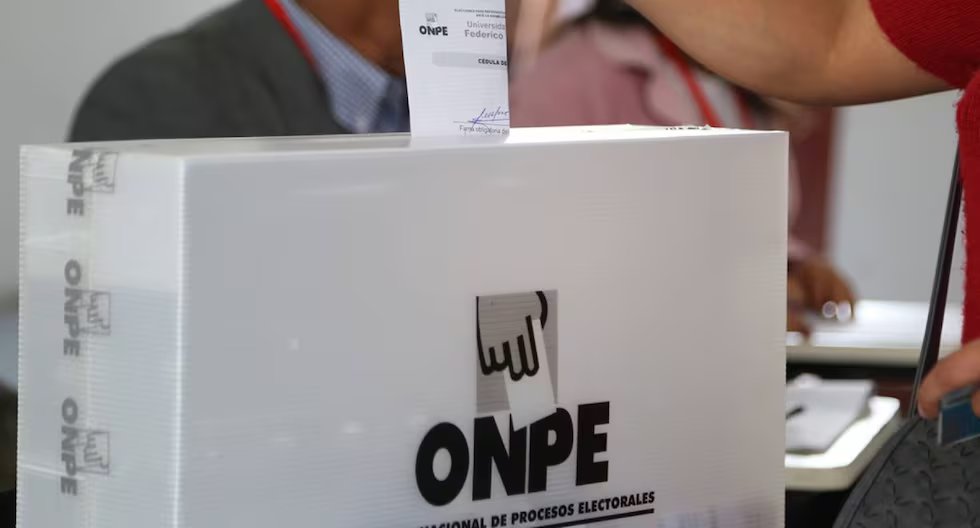
Tomorrow, more than 27 million Peruvians throughout the country and around the world are called to vote in new general elections. We have already mentioned in this space the importance of avoiding blank or flawed voting, and explained the problems that this brings with it in terms of reducing the universe of valid votes and, consequently, the legitimacy of the elected authorities, who end up obtaining greater support in the final count than they really have.
Tomorrow, more than 27 million Peruvians throughout the country and around the world are called to vote in new general elections. We have already mentioned in this space the importance of avoiding blank or flawed voting, and explained the problems that this brings with it in terms of reducing the universe of valid votes and, consequently, the legitimacy of the elected authorities, who end up obtaining greater support in the final count than they really have.
But there is an even bigger problem among the electorate with enormous consequences on the destiny of the country: absenteeism. In the general elections of 2011 and 2016 – both in the first and second rounds – the percentage of Peruvian voters who did not go to the polls ranged between 16% and 20% of the total. This figure grew in 2021, when it reached 30% in the first round and 25% in the runoff. In other words, five years ago, almost six and a half million Peruvians did not vote in the face-to-face between Pedro Castillo and Keiko Fujimori, an election that, as we all know, was defined by less than 45,000 votes. And, judging by how close the preferences are in the latest polls, whether or not to vote will make a difference in the final result.
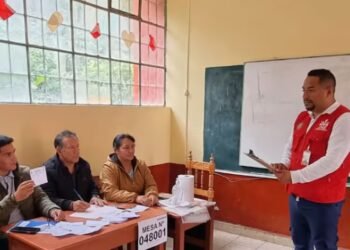
The call to deliver for the country, however, is not just for voters. The more than 800,000 Peruvians who have been drawn to be polling station members are a key piece for the success of election day. Let us remember that, in 2021, in Lima, voters in districts such as Surco, Miraflores, San Borja and San Isidro had to wait for hours to be able to vote because the tables were not installed due to the delay – or non-attendance – of those who formed them. Last Sunday, this newspaper reported that, according to the ONPE, only 52% of the polling station members had completed the corresponding training. I hope that those who are missing have done so these days, even more so considering that they can be trained virtually. It is worth mentioning that those who do their job will receive payment.
Five years ago, in the second round, almost 19 million Peruvians – including vulnerable groups, such as older adults – went to vote in the middle of a pandemic, with a mask and with a series of restrictions. Therefore, it would be unacceptable that today, in a completely different health context and without the scourge of climate phenomena, millions of Peruvians decide to stay at home instead of going to their polling place (premises, in many cases, that they themselves have chosen). There is no valid excuse. Everyone to vote tomorrow.