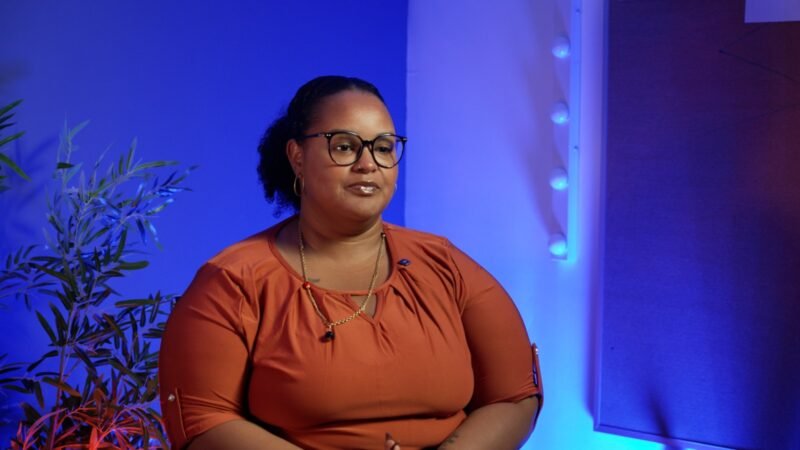
PARAMARIBO — The need for participation in the national school feeding program continues to increase. According to the most recent registration, 316 schools have registered for the 2026/2027 school year. The program involves approximately 34,000 loaves of bread and hot meals. Mireille Cramer, chairman of the presidential working group on the School Nutrition Project, confirmed this during an interview with the Communications Service Suriname (CDS).
According to Cramer, the program fulfills an important social function. Providing children with nutrition during the school day not only contributes to their well-being, but also to better conditions for education.
“In collaboration with the Public Health Service (BOG), food safety training has been provided for suppliers and their employees”
“Let’s all ensure that every child, regardless of his or her circumstances, has something to eat during the school day. Ultimately, we want children to be able to focus on learning and developing.”
More local production
The program also looks at options to include more locally produced foods. This is in line with president Jennifer Simons’ vision to further stimulate local production.
In the past school year, a pre-pilot was carried out with a selection of schools from different areas. This takes into account that needs may differ per area. “A child from the Latour area may have different needs than, for example, a child from Ma Retraite or the interior,” Cramer explains. More schools will be involved in the pilot in the new school year to further investigate how local products can be given a greater place within the program.
Lessons from last year
The 2025/2026 school year was mainly focused on building and monitoring the program. According to Cramer, this has given the working group better insight into what is going well and where adjustments are needed.
The program is implemented nationally. In Brokopondo and Sipaliwini mainly hot meals are provided. Marowijne will also be added this school year. In the other districts the emphasis is on bread meals.
An important adjustment for the new school year is the reduction of the plots. This has increased the total number of plots from 18 to 34. The adjustment should contribute to maintaining quality and ensure that the food is delivered to the schools on time.
“By reducing the size of the lots, the number of daily deliveries per supplier becomes more manageable. At the same time, we have taken the logistical location of the schools into account. With this, we strive to maintain quality and timely delivery,” says Cramer.
Collaboration and food safety
For the implementation, the working group works together with suppliers, each of whom is responsible for an assigned plot. Hygiene, quality and food safety are monitored.
In collaboration with the Public Health Service (BOG), food safety training has been provided for suppliers and their employees. The district commissioners are also involved in monitoring and control in the various areas.
Preparations 2026/2027
The working group is currently completing preparations for the 2026/2027 school year. Experiences from the past school year have been taken into account to further improve implementation.
The aim is to start deliveries around the third or fourth week of October. According to Cramer, the basic principle remains that further growth of the program must go hand in hand with quality, food safety, timely delivery and good monitoring.