TOKYO-MANILA DELIMITATION TALKS:
Beijing is attempting to use this opportunity to normalize patrols and law enforcement in the waters east of Taiwan, MOFA said
-
By Lee I-chia / Staff reporter
China has no law enforcement authority over the waters east of Taiwan, the Ministry of Foreign Affairs (MOFA) said yesterday, accusing China of undermining regional peace and stability.
The Chinese Ministry of Transport on Saturday evening announced that it had launched a “special maritime law enforcement operation” in the waters east of Taiwan, dispatching coast guard vessels to engage in illegal enforcement activities, the ministry said.
State-run Xinhua news agency said the operation was “a necessary action taken in response to Japan and the Philippines unilaterally announcing the initiation of maritime boundary delimitation negotiations in the waters east of China’s Taiwan island, which seriously violates China’s territorial sovereignty and maritime rights and interests.”
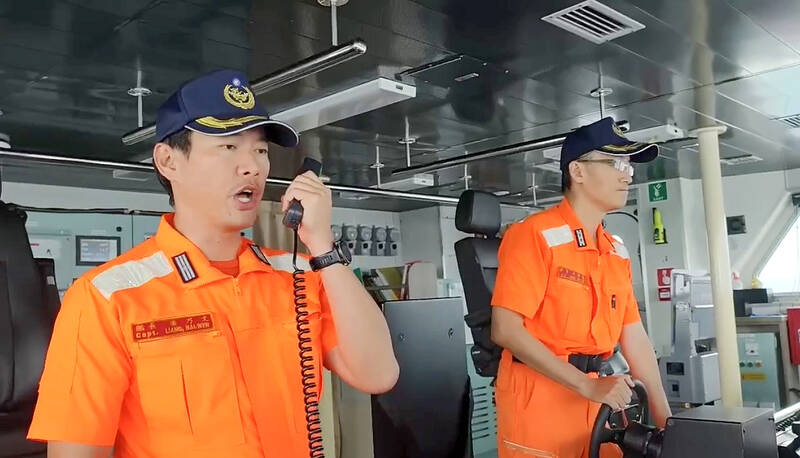
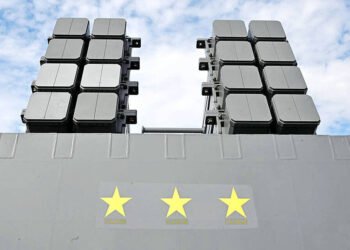
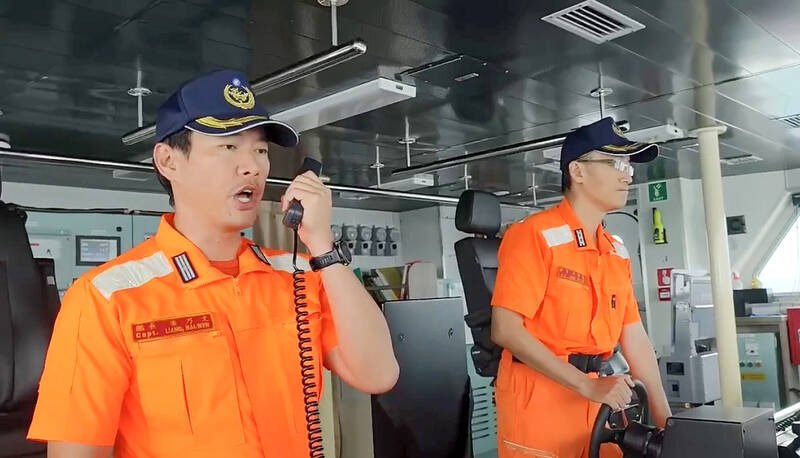
Photo courtesy of the Coast Guard Administration via CNA
In Taipei, MOFA spokesman Hsiao Kuang-wei (蕭光偉) said China has no right to claim law enforcement jurisdiction over the waters east of Taiwan for any reason, nor does it have the right to exploit potential maritime delimitation talks between Japan and the Philippines as an excuse to expand its jurisdictional claims near Taiwan.
“Taiwan categorically rejects China’s attempts to use this opportunity to normalize patrols and law enforcement in the waters east of our country,” he said. “MOFA strongly condemns China’s actions, which disrupt regional peace and stability and challenge the international order.”
Regarding potential Japan-Philippines negotiations on the delimitation of their exclusive economic zones (EEZ) and continental shelves, Hsiao said the ministry has already communicated its official stance to both governments.
First, according to the Vienna Convention on the Law of Treaties and international judicial precedents, bilateral agreements are only binding upon the contracting states and do not affect the rights and interests of third parties, he said.
Japan has stated more than once, including a reaffirmation by the Japan-Taiwan Exchange Association on Monday, that the Japan-Philippines agreement would not affect third-party rights, he added.
Therefore, the binding effect of Japan-Philippines negotiations does extend to Taiwan, and all rights and interests enjoyed by Taiwan in its eastern EEZ will remain unaffected, now and in the future, Hsiao said.
Second, when Japan and the Philippines hold negotiations, they should fully consider Taiwan’s overlapping claims, and continue to communicate and consult with Taiwan, he said.
And third, existing cooperation mechanisms — including the Taiwan-Japan Fisheries Agreement signed with Japan in 2013 and the Agreement Concerning the Facilitation of Cooperation on Law Enforcement in Fisheries Matters signed with the Philippines in 2015 — remain active, he said.
Citing the UN Convention on the Law of the Sea, Hsiao said the EEZ is a maritime regime where coastal states enjoy specific sovereign rights and jurisdiction over marine resources, and it does not fall within the scope of territorial or territorial sea sovereignty.
Therefore, EEZ delimitation issues between Japan and the Philippines do not involve Taiwanese sovereignty, nor do they affect the legal rights of Taiwanese fishers to operate within Taiwan’s EEZ, he added.
“MOFA will continue to maintain close contact with relevant countries, firmly safeguard Taiwan’s maritime rights and interests, as well as the operational rights of our fishers,” Hsiao said, adding that people should remain rational about the issue and avoid being misled by false information.
The ministry also urged the international community to pay attention to China’s recent escalation of provocations around Taiwan’s surrounding waters, undermining regional peace and stability, and work with Taipei to maintain a free and open Indo-Pacific region, he said.