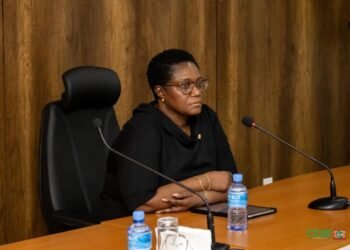
PARAMARIBO — The successful refinancing of part of the Surinamese national debt has, according to Minister Adelien Wijnerman of Finance and Planning, not only prevented an impending payment crisis, but also improved the country’s international creditworthiness and relations.
According to the minister, the government faced a major challenge when it took office. According to her, the existing Oppenheimer bond, which ran until 2033, was no longer financially sustainable. Without intervention, Suriname was in danger of ending up in a situation of default again.
“We do our utmost, but some developments are not completely under your control”
Minister Wijnerman
To prevent that scenario, the government worked with Bank of America on an international investment campaign. Investors on the capital market were informed of the future income from the oil and gas sector. Those efforts resulted in interest worth more than US$4 billion.
VRI bought off
The funds raised were not only used to redeem the old bonds, but also to buy off the so-called Value Recovery Instrument (VRI). This financial instrument gave creditors a claim to future oil revenues from Suriname.
Wijnerman emphasizes that the refinancing at the end of last year, followed by an additional issuance of government bonds in February, made it possible to fully repay overdue debts to the Paris Club and various commercial creditors. According to her, this has also improved relations with important international partners. “In particular, we have been able to further restore our relationship with the Paris Club countries,” the minister said.
More stability
The minister states that the operation has given the government more financial space. Although the total national debt is still above the legally permitted limit of 60 percent of gross domestic product, the new debt structure offers more stability and better opportunities for responsible financial management, according to her.
Together with the National Debt Office and President Jennifer Simons, the ministry is working on a strategy to further reduce the debt ratio in the coming years. The aim is to structurally reduce this from 2027.
At the same time, the government continues to pay attention to both the income and expenditure sides of the budget. For example, with the support of the International Monetary Fund (IMF), research is being conducted into how subsidies in the energy sector can be gradually phased out. However, a final decision on this has not yet been taken, partly due to the uncertainties on the international energy market.
On the revenue side, gold smuggling and issues within gold production are still a challenge. Although revenues from the sector have increased, Wijnerman points out that limited capacity at the Tax Authorities and Customs makes enforcement difficult. “We are doing our utmost, but some developments are not completely under your control,” said the minister.