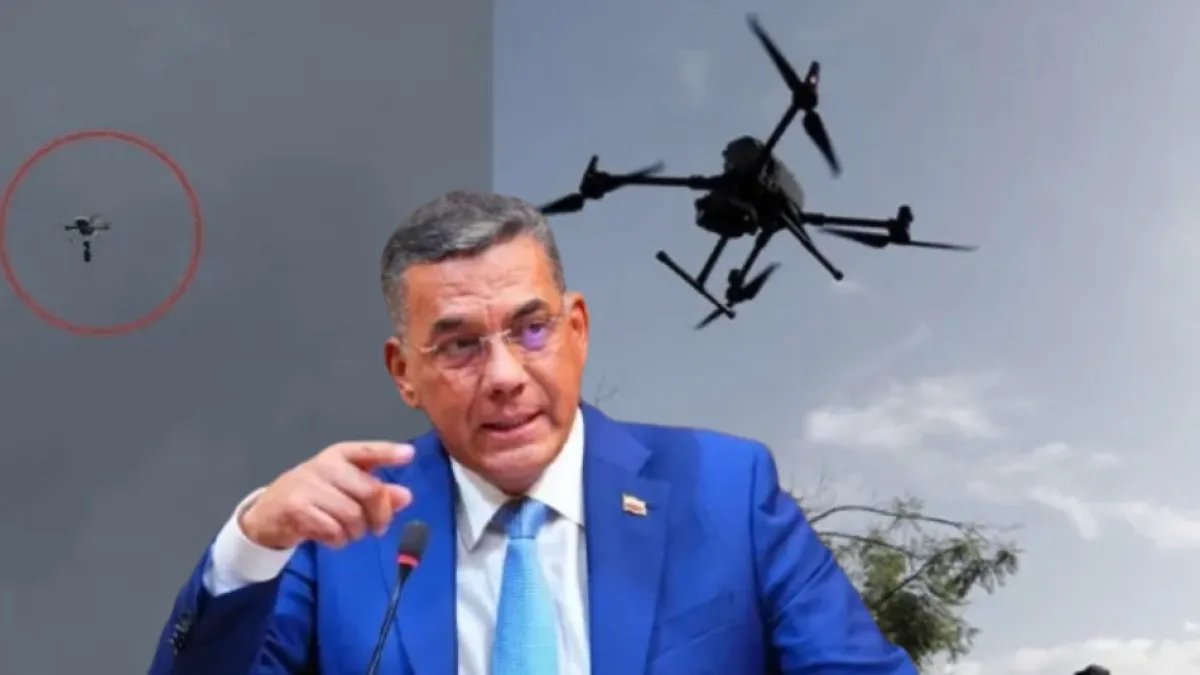
This Tuesday, November 17, during a political control debate in the Second Commission of Congress, the Minister of Defense, Jorge Eduardo Mora, assured that the Government of President Gustavo Petro and the previous administration of that portfolio, headed by Pedro Sánchez, blocked the direct purchase of drone inhibitors for the Military Forces, while awaiting the execution of a antidrone shield project that ultimately did not materialize.
READ ALSO
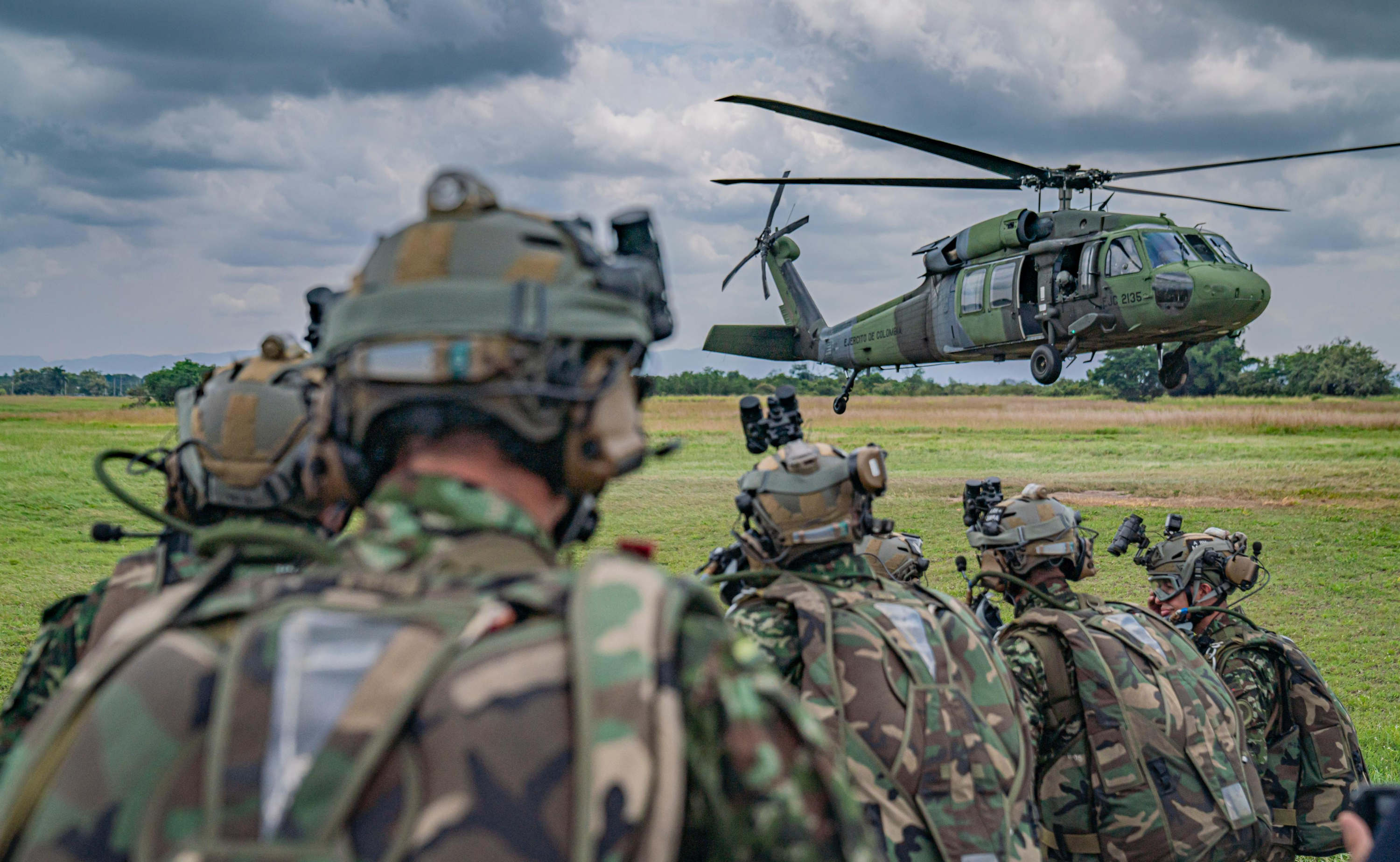
The official questioned the decisions taken and pointed out that These restrictions prevented military units from directly acquiring the equipment to confront attacks with unmanned aircraft used by illegal armed groups.
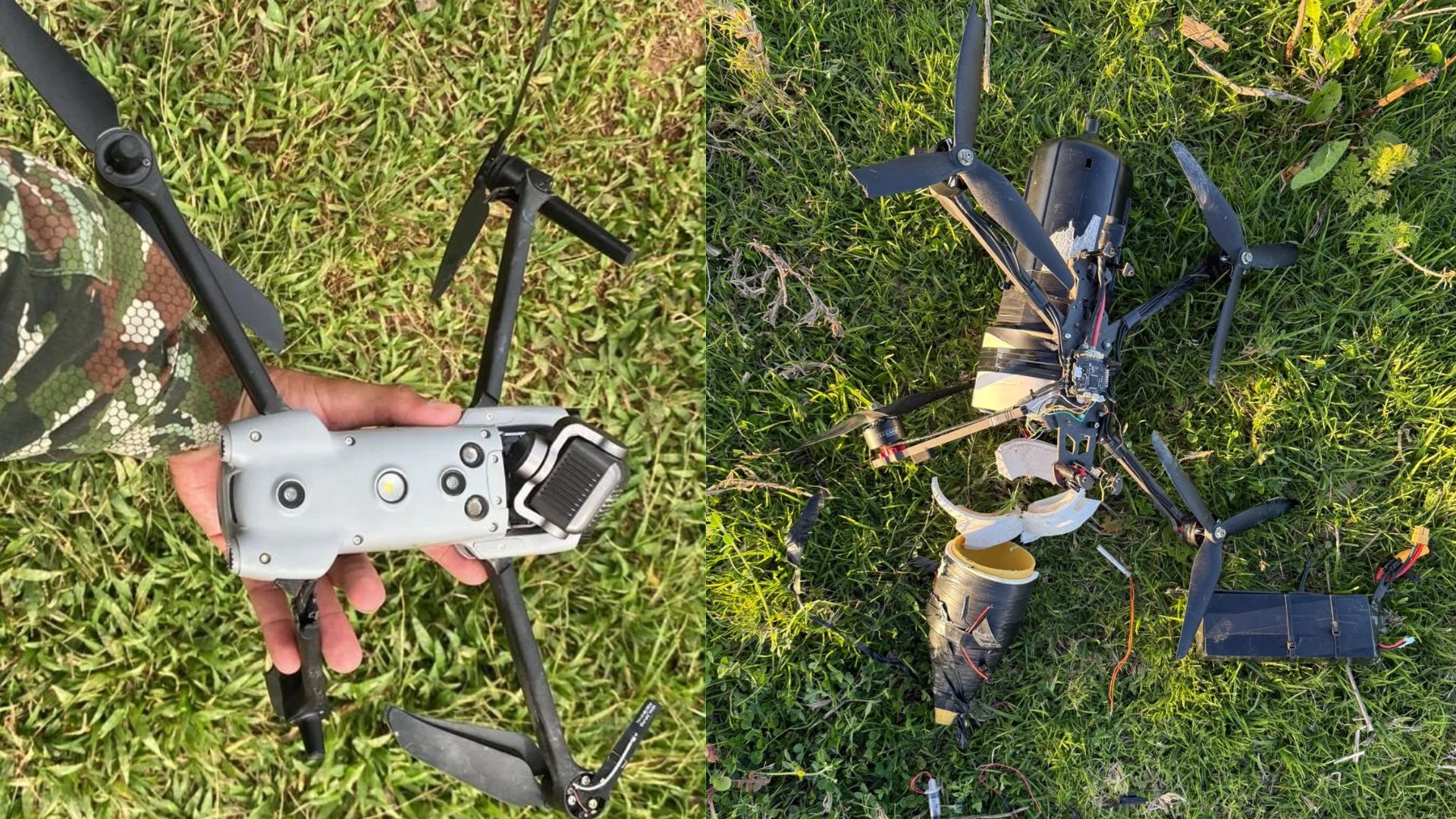
Drones seized by the Public Force that would be used to attack. Photo:courtesy
According to Mora, In March 2026, a circular was issued that prevented the direct acquisition of these devices. The measure was related to the intention to centralize purchases in the antidrone shield projectwhich contemplated a announced investment of 6.2 billion pesos and which, as he explained, did not come to fruition.
“On March 31, 2026, they issued a circular that blocked the direct purchase of anti-drone systems to power the anti-drone shield, which never materialized. That is to say, units could not buy inhibitorsbecause during all that time they were expected to be acquired with the large budget allocated to the anti-drone shield,” said the minister.
READ ALSO

The head of the Defense portfolio maintained that, while waiting for the execution of this initiative, Armed organizations advanced in the incorporation of technology to attack the Public Force. As he explained, these groups They have the economic capacity to purchase the devices online and they have also received advice from other countries in the management of these systems.
Anti-drone, detection and location equipment seized. Photo:Private file
“What happened was that, at that time, armed groups became technologically stronger and they advanced in the acquisition of this equipment because, since they are multimillionaires, they can buy it online. Advice from Ukraine received and there they have a great anti-drone capacity and The Government prohibited the purchase of inhibitors“Mora stated before the congressmen.
The official also provided details about the state in which the project found itself when the Ministry of Defense took over. He assured that 22 foreign companies had been evaluated and that the initiative had been announced with a investment of 6.2 billion pesosbut there were no viable solutions for its implementation.
“12 countries on three continents toured, evaluated 22 foreign companies and announced to the country a megaproject of 6.2 billion pesos and what was the actual result? We found upon assuming the ministry zero viable solutionswhich forced the technical closure of that project through a resolution that we get the August 14. Zero budget execution inherited from 2026. Zero pesos associated with the 2026 budget of the resources that the previous government had announced at a press conference,” he said.
In this context, he questioned the way in which the process was carried out and assured that no concrete results were obtained. “I want to talk about something that has been mentioned in recent days: the anti-drone shield; I baptized it as a technological mirage and the balance is that there what there was was bureaucratic tourism“, he expressed.
Mora also referred to the consequences that, according to his presentation, the lack of a solution had during that period and questioned whether the protection capabilities of the uniformed personnel depended on a project that did not advance. “How is it possible and how far can one go and can one play with the lives of our soldiers of the country in that way? The anti-drone shield was that. I called it bureaucratic deployment“he added.
Attack with explosive drones on the military canton of Santa Rosa, Bolívar. Photo:Private file
During his speech, the minister recounted an episode that occurred in the middle of a military operation in Catatumbo. According to what he said, after a bombing of a camp, The units were attacked with unmanned aircraft.
Mora assured that, on that occasion, the Military Forces had inhibition teams that allowed the threats to be neutralized. “On the one hand, the dissidents began to attack us with drones and the ELN with drones to try to attack the soldiers, but fortunately we had that capacity and In a single day we managed to inhibit 26 drones loaded with explosives to prevent us from consolidating the bombing, removing those killed in military operations and those recovered, because there we recovered a minor“he indicated.
The official also described the situation of the communities affected by the clashes between these armed organizations. In his story, he mentioned that during the analysis of images and the terrain they found more than 28 homes destroyed in the midst of the fighting taking place in that region of the country.
The Government of Antioquia delivered 36 drones to the public force. Photo:Governorate of Antioquia.
Faced with the restrictions that, according to the minister, existed to acquire these devices, Mora assured that The National Army began to develop its own capabilities to detect and inhibit unmanned aircraft. He explained that the objective is reduce dependence on foreign suppliers and have equipment that can adapt to the technological changes of armed groups.
“The Army is currently acquiring its own capabilitiesbecause the fight against drones is not about buying and buying and buying, because we will never end up having resources for them. This is a technological war and technology is fought with technology,” he said.
READ ALSO
The minister explained that the institution has a production line that currently allows the manufacture of 40 anti-drone systems per week. However, he warned that This capacity is still insufficient facing the operational needs of the Military Forces and the Police, taking into account that There are 3,500 platoons and 2,200 police stations.
“The National Army is already building inhibitor systems and anti-drone systems. We need a faster production line; we are in that process I will explain it later,” he said.
Furthermore, he revealed that some members of the Military Forces They advanced these developments with ordinary resources and without the anti-drone shield project coming to fruition. According to him, during a visit to the facilities where this technology is being worked on, the uniformed officers explained to him that they had to advance in those capacities without disclosing the process.
“They told me: ‘To us We practically had to do this almost hidden froml minister’. I said: ‘How so?’ And they said: ‘Yes, it’s just that we are prohibited from acquiring capabilities and the purchase of inhibitor equipment because all of that was going to be within the anti-drone shield,'” he said.
Mora added that currently There is a pre-contractual process for 32,000 million pesos to acquire new systems, while strengthening national manufacturing. He also explained that equipment can become obsolete in periods of between three and six months, due to the modifications that armed groups make to their devices.
Regarding the balance of effects on the Public Force, the minister reported that drone attacks have left 42 soldiers killed and 545 injured. According to the figures presented in the Second Commission, since the first attack recorded on April 26, 2024in Algeria, Caucahave been counted 723 facts of this type and 1,908 air-launched explosives.
The information presented also indicates that during 2026 alone, 348 military injuries have been recorded, a figure higher than the sum of those reported in 2024 and 2025. In terms of response, the authorities count 964,536 detections of threats in the electromagnetic spectrum and 44,564 effective inhibitions.
Government proposes a long-term anti-drone strategy
The drones were distributed among the Army, Police and Air Force in the department. Photo:Governorate of Antioquia.
As part of the announced measures, Mora presented the Strategic Plan for Anti-Drone Stabilization and Technological Sovereigntystructured in three lines of action. The first contemplates an immediate response through the acquisition of detection, monitoring and inhibition equipment, as well as dispersion measures and adaptation of military bases.
The minister explained that this phase includes the transfer of knowledge and combat experiences from allied countries such as the United States and Ukraine. He also noted that the doctrine was implemented that all soldiers must be prepared to face this type of threat.
The second line is related to the national technology development. The official indicated that seeks to expand the Army’s manufacturing capacity and take advantage of the experience of other countries to strengthen research and production processes of devices adapted to the conditions of Colombian territory.
The third contemplates a financial and regulatory strategy. As explained, the Government works with the National Planning Department (DNP) in the structuring of a anti-drone Conpes documentwhose projected budget would be around 7.2 billion pesos.
LAURA NATHALIA QUINTERO.
LATEST NEWS EDITORIAL.