The household market would be protected from new charges, but foods that currently pay VAT would not automatically be free of the tax. A reduction in the general rate from 19 to 17 percent is not assured nor would the restaurant consumption tax disappear. These are the main details of the experts consulted about the announcement with which President Abelardo De La Espriella opened the door to modifying his tax reform and fiscal adjustment.
The starting point to understand the effect on the pocket is to distinguish what is currently charged, what the project proposed to change and what the Government will finally take to Congress. While the latter is specified, the announcement does not modify the current rates.
READ ALSO
“I don’t see any possibility of lowering the VAT, but I do see the possibility of guaranteeing that the bulk of the family basket is exempt,” says José Antonio Ocampo, former Minister of Finance. His position includes two issues that were raised on Sunday, such as protecting food from new taxes and studying a reduction in the general tax.
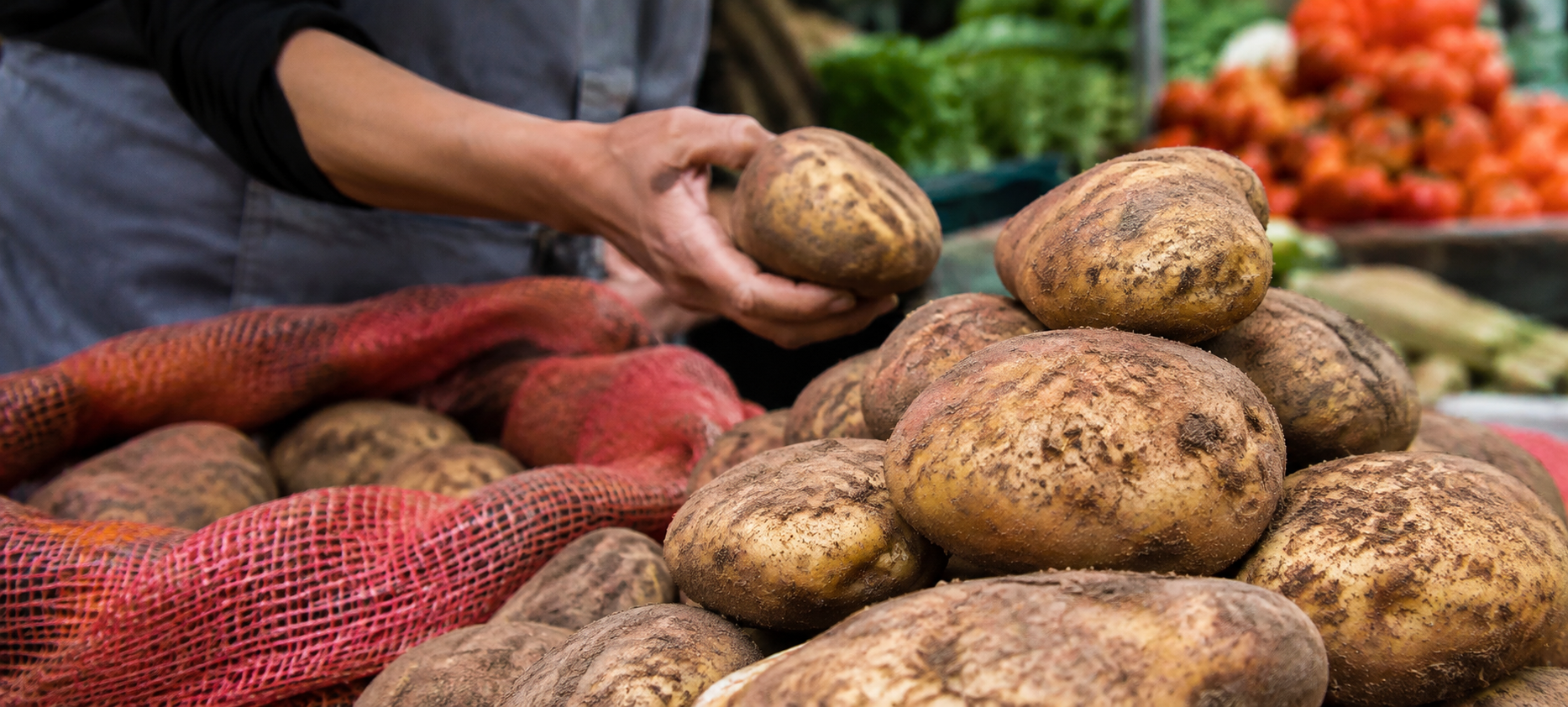
A good part of basic foods already reaches the consumer without VAT. Luis Fernando Mejía, president of Lumen Economic Intelligence, mentions meat, milk, eggs, rice, potatoes, fresh fruits and vegetables, although he specifies that technically some are exempt and others excluded.
Therefore, the presidential commitment does not mean that these products will have a reduction due to the elimination of the tax, since they are currently sold without it.
Horacio Ayala, tax expert and former director of the Dian, provides a distinction to understand why not all foods receive the same treatment: “As a general rule, food is not subject to VAT when sold in its natural state.” Some processed, however, have differential rates.
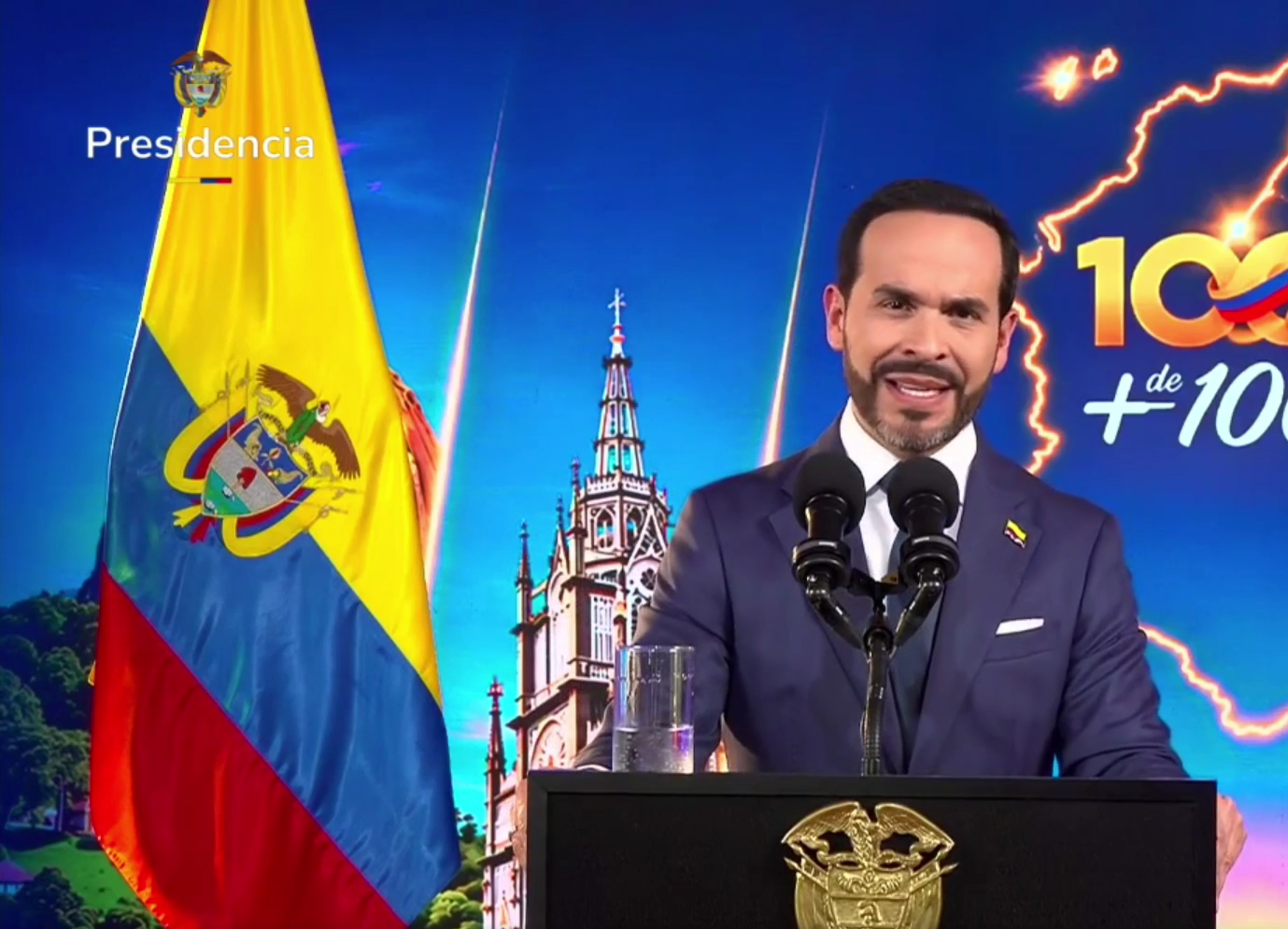
President Abelardo de la Espriella presented an assessment of the first 100 days of his Government. Photo:Presidency of the Republic.
Precision is essential when faced with the presidential phrase: “I do not want Colombians to pay VAT on their food.” Its scope must be specified in the articles, because preventing new charges and eliminating existing ones have different effects.
Changes that don’t work
According to Mejía, the project proposed taxing some foods and raising the rate of products such as coffee, sugar, pasta and table chocolate from 5 to 19 percent.
His reading is that the Government would withdraw these changes for all foods. This would allow the current treatment to be preserved, that is, Those that are sold without VAT would continue like this and those that already pay it would maintain their taxunless the new text provides something additional.
The president also assured that he will not promote new VAT charges on the agricultural sector. The commitment therefore includes another front that must be specified in the adjusted proposal, due to its implications for production costs.
But there remains a doubt about the expression “family basket”. Although it is often used synonymously with food, household consumption includes other goods and services.
READ ALSO
Andrés Langebaek, dean of Economic and Administrative Sciences at the Jorge Tadeo Lozano University, warns that the baskets vary depending on income. Prepaid medicine, for example, has a different participation between older and lower-income households.
That is why he asks to clarify if all these baskets will be untouchable or if the commitment is focused on food. Without this delimitation it cannot be concluded that all the VAT changes provided for in the reform will disappear.
Mejía interprets that proposals on online betting, electric and hybrid vehicles, and low-value imports could be maintained. It is a reading of the announcement, pending confirmation in the text.
Lower the rate
The president stated that the Treasury is studying reducing the general rate from 19 to 18 “or even 17 percent.” This is a possibility, not an approved reduction.
In addition to Ocampo’s skepticism, Mejía warns that reducing it would be difficult without sufficiently expanding the base, that is, the set of taxed goods and services, to compensate for the lower income.
Reducing the general rate from 19 to 18 percent would be difficult without sufficiently expanding the base, that is, the set of taxed goods and services, to compensate for the lower income.
Luis Fernando MejíaPresident of Lumen Economic Intelligence.
Juan David Ballén, director of Economic Studies at Aval Asset Management, points out that a lower rate applied on a broader basis would make it possible to offset part of the loss. However, he emphasizes: “We still need to know the Government’s new proposal.”
Experts believe that with the proposed VAT on food, the reform was lost in Congress. Photo:Néstor Gómez – El Tiempo
Consequently, Protecting food from new charges does not guarantee that other products will pay less VAT.
The shift also has a political explanation. Juan Camilo Restrepo, former Minister of Finance, considers that the VAT chapter on food was lost: “No party was going to support it in Congress.” In his opinion, the Government anticipated a legislative defeat.
Daniel Velandia, chief economist at Credicorp Capital, recognizes technical sense in expanding the tax, since higher-income households also take advantage of its benefits. But it warns about its high social and political sensitivity, even among sectors related to the Government.
The cost
The account will depend on what is withdrawn. Mejía preliminarily calculates that excluding changes on food would reduce the expected collection between 10 and 12 billion pesos annually, according to the measures and returns to vulnerable households.
Camilo Pérez, director of Economic Research and Market Analysis at Banco de Bogotá, recalls that the complete VAT component represented about 1.1 points of GDP within a fiscal adjustment of four points.
READ ALSO
César Pabón, executive director of Economic Research at Corficolombiana, adds a dimension to the cost of withdrawing the measure and is that, starting in 2028, the VAT component would be the main source of income from the adjustment, with a contribution greater than 1 percent of GDP. Although he considers the decision understandable due to its lack of political support, he warns that Replacing these resources will require “being much more ambitious on other fronts, especially in reducing spending and selling assets.”and open equally sensitive discussions, such as fuel.
To compensate, Restrepo proposes reviewing contracts, payrolls, redundant entities and the diesel subsidy. Mejía adds focusing on energy subsidies, reviewing high pension benefits and making the reduction of business income more gradual. Velandia agrees that the planned tax relief could be reduced and calls for greater spending efforts.
For Henry Amorocho, professor of Public Finance and Budget at the Universidad del Rosario, one of the main alternatives is in review tax benefits on income and VAT. It estimates that reducing these preferential treatments could contribute around 25 billion pesos, although its calculation requires specifying which ones would be eliminated.
He proposes to especially examine the exemptions and deductions of companies and the financial sector, seeking to preserve activities such as industry and agriculture, which, he warns, are still in recovery.
The effort must also go through expense, but with detailed accounts. Amorocho requests that the Government identify which service provision contracts and operating expenses it will cut and how much it would save with the administrative reform. In his opinion, merging or eliminating entities requires studies of functions, processes and workloads that allow duplication to be eliminated without weakening the capacity of the State. It also proposes setting “clear, real, verifiable” goals against evasion and smuggling, a way through which it estimates it is possible to obtain an additional $5 billion annually.
They are alternatives to discuss. As the president acknowledged, “this is not a law, it is a project under construction.” For the consumer, the immediate certainty is that they follow the current rules; The new articles must show which ones will be kept and which ones will change.
Discounts in some restaurants in the city. Photo:iStock
Eating in a restaurant has another account
The food compromise also does not announce the elimination of taxes on restaurants. As a rule, These establishments are subject to the 8 percent consumption tax, explain Mejía and Horacio Ayala, tax official.
Ayala points out that he has not heard proposals to modify the consumption tax. Langebaek explains that This tax, unlike VAT, does not allow restaurants to deduct the VAT they pay on their inputs.
Therefore, an eventual reduction of the general rate to 18 or 17 percent would not automatically imply reducing the consumption tax that appears in those accounts.
Precision is key for your wallet, since buying food to prepare at home and paying for a meal in a restaurant are operations with different tax treatments. That’s why, Not imposing new burdens on the former should not be interpreted as a reduction in the account of the latter, those consulted warn.