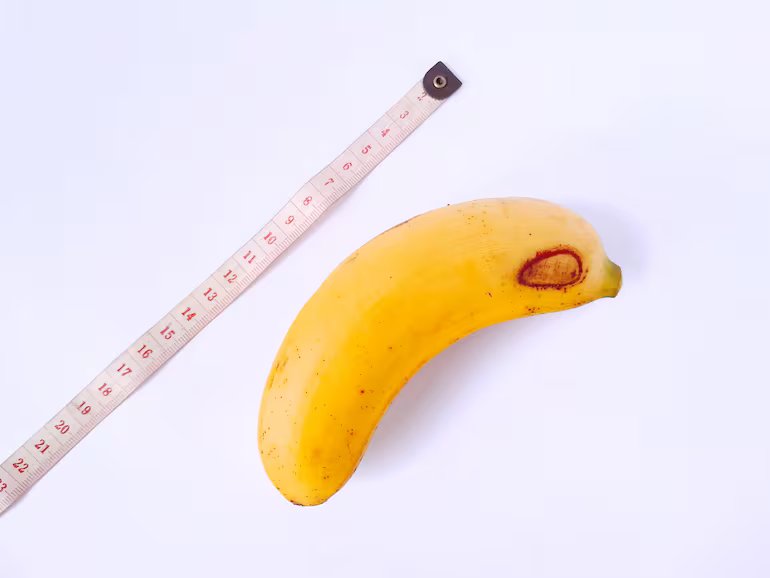
April 23, 2026 – 10:30
Micropenis exists as a medical diagnosis, but it often gets caught up in jokes, anxiety, and silence. We tell you what “micropenis” means according to the evidence, what it is not, and how it impacts self-esteem, your partner, and pleasure.
“Will I be able to satisfy?”, “Are they going to reject me?”, “Does this make me less of a man?”: the micropenisas a theme, is loaded with cultural expectations that confuse performance with personal value. And that often hurts more than the physical condition.
What is a micropenis (and what is not)
Micropenis is a medical term: it is defined when the stretched penis length this significantly below average for age (in medicine the criterion of 2.5 standard deviations).
It is not “small penis” in the colloquial sense or a label based on wardrobe comparisons or pornography.
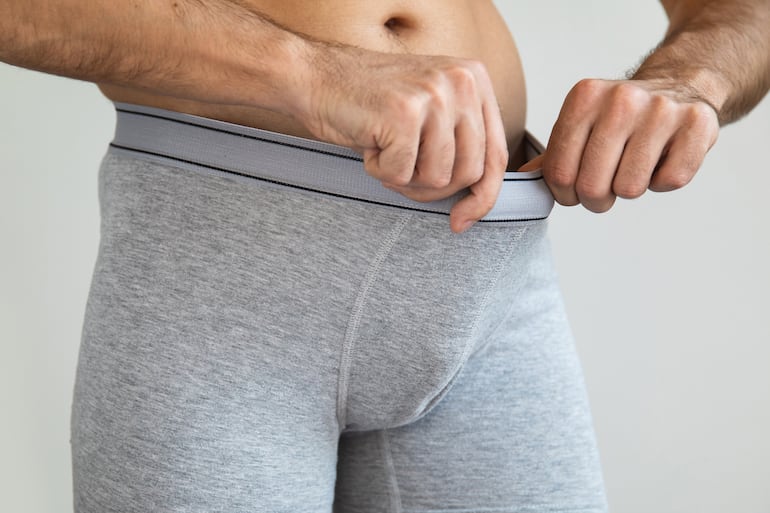
In adult men, the most cited studies (such as systematic reviews published in urology journals) find that the standard measures are:
- Stretched (flaccid) penile length: average ≈ 13–13.5 centimeters
- Standard deviation: ≈ 1.5–2 centimeters
Applying medical criteria:
- Micropenis threshold ≈ less than 9–9.5 centimeters (stretched)
This is important: it is not measured in state erect for clinical diagnosis, but stretched into saggingbecause it is more reproducible in consultation.
Read more: More thickness and less taboo! Controversial penis thickening treatment conquers men
It is also convenient to separate diagnoses that are similar, but are not the same: a buried penis (when “hidden” by tissue or fat), certain curvatureswave body anxiety which makes any measure seem insufficient. The difference matters because it changes the approach: sometimes the main problem is not in the penis, but in the way (our own and others’) look at the body.
Why it happens: possible medical causes
Causes of micropenis may include hormonal alterations in early stages of development (for example, problems in the production or action of testosterone), conditions endocrine either genetics.

In some cases, no single cause is identified. What is relevant here is twofold: that It is not a “failure of masculinity”and that an evaluation with urology and/or endocrinology can clarify the picture, especially if there were signs from childhood or adolescence.
Read more: An app promises to help men last longer in bed: how it works
Micropenis in adults: pleasure, bond and the weight of stigma
The most frequent impact is not anatomical: it is psychological and relational. The anticipation of judgment can lead to avoiding encounters, extinguishing desire or “acting out” a security that falls apart inside. Some couples enter into a silent dynamic: one fears disappoint and the other is afraid to ask so as not to hurt.

The sexological evidence is clear in something that is culturally difficult to accept: sexual satisfaction does not depend on a single body parameter.
Sexuality is a system—desire, trust, communication, stimulation, context—and pleasure is often more sensitive to emotional presence and erotic variety that to an exact measurement. That does not invalidate insecurity: it makes it understandable and workable.
Read more: Heteroflexible or curious? How to understand the gray areas of sexual orientation without pressure
Treatments and support: what can help and what promises to distrust
When detected early, it can be considered hormonal treatment in selected cases and under medical control.
In adults, medical options are more limited and surgeries They do not always offer results proportional to the risks, so it is advisable to obtain information from serious clinical sources.
In parallel, the approach that most transforms intimate life is usually comprehensive: realistic sexual education (without porn as “school”), sex therapy or as a couple if there is anguish, and conversations that restore agency.
Micropenis, as a condition, deserves medical precision. And as an experience, it deserves humanity. When the stigma turns down the volume, something more interesting than the joke appears: the possibility of an intimacy that is less performative, more honest, and—paradoxically—more pleasant.