There are almost three thousand municipalities in Slovakia. Their merger and system change have been talked about for years.
In March, the Association of Cities and Towns of Slovakia (ZMOS) and the Association of Self-Governing Regions of Slovakia (SK8) jointly presented a document on public administration reform entitled Territorial self-government as a stable and strong partner of the state.
In it, both organizations count on a comprehensive reform of local governments, including the merger of municipalities, and claim that its goal is a lean and functional state that transfers more competences to local governments. They propose a model that, according to them, is more suitable and fair for small and medium-sized municipalities.
Small municipalities criticize this material, as does the Union of Slovak Cities (ÚMS), which comes up with its own proposal. He rejects mandatory mergers or mandatory cooperation of municipalities, and identifies a change in the financing of local governments as a priority.
Similar to the organization in which mainly larger cities are involved, the smallest villages of up to 500 inhabitants, which make up a quarter of the territory of the Slovak Republic, see it as well.
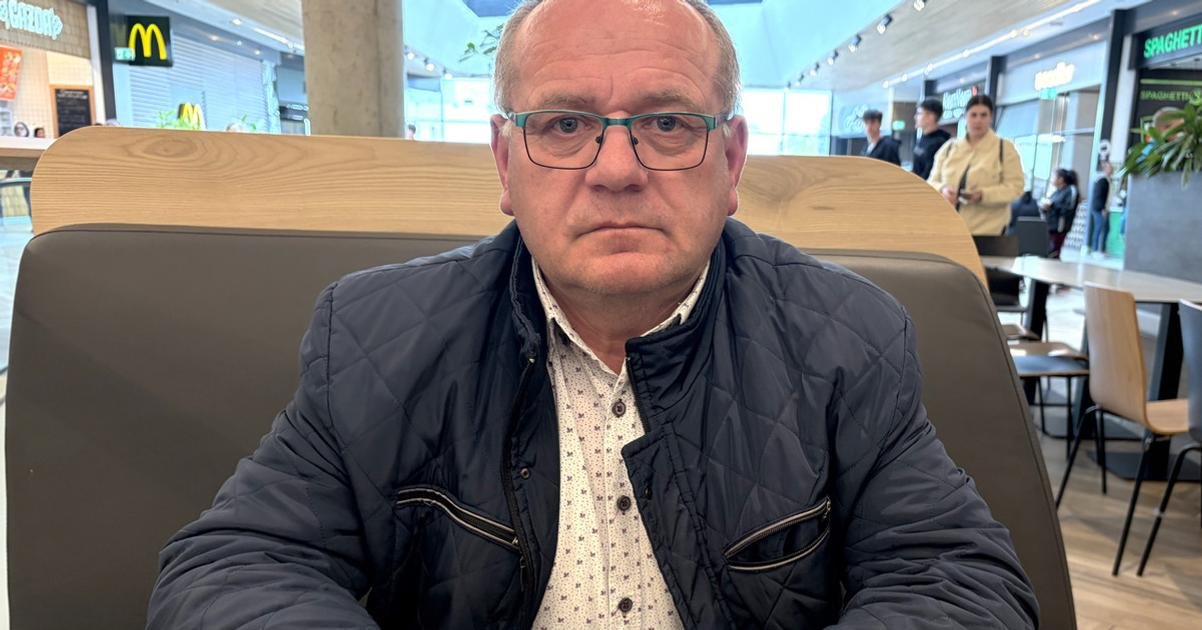
The initiative of small municipalities says that the document was created without their involvement. According to the civic association, they form the backbone of the Slovak countryside. He is the founder and most visible representative of the Initiative of Small Communities MICHAL SEKERÁK. Since 2011, he has been the mayor of the village of Bajerovce in the Sabinovský district, running as an independent candidate.
In the interview you will also read:
-
Why small municipalities do not agree with the reform,
-
who should decide about the money
-
in which they found agreement with the Union of Slovak Cities,
-
how to live in Bajerovce.
You claim that according to the proposal to merge the municipalities, it may end up being more expensive. Why?
To explain this, it is necessary to return to the turning point. This was fiscal decentralization in 2004, when the financing of cities and municipalities was set according to the number of inhabitants. That’s where, in my opinion, a fundamental mistake happened. Instead of the fair principle of determining the same amount for each citizen, coefficients were introduced. The bigger the city, the higher the coefficient.
Regional differences began to emerge. For example, the village had a coefficient of 0.90, while larger cities with more than 5,000 inhabitants had 1.25 or 1.35. If they wanted to achieve equality at that time, they should have turned the coefficients, or equally per capita.
Representatives of ZMOS were also present at this meeting. When they could not come to an agreement with the then Minister of Finance Ivan Mikloš (SDKÚ – editor’s note)small villages were the first to “sacrifice”. The rhetoric was, merge or perish. And it continues to this day, I am living proof of that.
When I took office as mayor, I started to deal with this issue and small municipalities negotiated within the ZMOS. We foolishly believed that ZMOS could help us with this. Even when Michal Sýkora was the chairman, then Branislav Tréger and the current Jozef Božik, we met with each of them as a delegation of small municipalities, I was there, every time we went to the dog’s thirtieth. They rejected us, they didn’t want to talk to us at all.
For some time I was a member of the ZMOS Council and I proposed additional financing of small municipalities as part of the resolutions. Those resolutions at the assemblies were adopted, but they went to waste.
That is why we took matters into our own hands, because the document proposed by SK8 and ZMOS is absolutely unacceptable. It is not, as one thinks, decentralization. This is absolute centralization, absolute subordination to higher territorial totals.

Related article
Public administration reform: Small municipalities are rebelling, the coalition is still lukewarm on the ideas
Read more
In what?
The proposed merger or liquidation of small municipalities, and at the same time the abolition of district offices. It is not directly written, but money must be seen behind it, because by abolishing offices and small municipalities, competences will pass to regions and to larger, let’s say, district cities, and with that, of course, money will also come.
And there is no way for them to get to small villages. There is already a problem, but then, when only they decide on it, it will be an even bigger problem. If we are talking about some development of Slovakia and regional equalization, then with this position document, development in the countryside will stop, there will be no regional equalization, but the differences will deepen.
Small villages do not want to merge. What is the problem? Proponents of the merger say that the costs of mayors, deputies, and officials will be reduced.