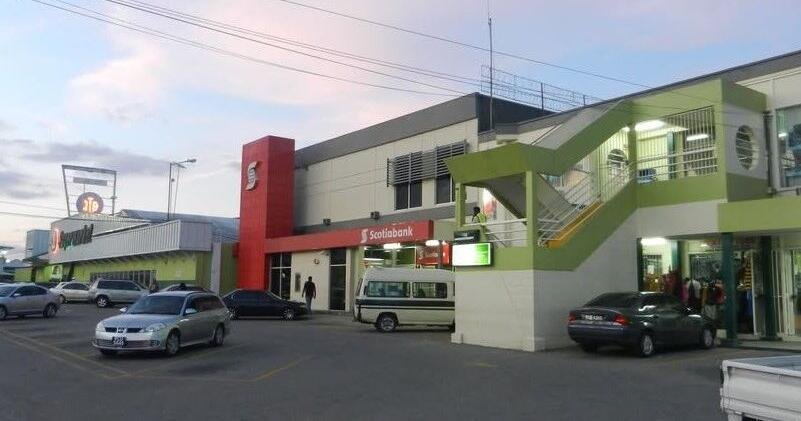
A commercial landlord can be held responsible for damage caused to tenants’ property by a plumbing failure, the Court of Appeal has ruled, overturning a High Court decision and clearing the way for compensation claims by two Marabella owners.
In a split decision delivered on Wednesday, a three-judge panel led by Chief Justice Ronnie Boodoosingh, with Justices of Appeal Nolan Bereaux and James Aboud, found that although the landlord was not negligent, it was liable under the law of private nuisance.
The case stems from a December 2018 flooding incident at Allum’s Shopping Centre in Marabella, where water from an upstairs unit seeped into several businesses below, causing extensive losses.
The leak originated from a PVC angle valve connected to a kitchen sink in a unit occupied by O.T.I. Trinidad Ltd. Water spread into five downstairs suites, including those operated by Western Industrial Solutions Ltd and Debera Rampersad, who trades as Debera Fashion Step Up and Save.
The affected tenants claimed over $3 million for damage to stock and business disruption.
Their case was initially dismissed by High Court judge Avason Quinlan-Williams, who ruled that the landlord, J.T. Allum and Company Ltd, could not be held liable for a sudden plumbing failure occurring within a tenant’s exclusive space.
However, the Court of Appeal took a different view.
Writing the lead judgment, Justice Nolan Bereaux whose reasoning was supported by the Chief Justice, held that the landlord’s retained right under the lease to enter the premises to inspect and carry out repairs was enough to establish liability in nuisance.
He pointed out that the landlord had, in separate legal proceedings against the upstairs tenant, alleged that the plumbing was in disrepair. In those circumstances, Justice Bereaux said, the company could not later claim that the defect was not reasonably detectable.
He further explained that in nuisance claims, a landlord who reserves the right to repair may be held liable for damage caused to third parties, even if it did not have actual knowledge of the defect.
Justice Aboud dissented, finding that the appeal should have been dismissed. He described the incident as an isolated and unforeseeable failure – a pipe joint giving way after more than a decade – which did not amount to a legal nuisance. He also warned that the majority’s reasoning could place an unreasonable burden on landlords to uncover hidden defects within tenants’ spaces.
On the issue of negligence, the appellate court was unanimous in rejecting the tenants’ claim, finding no evidence linking the landlord’s actions, or lack thereof, to the pipe failure.
The court also upheld the trial judge’s decision to exclude evidence from a former employee, Vedesh Gopaul, ruling that his proposed testimony about the original plumbing installation was not relevant to the issues in dispute.
The matter has been referred to a Master of the High Court to determine the amount of damages to be awarded to Western Industrial Solutions Ltd and Rampersad.
The appellate court also left intact an earlier order requiring Rampersad to settle outstanding rent owed to the landlord, which was unrelated to the flooding incident.
Attorneys Chanka Persadsingh and Anand Rampersad, represented the appellants, while Shankar Bidaisee, instructed by Rachael Jaggernauth, appeared for the landlord.