For years, thousands of intimate images of Trinidad and Tobago’s women have been circulated and exploited en masse within local pornography rings, saved by anonymous users in group chats or cloud platforms, and reshared among group members week by week.
The highly organised groups, the Express has previously reported, facilitate the non-consensual trade of nude and explicit images of women, stolen from their devices or posted without their permission. They are often categorised by name and auctioned at a price while group members are encouraged to go in search of more explicit content.
Victims have in the past reported being extorted, harassed, stalked and threatened by ring members seeking to control them. Some told the Sunday Express they have suffered psychological and personal challenges as a result, facing reputational harm and disruptions to their personal and professional lives.
The groups, the trade, and police investigations have been the subject of a constitutional claim filed by the Humanitarian Foundation for Positive Social Change (HFPSC), the Court of Appeal recently ruling that the police failed to protect a victim of child pornography whose intimate images were circulated on these platforms.
But still, even as the Trinidad and Tobago Police Service (TTPS) promised an investigation into the phenomenon, and the groups have been driven further underground, the country’s laws do not criminally outlaw the sharing of intimate images of adults by local abusers. As such, victims are often turned away by police, or advised to file civil claims against their abusers.
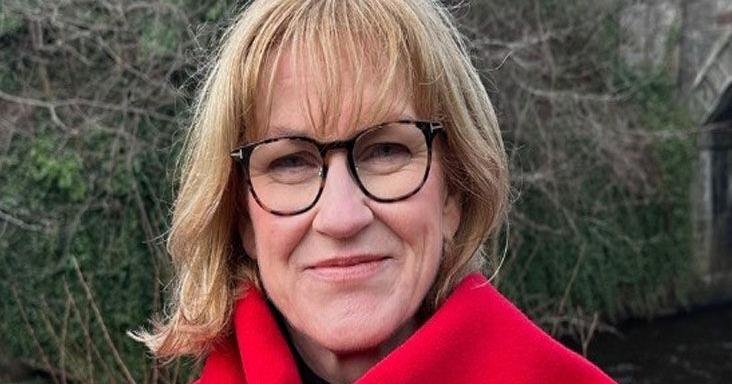
To better understand the dynamics of online abuses, the Sunday Express recently interviewed Clare McGlynn KC (Hon), a law professor at Durham University, United Kingdom, and a leading expert on violence against women and girls, particularly the legal regulation of pornography and image-based sexual abuse.
McGlynn, an honorary King’s Counsel, who serves on the Council of Europe’s Committee on Combating Technology-Facilitated Violence against Women, and on the UK’s Judicial Appointments Commission, has worked on the UK’s Online Safety Act 2023—a landmark law that mandated major tech companies to protect their users, especially children, from harmful content. She has also worked with a number of organisations to strengthen the European Union’s directive on gender-based violence.
McGlynn, who has been widely credited for coining the phrase “image-based sexual abuse”, has long argued that it must be understood as a form of sexual violence, and not just a privacy violation. She noted that failure to seriously consider the harm of online abuse has a devastating impact.
Q&A with Prof Clare McGlynn, KC
Q: What actions do you believe are necessary to address the harm caused by technology?
A: We need a whole-society response that better regulates social media platforms, holds perpetrators of abuse accountable, and works to prevent abuse by education and awareness-raising campaigns.
What barriers have you encountered when advocating for changes in the law?
There is a failure to take seriously the harms of online and tech-facilitated abuse. Online abuse can have a devastating impact on every part of your life, from your personal life, to professional life, your economic security, and your trust in society. It ruptures your life as you knew it, with survivors often dividing their lives into before and after.
But there remains a prioritisation of physical harms. Yet it is online abuse that remains constant, and never-ending.
How does one get governments to adopt stronger laws to protect women in countries where pornography is a problem and the sexualisation of young girls and women is routine?
I think the focus needs to be on consent. There is a difference between voluntarily and willingly engaging in sexual activity and, for example, taking or sharing nudes. But that does not mean you consent to being filmed without your consent, or nudes being shared without your consent.
I agree that in a context where there is a hypersexualisation of women and girls, this is even more difficult. In all countries, the dominance of mainstream porn, with its message that women are available any time and willing to do anything, normalises violence and abuse, and undermines our ability to refuse to engage in sexual activity.
How concerned should we be of the impact which regular viewing of image-based sexual abuse can have on the minds of the younger generation and their attitudes towards sex and people? From your experience, are people underestimating the dangers? Do strict laws like the one France implemented to prevent minors from accessing pornography actually work?
Regularly viewing image-based abuse material, whether shared amongst groups of friends or online on porn sites, legitimises and normalises non-consensual sexual activity. I think there is a collective lack of understanding about both the prevalence and harms of image-based sexual abuse.
In terms of pornography, it depends whether the laws on age verification are enforced. However, my bigger concern about mainstream pornography is the content. We would not be so bothered about a young person, a 14-year-old, accessing pornography if it were not so sexually violent, misogynistic and racist. So, I think we need to focus on changing the content of mainstream porn, rather than age assurance.
There are stories of suicides among young people as a result of sextortion. How can parents protect their children? What measures can they take even within the home? Is there such a thing as the right age to start using social media?
Sexual extortion can be life-ending. We need to be far more open that this is a common practice, and if it happens to you—mostly teenage boys—then you are not alone, it’s not your fault, and we can help.
Parents can be very open with their children that this happens a lot, it’s not their fault, and help them manage it. With deepfakes, the young person does not have to have shared a nude for them to be threatened. They may fear that nobody knows it’s actually a deepfake.
But also, even if a young person has shared a real image, parents and society must not condemn that young person. They are doing what so many do. They may also have been coerced into sharing it—duped by organised crime gangs.
As a leading expert on violence against women and girls, is there any particular story or victim-impact experience that has stayed with you over the years? Do you mind sharing it?
Over the last two years, I’ve worked closely with a young woman Jodie (not her real name), who found out that one of her best friends had been creating and sharing sexually explicit deepfakes of her. His actions were devastating. Since then, Jodie has campaigned to change the law to try to reduce the prevalence of this form of abuse, hoping to help other women, so that they don’t have to face what happened to her.
What motivated you to get involved in this field? How has it moulded your perspectives, and what would you like our readers to take away? Is there anything that we can do on our end to help raise awareness about the dangers of technology?
I am motivated by the experiences of women survivors that I have worked with who have bravely shared their stories and demanded change. In particular, online abuse affects younger women particularly, and in many societies, their voices are not heard. They are not taken seriously. So, I have tried to support them, to raise their voices and to raise awareness.
I would like readers to understand that online and tech abuse is life-shattering. It is also harmful to our societies as a whole, as women remove themselves from public life due to their experiences of harassment and abuse, and fear of further abuse.
Technology is neutral—it is how it is used that is the problem. We need to tackle the root causes of inequality and misogyny. There is a lot of work ahead! But we must work every day to try to make the changes that will mean that women and girls can live their lives without the constant fear of harassment and abuse.