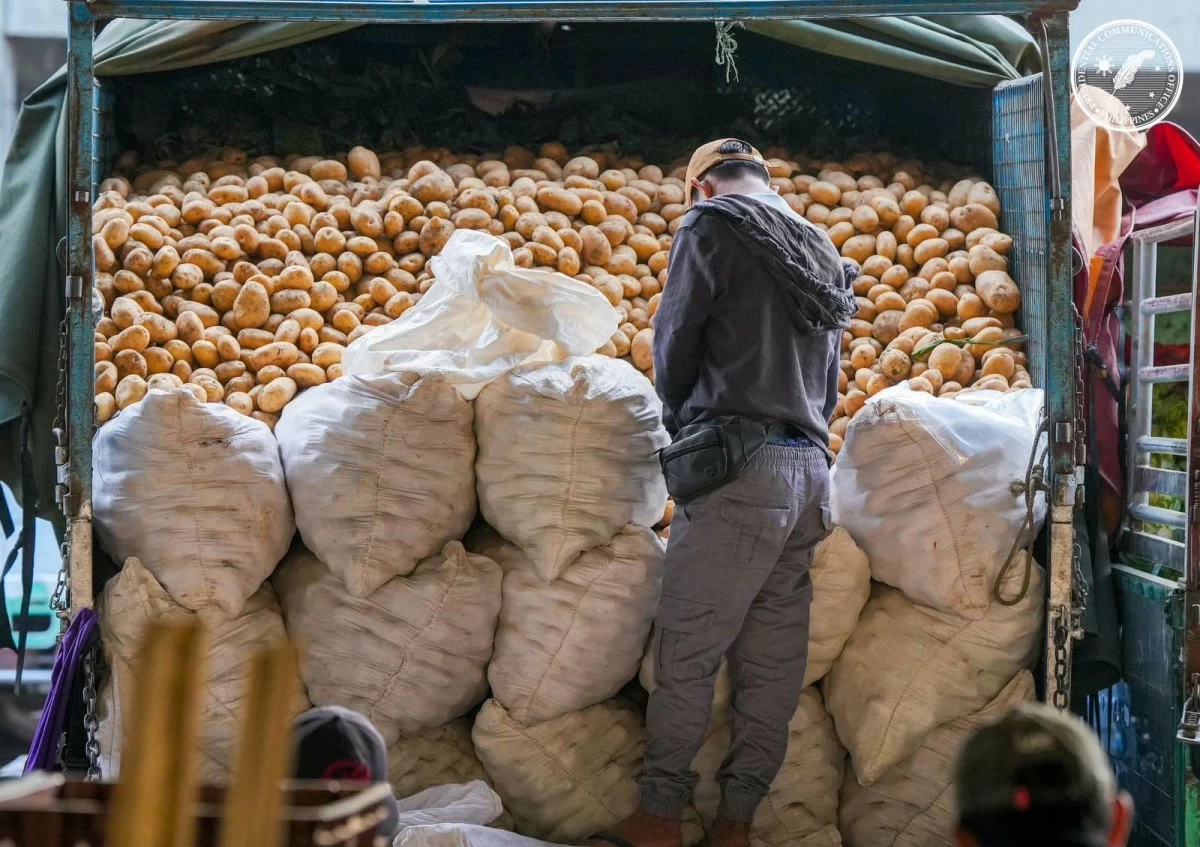
President Marcos said that trucks transporting vegetables from Mountain Province do not have to pay toll fees for now, easing their burden amid high diesel prices.
Marcos announced this during his visit to the Benguet Agri-Pinoy Trading Center on Friday, April 17, following reports that vegetable trucks from the province had halted operations due to high diesel prices.
“We are here now at the Trading Center at pinuntahan din natin ang palengke because ang nangyari very – nagulat kami, yung mga report na mas – dahil sa pagtaas ng presyo ng diesel ay hindi na binababa ang mga gulay na galing dito sa Mountain Province, dito sa mga mountainous areas (We are here now at the trading center, and we also went to the public market because we were surprised with reports that due to high diesel prices, vegetables from Mountain Province and other mountainous areas here are no longer being transported),” Marcos said.
“Kaya tiningnan natin, hinanapan natin ng paraan. Kaya unang-una, binaba natin ang presyo ng diesel ng PhP10. Tapos ‘yung mga charges ng mga local government, eh wa-waive (waive) na muna. Tapos tinanggal na rin natin ang toll fee para sa mga truck na bumababa (So we looked into it and found ways to address the problem). First, we reduced the price of diesel by P10. Then, the charges imposed by local governments were temporarily waived. We also removed the toll fees for trucks transporting goods),” Marcos added.
According to the President, 10-wheeler trucks used to pay around P3,000, and 4-wheelers around P1,000. With the relief, they no longer have to pay the fees for a short time.
Toll fees are waived “until this issue with rising oil prices is resolved,” Marcos said.
Marcos assured farmers that the government will continue to take action over the impacts of the conflict in the Middle East.
He cited the initiative to include drivers, who need assistance, in the TUPAD program of the Department of Labor and Employment (DOLE).
It is part of the effort to ensure food supply, to ease the burden on farmers, producers, and wholesalers, and to make sure that food supply remains steady “so we won’t face problems with food prices or shortages,” Marcos said.
“Mabuti naman at mukha namang dahil sa mga ating inisyatiba na ginawa ay mas – mas nagkakaroon ngayon ng – yung sistema ay umaandar na. At patuloy naman ang ating mga initiative kung mayroon pa. Kaya na – mabuti at nakausap ko ‘yung mga iba na nagtitinda rito para ‘yung kanilang mga suggestion kung ano sa palagay nila ang kailangan pang gawin (Fortunately, it seems that because of the initiatives we implemented, the system is starting to function better. We are continuing our efforts, and I was able to speak with some of the vendors here to gather their suggestions on what else needs to be done,” Marcos added.
He further assured them that they will keep studying the situation and continue monitoring to ensure that everyone feels the government’s support as the country reels from crisis brought about by the war in the Middle East.
OP buys 20 tons of vegetables
According to the Presidential Communications Office (PCO), the Office of the President bought about 20 tons of vegetables from La Trinidad and Urdaneta.
The vegetables will be given to those in need communities in Metro Manila.
“Pinagtibay ng Pangulo ang mga hakbang para mapababa ang gastos sa logistics, habang nagbigay rin ng dagdag-kita sa mga magsasaka sa pamamagitan ng pagbili ng Office of the President ng humigit-kumulang 20 toneladang ani mula sa La Trinidad at Urdaneta, na agad namang ihahanda upang maipamahagi sa mga komunidad na higit na nangangailangan na komunidad sa Metro Manila (The President strengthened measures to reduce logistics costs, while also providing additional income to farmers by purchasing around 20 tons of produce from La Trinidad and Urdaneta through the Office of the President, which will be prepared and immediately distributed to communities in Metro Manila that are most in need),” the PCO said.
During his visit to Benguet, Marcos inspected farm inputs and equipment for distribution to the Farmer Cooperatives and Associations (FCAs) under the Department of Agriculture’s High Value Crops Program.
He also toured Spot Trading Building 2 (Wholesale Area), where post-harvest activities are underway, and engaged with farmers and key stakeholders in the Cordillera highland vegetable industry.