Tourism is not measured by the number of people who will pass through a country, but by the number of people who will want to return again! For decades, Macedonia has been described in a large number of texts, scientific papers, books, and travel publications as a country with huge tourist potential. Mountains, lakes, rich cultural heritage, traditional gastronomy, authentic rural environments, hospitable people and strategic geographical position – all this represents a serious basis for the development of a competitive tourism sector. But despite all these advantages, over the last twenty years one question remains open and is becoming more and more relevant: is Macedonia really a tourist destination or just a transit station through which tourists pass on their way to another destination?
This question should not be understood as a criticism or as an attempt to point out the culprits, but as an incentive for a serious analysis and re-examination of the previous model of tourism development, which was left to develop spontaneously for too long. In modern conditions, tourism is no longer just a sector that generates income, but is an important instrument for economic development, regional balance, diplomacy, promotion of national identity and creation of the international image of the state.
In recent years, Macedonia has recorded positive tourism indicators. The number of domestic and foreign tourists is growing, interest in alternative forms of tourism is increasing and new opportunities for development are opening up. But behind these harsh statistical numbers hides an essential challenge – the average stay of tourists remains relatively short.
This means that a large number of visitors see Macedonia as a temporary destination, and not as a place where they would like to stay longer, explore and create new experiences. This trend is particularly noticeable in the last few years and opens a serious question: does the growth of tourist traffic really mean greater competitiveness of Macedonian tourism?! This is where the real debate begins.
We have the resources, but do we have a tourism product?
One of the biggest misconceptions is the belief that having natural and cultural resources automatically means successful tourism. Tourism resources in themselves are not a tourism product. Macedonia has extraordinary natural resources, from high mountains, through national parks, to lake regions and rich biological diversity, the country has the potential to be a recognizable European tourist destination. But the modern tourist does not travel just to see something. He also travels to experience something.
Today’s tourist buys an experience. He wants a story, emotion and authenticity and to feel the local culture, taste traditional food, talk to the local people and participate in activities that will remain in his memory.
That is why Macedonia must stop thinking in terms of isolated tourist attractions and start creating integrated tourist products. It is necessary to connect nature, culture, gastronomy, tradition and local economy in a single story.
The tourist does not need to independently search for the information, connect the destinations and organize his trip. It is we who should offer him the full experience.
Why don’t tourists stay longer?
This is probably the most important question we should ask ourselves, or maybe not? Why would anyone stay two days if they could stay five? Why would anyone come back again? The answers are complex. First, infrastructure is still a serious challenge. Although significant projects have been implemented in recent years, there are still problems with the local road infrastructure, tourist signage and accessibility to certain destinations.
Second, the digital tourist offer is underdeveloped. The modern tourist usually makes the decision to travel via mobile phone. He searches, compares and books online. If we are not present in the digital space, then we practically do not exist in the global tourism market.
Third, there is a lack of integrated tourism packages. It is necessary to create specific products such as: three-day cultural tours, gastronomic weekends, wine itineraries, active mountain tours, bicycle itineraries, family programs, rural experiences. The tourist does not want to spend time on organization. He wants a ready and quality experience.
Tourism is not only Ohrid
Without a doubt, Ohrid is the tourist symbol of Macedonia. But this is where one of the biggest risks is hidden. Excessive concentration of tourism activities in one destination creates uneven development. Excessive dependence on one destination poses a risk to the long-term sustainability of the tourism sector and reduces the possibility of balanced regional development.
Macedonia must not build its entire tourism strategy around one city. The tourism story needs to be expanded. Kruševo has potential for cultural and adventure tourism. Berovo offers conditions for health and wellness tourism. Mavrovo has extraordinary opportunities for four-season tourism. Dojran has a unique potential for the development of sustainable lake tourism. Prespa represents one of the biggest unused tourist potentials. The Osogovo Mountains open opportunities for active tourism, Ovchepolite for the development of archaeological tourism, the Pelagonian Region has a rich cultural and gastronomic heritage. Rural areas can become drivers of local economic development. True success will not be achieved if one destination is crowded and the others are empty. Tourism must be evenly distributed.
Tourism as an economy, not as a seasonal activity
In Macedonia, there is still a perception that tourism is a seasonal activity. This thinking, if we want to develop a sustainable tourism sector, must change. Modern tourism is an economic industry that operates throughout the year. It connects transport, agriculture, gastronomy, culture, digital technologies, education and local production.
Every tourist spends funds in several sectors. Therefore, the development of tourism directly affects the local economy. The connection of tourism with local producers is of special importance. Cheese, wine, honey, traditional products and handicrafts should not be seen as separate segments, but as an integral part of the tourism product.
When a tourist buys a local product, he is not just buying an item, he is buying part of the story of the destination.
Digitization is the new tourism infrastructure
In the past, roads were the most important. Today, digital infrastructure is equally important. Every tourist destination must be easily accessible through the internet. Needed: modern tourism platforms, mobile applications, interactive maps, virtual tours, digital promotion, online booking systems, smart tourism solutions.
Digitization does not only mean technology. It also means a new way of telling stories. Destinations are no longer sold through photos, but through emotions. People don’t want to hear that something is beautiful. They want to feel why it is special.
Modern tourism requires professional management. Tourism cannot develop spontaneously. Long-term planning is required. Professional personnel are needed. Modern models of destination management are needed. Successful tourism destinations function as well-organized systems. Local government institutions, tourist organizations, the private sector, the academic community, and the local population cooperate in them. Only through partnership can sustainable tourism development be created.
It’s time to tell our own story
Macedonia does not suffer from a lack of potential. On the contrary! Rarely any country in such a small territory has such diverse resources. But potential alone does not create success. It takes a vision. Coordination is required. A long-term strategy is needed. Most importantly, it takes courage to let go of old thinking patterns. The question is no longer whether Macedonia has anything to offer. The question is whether we know how to offer it. Are we ready to create experiences instead of just offering locations? Are we ready to turn the tourist offer into a national story? Are we ready to think long term?
The answer to these questions will determine the future of Macedonian tourism. So instead of always talking about the potential, it’s time to start talking about the realization. It is time for Macedonia to build its own tourism story. Because tourists will not come just because we have beauties. They will come because we create a reason for them to stay.
And more importantly – they will come again because we will create a reason for them to come back. In the 21st century, the countries that have the most tourism resources no longer compete, but those that know how to turn them into authentic experiences. Only then will Macedonia stop being a transit station and become a real tourist destination.
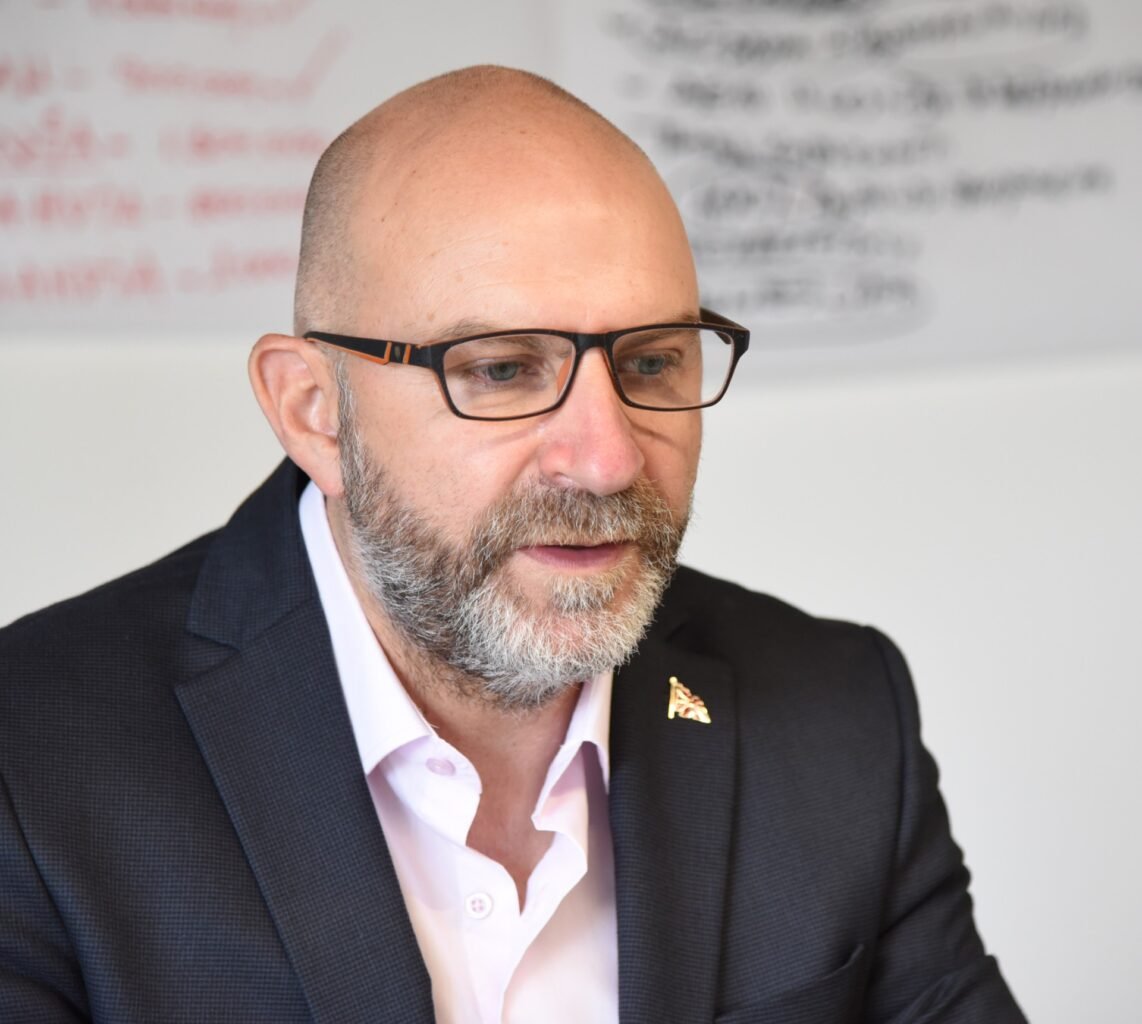
Assoc. Dr. Ljupco Janevski, University of “Skopje”