
“If any vessel attempts to transit in the Strait without our permission … or outside of the designated route, it is responsible for any consequences.”
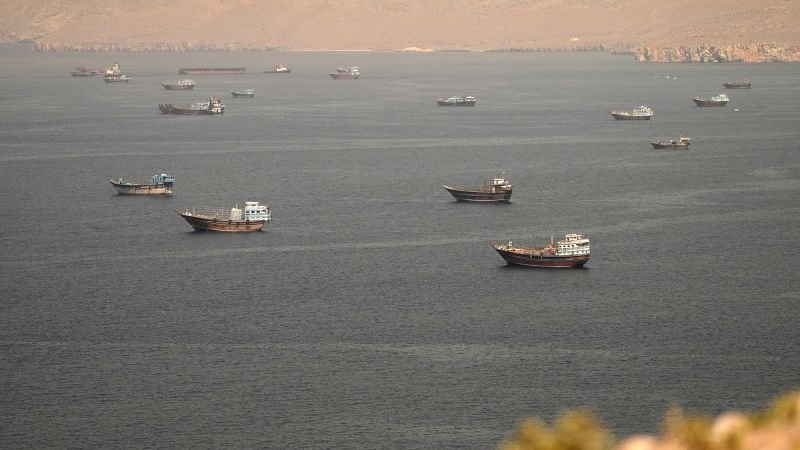
The warning was broadcast on Thursday by Iran’s Revolutionary Guards to ships passing through the Strait of Hormuz, the vital oil chokepoint which is emerging as one of the biggest tests of the initial agreement between Iran and the United States to end their war.
Just hours later, the Singapore-flagged container ship Ever Lovely was struck by an Iranian drone, a US official told CNN. The attack, the first on a vessel since the pact was signed, was described by US President Donald Trump as a “foolish violation of our Ceasefire Agreement.”
In retaliation, the US military conducted strikes Friday against Iranian military targets around the strait. The next day, Iran said it, in turn, had targeted US military positions in the region. A US official told CNN that Iranian drones were detected but did not reach their targets.
Earlier Saturday, maritime authorities also said a tanker in the Strait of Hormuz was struck by an “unidentified projectile” — highlighting yet again the unsettled nature of safety in the strait.
The ceasefire agreement stipulates that Iran will make “arrangements using its best efforts” to ensure the safe passage of commercial vessels in the Strait of Hormuz. Ensuring unobstructed transit was Iran’s main concession to the US.
But for Iran, reopening the strait does not mean relinquishing control of it. A vaguely worded article in the agreement said Iran and Oman would work together to “define the future administration” of the waterway, effectively giving Tehran a formal role in managing it.
Read more here on the state of play in the Strait of Hormuz.