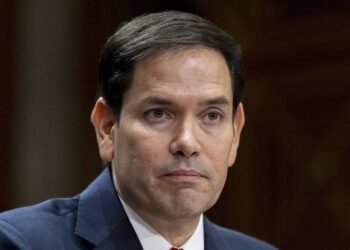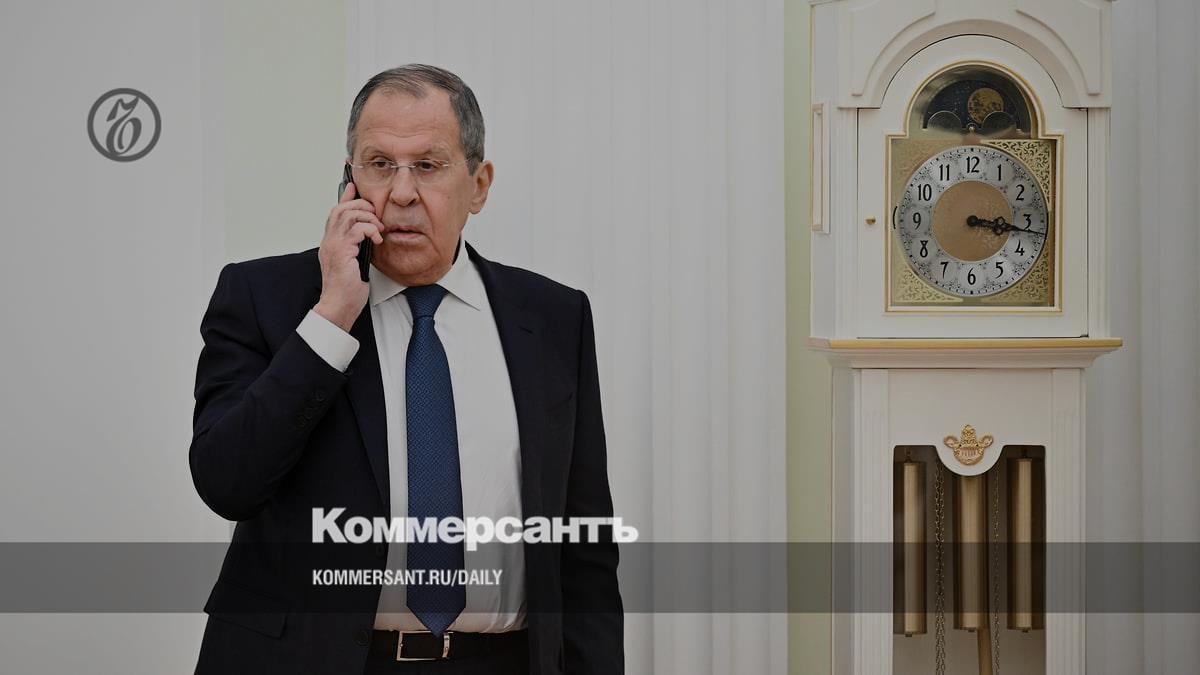
Russian Foreign Minister Sergei Lavrov had his first telephone conversation with US Secretary of State Marco Rubio this year, which resumed communication between the heads of diplomatic departments of the two countries. Sergei Lavrov’s call to the US State Department came a few days after the conversation between Presidents Putin and Trump, which was also initiated by Moscow. The intensification of Russian-American contacts is taking place in the context of a significant escalation of the Ukrainian crisis on the eve of Victory Day, one of the scenarios of which could be Russian attacks on the center of Kyiv. In this regard, it is fundamentally important for Moscow to warn Washington about the risks of further deterioration of the situation and the increasingly real threat of a global conflict in which the United States could be drawn.
The telephone conversation between Sergei Lavrov and Marco Rubio, which took place on the evening of May 5, was reported by the diplomatic departments of the United States and Russia, limiting themselves to brief statements without mentioning the details of the conversation and its duration.
“The heads of the foreign affairs departments “checked notes” on the current situation in international affairs and Russian-American relations, and also discussed the schedule of bilateral contacts,” it says in the messageposted on the website of the Russian Foreign Ministry. As follows from the statement from Smolensk Square, the conversation between Lavrov and Rubio “was constructive and businesslike.”
US State Department spokesman Tommy Pigott was also laconic: “Secretary of State Marco Rubio today spoke with Russian Foreign Minister Sergei Lavrov at the request of the minister. They discussed US-Russian relations, the Russian-Ukrainian war and Iran.”
The conversation between Sergei Lavrov and Marco Rubio became a very rare contact between the heads of the diplomatic departments of the two countries, given that their previous conversation took place on October 20 last year. Then its topic was a discussion of the idea of a meeting between Presidents Putin and Trump in Budapest, which has lost its relevance today.
It is also noteworthy that the White House’s Russian policy over the past months has been determined by US Presidential Special Envoy Steven Witkoff and Trump’s son-in-law Jared Kushner, while Secretary of State Rubio remained in the shadows.
Nevertheless, Russian Foreign Minister Sergei Lavrov now has compelling reasons to urgently call his American counterpart and discuss the Ukrainian crisis with him, among other issues.
The basis for such a conversation was that on the eve of Victory Day, the escalation around Ukraine is developing increasingly.
The day before the conversation between Sergei Lavrov and Marco Rubio Russian Ministry of Defense spoke with an unprecedentedly harsh statement addressed to Ukraine and its Western allies, announcing their readiness to strike the center of Kyiv if they try to interfere with the parade in Moscow on the occasion of Victory Day.
Recalling that “in accordance with the decision of the Supreme Commander-in-Chief of the Armed Forces of the Russian Federation V.V. Putin, a truce is declared on May 8–9, 2026 in honor of the celebration of the Victory of the Soviet people in the Great Patriotic War,” the Russian military department called on the Ukrainian side “to follow this example.”
At the same time, the Russian Ministry of Defense has not ruled out another, radical scenario. “If the Kyiv regime attempts to implement its criminal plans in order to disrupt the celebration of the 81st anniversary of Victory in the Great Patriotic War, the Armed Forces of the Russian Federation will launch a retaliatory, massive missile strike on the center of Kyiv. Russia, despite the capabilities we have, has previously refrained from such actions for humanitarian reasons. We are warning the civilian population of Kyiv and employees of foreign diplomatic missions about the need to leave the city in a timely manner,” stated the Russian Ministry of Defense.
Thus, the Russian military department not only called on Kyiv to comply with the truce announced by Moscow on May 8–9, but also for the first time directly warned of its readiness for an immediate response in the event of its failure, which would threaten the Ukrainian capital with enormous casualties and destruction, and could also cause damage to Western diplomatic missions.
Meanwhile, the conversation between the heads of the US and Russian diplomatic departments was preceded by the first telephone conversation between Presidents Trump and Putin in less than two months, which took place on Moscow’s initiative on April 29, one of the topics of which was Vladimir Putin’s proposal to declare a truce on Victory Day. The details of the conversation were reported by assistant to the Russian President Yuri Ushakov. According to him, both Trump and Putin expressed similar assessments, recognizing that Ukraine, with the support of Europe, is pursuing a policy of prolonging the conflict.
“The Russian leader directly said that Kyiv resorts to openly terrorist methods, attacking purely civilian targets on Russian territory,” Ushakov said.
According to him, President Trump, for his part, actively supported Moscow’s initiative, noting that the May 8–9 holiday “marks our common victory over Nazism in World War II.”
Trying to seize the initiative from the Kremlin, Ukrainian President Vladimir Zelensky unilaterally declared a “regime of silence” from May 5 to 6, but Moscow ignored this uncoordinated step, which gave Kyiv a reason to accuse the Russian Federation of violating the truce. “The Russians broke the regime of silence and carried out a number of attacks on Ukraine. These actions neutralize the “truce” announced by Putin for May 9,” said Sergei Sternenko, adviser to the Minister of Defense of Ukraine, on May 6. “Moscow has once again ignored a realistic and fair call for a cessation of hostilities,” echoed Ukrainian Foreign Minister Andrei Sibiga.
For its part, the Russian Ministry of Defense reported that the Ukrainian side did not comply with the truce it declared. According to the Russian military department, on the night of May 5-6, five Russian regions were subjected to a massive attack by more than 50 drones – the Belgorod, Bryansk, Kursk regions, Crimea and the Moscow region, including Moscow and the Moscow region.
Thus, given the ongoing escalation of the Ukrainian conflict in recent days, it was fundamentally important for the top Russian leadership to warn Washington in advance about the risks of further deterioration of the situation and the increasingly real threat of a global conflict into which the United States itself could be drawn.