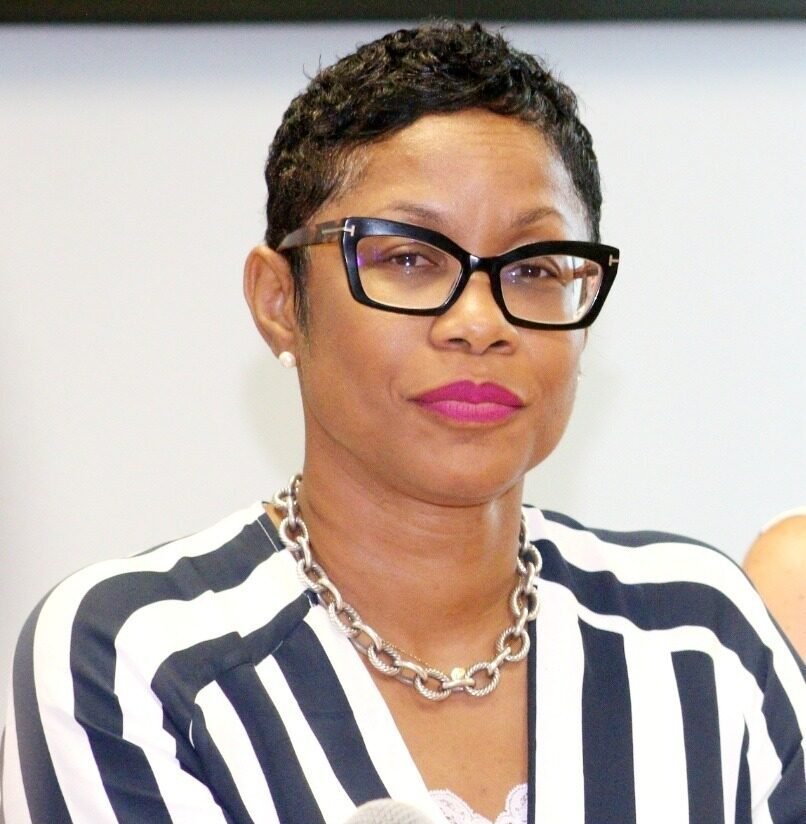
Barbados is one step closer to establishing a legal framework for organ donation after death, with Minister of Health and Wellness Senator Lisa Cummins hailing the “life-saving” and “transformational” Human Tissue Transplant Bill that will modernise the country’s transplant system.
The bill, which was passed in the Senate last week, went through its second reading in the House of Assembly on Tuesday.
“This legislation is important. This legislation is transformational. This legislation is life-saving,” said Senator Cummins in a cross-chamber appearance as she opened the House debate.
Acknowledging members of the Barbados Kidney Association and other campaigners in the public gallery, she noted that they had advocated for the legislation for decades. She also paid tribute to transplant patients who died while waiting for organs, and to the Queen Elizabeth Hospital transplant team who were absent because they were performing a live donor kidney transplant.
In outlining the bill’s features, the health minister said it provides for the administration of the transplant system, the establishment of a National Donor and Transplantation Registry, donation by adults and minors, procedures for donation after death, and the prohibition of trade in human tissue.
The bill provides for the approval of health service institutions, the establishment of a Transplant Council, a National Donor and Transplantation Registry, a public education programme and the allocation of human tissue.
It also sets out separate provisions governing organ donation by adults and minors. Senator Cummins said the legislation benefited from extensive input by the Law Reform Commission, which recommended amendments, including changes to bring it in line with the Succession Act.
“It separates out the regime for adults from children and here’s what it does, in the case of adults, I could tell you what I want to do and you are going to have to follow my instructions….One of those changes was made in the other place and it was in accordance with the provisions of the Succession Act. Where there was a requirement or under the Succession Act, it usually requires there to be two witnesses to sign off on the decisions being made by adults.”
The health minister sought to clarify that the legislation is not about being predatory and instead gives Barbadians the choice of whether to donate their organs after death:
“It allows us to have and to begin a national conversation about that choice, about people transitioning from going back to my maker just how I came into or to donate my organs to someone who needs them.”
Part of the implementation strategy is the establishment of a National Transplant Council and the development of a National Organ Donation and Transplantation Strategy.
She said: “We will begin to work in the ministry on a national organ donation and transplantation strategy that gives effect to this legislation.”
Rather than creating an entirely new registry, the ministry also intends to expand the existing University of the West Indies registry in collaboration with the Barbados Living Laboratory.
She revealed that during a meeting with the UWI Faculty of Medical Sciences last week, both sides agreed that maintaining a registry without using the data to inform policy decisions would be pointless:
“We have agreed on a number of key areas in collaboration with UWI to be able to take the data that is there in the registry and to help it, to allow it to help us make better empirically led decisions.”
Additionally, she pointed to the legislation’s prohibition on trading in human tissue:
“We also have a section in Part 8 on the prohibition of trading in human tissue. I think that’s pretty clear, it’s standard. It exists across all the other jurisdictions where this legislation was considered, and we want to make sure that that is in place.”
Senator Cummins highlighted existing dialysis services across Barbados, including those provided at the Queen Elizabeth Hospital and through private dialysis provider SILS, founded by entrepreneur Kurt Lambert:
“We know we need more of this dialysis support. When I first came to the ministry and I was looking to see what our facilities were and what we were offering, I had the opportunity to go to, of course, the Queen Elizabeth Hospital where we have 24 chairs, we call them chairs, not beds, but chairs, supporting dialysis patients but then outside of the Queen Elizabeth Hospital, there are about three additional locations where Persons can have the benefit of dialysis support.”
The ministry has already begun discussions with the Queen Elizabeth Hospital, SILS and public health officials to expand dialysis services, she said.
“We’ve already had the dedicated engagements with the Queen Elizabeth Hospital and SILS, along with the public health officials, to see how we can expand that even further so that people are able to have the benefit of dialysis support in their communities, without all having to go into the Queen Elizabeth Hospital. We’re hoping to be able to have that done in the shortest possible time frame, starting between now and early 2027.”
Senator Cummins also shared details of a conversation she had with a recipient of a live donor kidney transplant before Tuesday’s debate to better understand the physical and emotional journey involved:
“What happens in the three hours before they actually go into surgery, where that loved one goes into surgery, and they have to think about if something happens or something goes wrong, this person is my responsibility because they’re giving their organ to me.
“They talked about how they don’t take out the infected kidney, the dead kidney, but it stays within the abdominal cavity, and they put the live kidney, the new kidney in, and they begin treatment for several weeks or maybe three months… on immunosuppressants.”
A kidney transplant recipient described the emotional burden of receiving an organ from a loved one, stressing that transplantation is “not just a surgical procedure…it’s the emotional transaction that takes place between a loved one and the recipient”, said Senator Cummins.
The transplant programme has so far relied largely on living donors, while many patients died waiting for transplants because dialysis was no longer enough or their kidney disease could no longer be managed, she added.
She also pledged to lead by example by registering as an organ donor after her death:
“This legislation allows people like us in this chamber to say, I want to wear a bracelet, as we’ve seen in other countries that says, if something were to happen to me, if I pass, rather than letting the ants take control of my body and my organs, I want to give the gift of life. I want to be able to let someone else’s family benefit from my organs if they are in good order.”
Senator Cummins also revealed that discussion is ongoing on a regional donor bank for which the government has committed its support:
“There has been an equal discussion about whether or not the region should pool their resources together to be able to benefit from organ availability in another jurisdiction. We as the Ministry of Health want to pledge our support to the regional initiative for there to be a regional donor organ donor bank where we can pull on the resources of our CARICOM colleagues and our regional colleagues to be able to support people to access organs.”
(LG)