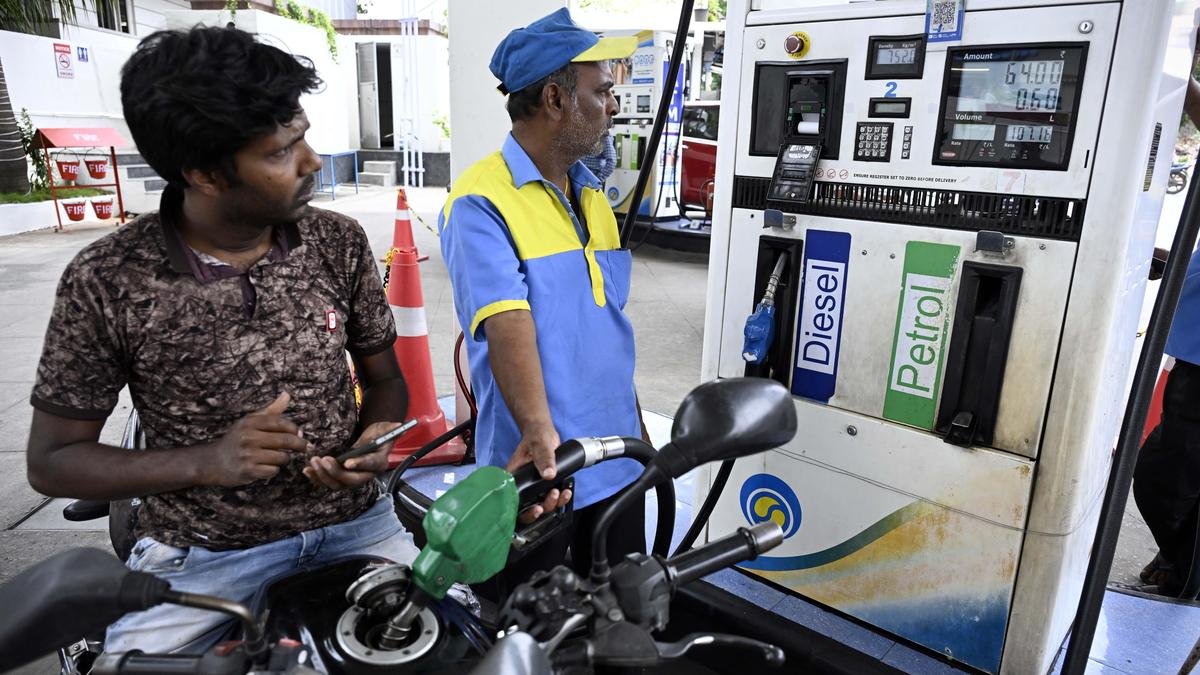
Petrol sold by several major oil companies in Karnataka contained ethanol far above the prescribed 20% level, in some cases as high as 31.2%, the Karnataka government has alleged, raising questions about transparency in the ethanol-blended petrol being sold to consumers across the country.
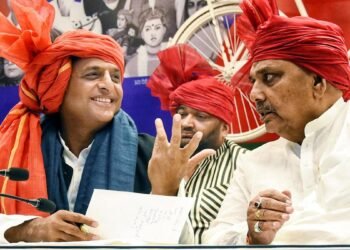
The samples in question were taken recently by the Department of Legal Metrology, under the Department of Food, Civil Supplies and Consumer Affairs, from Bengaluru Urban, Bengaluru Rural, Kolar, Chikkaballapura, Tumakuru and Dakshina Kannada districts, said Rizwan Arshad, Minister for Food, Civil Supplies and Consumer Affairs, Karnataka, on Friday.

Petrol samples from major Oil Marketing Companies (OMCs), Indian Oil Corporation Limited (IOCL) and Hindustan Petroleum Corporation Limited (HPCL), recorded ethanol blend percentages of 31.2% and 30.5%, respectively. Bharat Petroleum Corporation Limited (BPCL), Nayara and Shell petrol samples revealed ethanol blends of 26.5%, 26.1% and 25.5%, respectively, he said.
‘No transparency’
Mr. Arshad said the samples were initially submitted to the in-house laboratories of IOCL and BPCL. But, he claimed, the test reports issued by these laboratories did not disclose the ethanol content in the fuel, despite it being one of the prescribed testing parameters. “This raises serious concerns about transparency on the part of the oil majors and what they are hiding from consumers,” he said.
| Sample from OMC bunks | Fuel | Ethanol % in samples collected |
| IOCL | Petrol (Motor Spirit) | 31.2, 20.8 |
| HPCL | Petrol (MS-Power) | 30.5 |
| HPCL | Petrol (MS) | 27, 22.4 |
| BPCL | Petrol (MS) | 24.2, 22.6 |
| BPCL | Petrol (MS – Speed) | 26.5 |
| MRPL | Petrol (MS) | 19.2 |
| Nayara | Petrol (MS) | 26.1, 20.6 |
| Shell | Petrol (MS) | 25.5, 13.5 |
Source: Department of Food and Civil Supplies and Consumer Affairs, Karnataka
“The Department of Food, Civil Supplies and Consumer Affairs, Karnataka, later got the same samples tested at laboratories recognised by the National Accreditation Board for Testing and Calibration Laboratories (NABL) and the International Organisation for Standardisation (ISO). These reports have revealed higher ethanol blends,” Mr. Arshad said.
Mr. Arshad provided copies of six lab test reports from Shriram Research Institute, Bengaluru, a unit of Shriram Tilak Dhar Research Foundation. All six reports showed ethanol blends beyond the permissible 20%.
Consumers suffer
Mr. Arshad said 99% of India’s over 35 crore vehicles are not built for ethanol blends of more than 20%, and the risk is not limited to old vehicles. “Vehicles sold after April 2023 have been certified only up to E20. With lower-ethanol-blend petrol withdrawn from nearly one lakh fuel stations, consumers have been left with no alternative,” he said.
Assuming a 10% mileage loss at ₹100 a litre, he said the hidden loss to consumers would amount to around ₹62,000 crore, based on India’s annual fuel consumption of 6,200 crore litres.
The Minister claimed that, after factoring in damage and repair costs due to higher blends, the loss would be around ₹1 lakh crore, but did not elaborate on how he arrived at this figure.

‘Penalty for excess ethanol blending’
Mr. Arshad demanded that the Union government penalise OMCs for “over-blending”, even as the Karnataka government would continue to conduct these tests and release their findings. “Every fuel station in the country should be mandated to display the ethanol blend percentage, allowing consumers to choose between the range of blends available,” he said.
The Minister demanded that the Union government establish an E20 spoilage fund and compensate every consumer whose vehicle has been damaged through a time-bound claims process, with damage certified by authorised service centres.
“Before all these steps are taken, the Union government owes an explanation to consumers who have suffered. The Union Government, OMCs and vehicle manufacturers are making windfall profits at the cost of consumers,” he alleged.
OMCs refute report
Refuting observations about ethanol blend in petrol being as high as 31% in Karnataka, the three State-owned OMCs said the tests were not conducted in accordance with prescribed statutory and technical procedure.
Citing discrepancies with findings from their own quality monitoring, they urged the State government to share the complete counterpart sampling documentation, outlet-wise laboratory reports and details about the adopted testing methodology, and samples for retesting.
“The OMCs remain committed to cooperating with the State government and other competent authorities in conducting joint sampling and testing in accordance with the Control Order and the Marketing Discipline Guidelines, 2024,” it stated, adding, “Any deviation established through the prescribed procedure will be dealt with in accordance with applicable guidelines.”
Published – November 06, 2026 04:12 pm IST