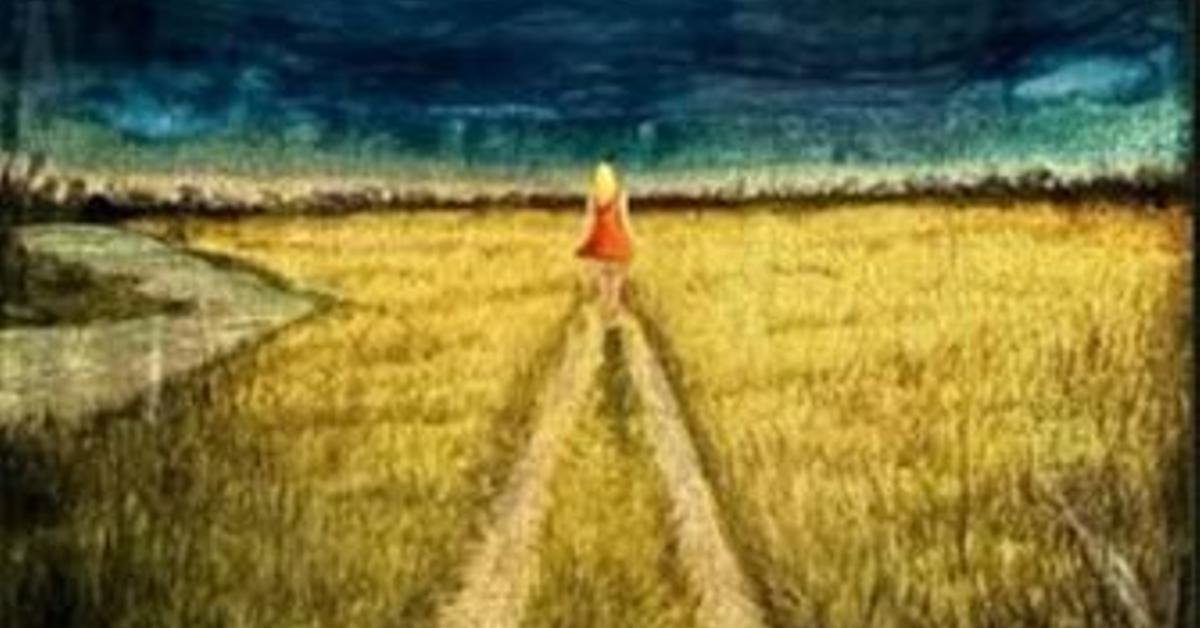
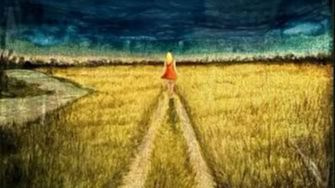
Paris/The Cuban artist Humberto Castro returns to Paris with Kochūtena personal exhibition of small-format paintings that proposes enclosing large human issues in deliberately reduced surfaces.
The title comes from the Japanese term Kochūten (壺中天), linked to an ancient Chinese conception that can be roughly translated as “heaven within a vessel”: the possibility that a world, and even a universe, is contained in a seemingly limited space. From this paradox, Castro addresses recurring issues in his career such as existence, love, violence, power, loneliness, desire, memory, death, displacement and the relationship of the individual with his own history.
The exhibition also extends Castro’s dialogue with Japanese culture. In 2025 he presented in this same Parisian gallery Haikumade up of small acrylics for which he later wrote a haiku poem associated with each work. The artist then explained that he was especially interested in the ability of this poetic form to express a broad idea with very few elements.
Born in Havana in 1957, Castro studied at the San Alejandro Academy of Fine Arts and the Higher Institute of Art. He was one of the figures of the so-called Generation of the 80s and in 1983 he founded, together with other creators, the Hexágono group, which developed installations aimed at encouraging public participation. His work encompasses painting, drawing, printmaking, ceramics, installation and performance. In 1989 he settled in Paris, where he remained for a decade, before moving to the United States in 1999.
The relationship with the Galerie Akié Arichi comes precisely from that French period: Castro exhibited there already in the early 90s and has maintained the link with the space for decades.
As an activity related to Kochūtenon Friday, October 9, at 9:00 pm, will be screened The Walkera biographical film about Humberto Castro made by Raúl Francisco, at the Maison de l’Amérique Latine, 217 boulevard Saint-Germain, Paris, according to the exhibition call.